We remain fully operational. Our teams are working around the clock to ensure your deliveries continue safely.

DOWNLOAD THE APP


Customer Services
Copyright © 2025 Desertcart Holdings Limited
DOWNLOAD THE APP
![Ida [DVD]](https://m.media-amazon.com/images/I/41og+NiVdxL.jpg)

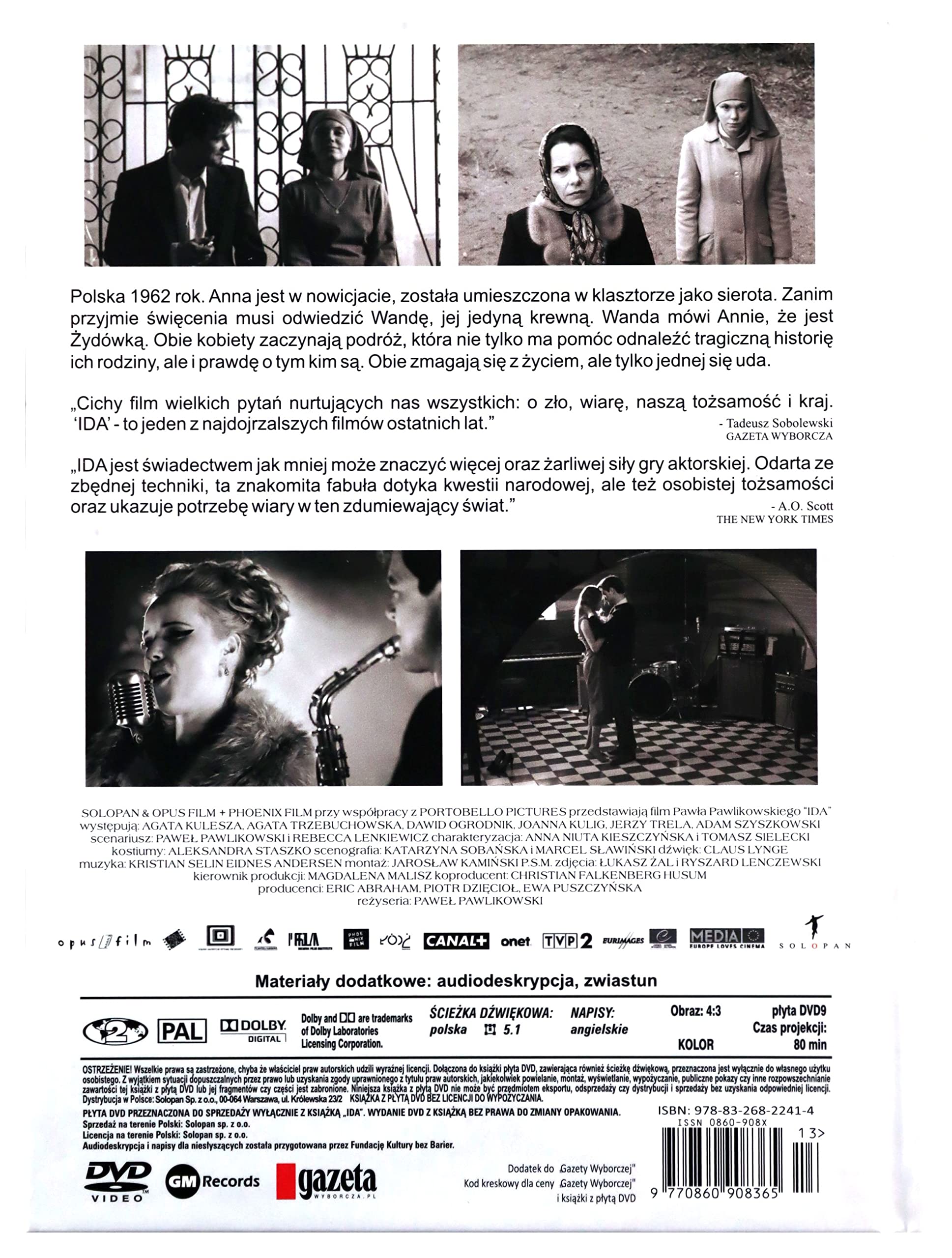
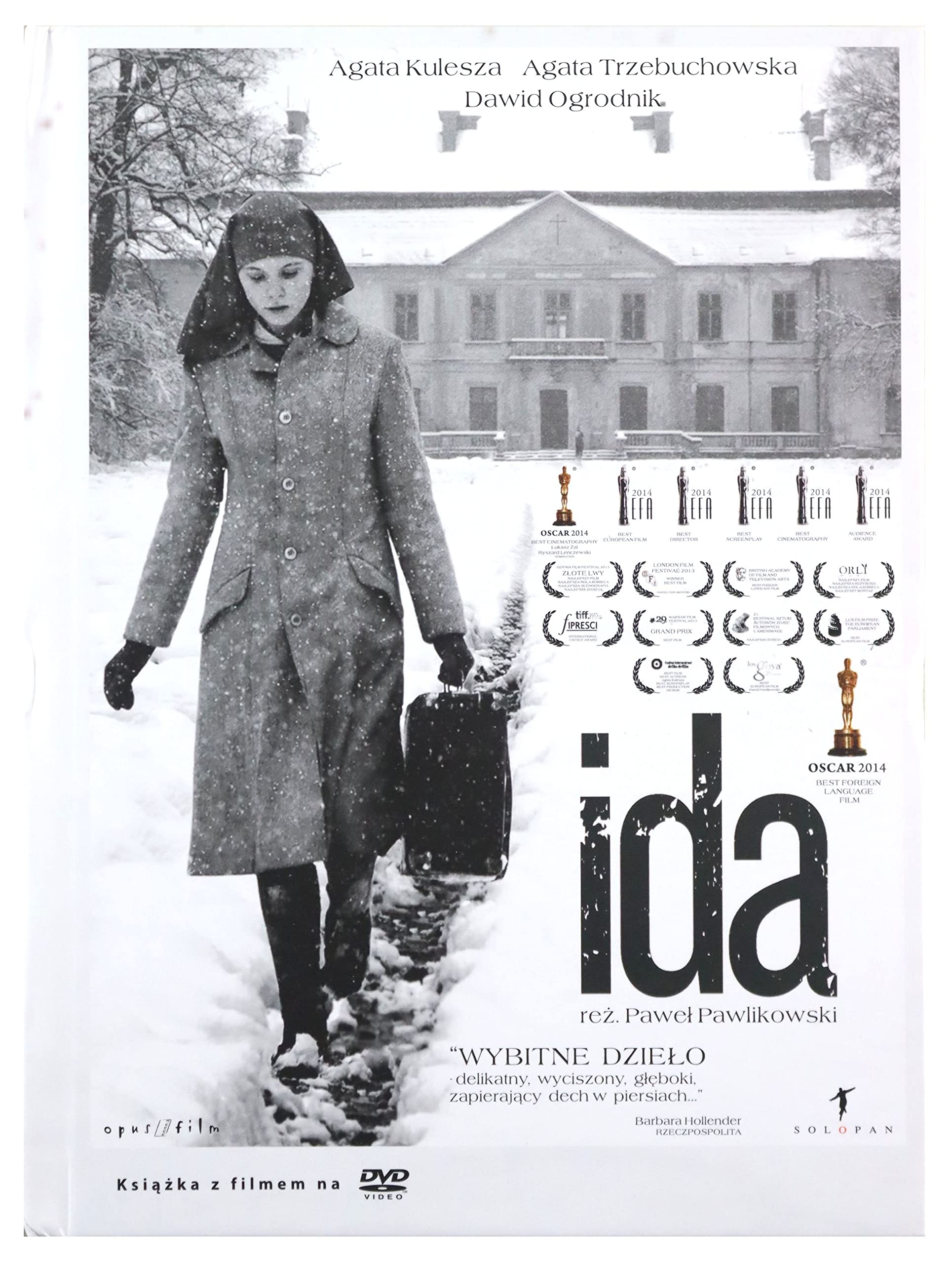
NOTICE: The disk has English subtitles. Poland 1962 Anna is a novice, an orphan brought up by nuns in the convent. She has to see Wanda, the only living relative, before she takes her vows. Wanda tells Anna that Anna is Jewish. ... See full summary ĹĽ Review: Orphan girl - No Germans appear in the film. They aren’t even talked about, as if their existence had no meaning, as if they were too worthless to think about and mention. But what they did during the war in Poland lingers, the people marked by it. Memories run deep and some wounds will not heal. Anna is a young woman in a convent in Lodz. She’s 19 or 20 and the year is 1961, so perhaps she was born in about 1941. She is chaste and devout, dedicated to God, hers a life of surrender and abstinence. She finds meaning and purpose in the Saviour. From the outside devotion can look like a life wasted. But it’s something lived on the inside where feelings and the spirit reside. Anna is at peace with her life. Or nearly so. She is to take her vows some time in the forthcoming weeks. It’s a big step because once taken they cannot be easily rescinded. The holy vows are a symbolic merging of one’s spirit with God’s. Anna is summonsed by the Mother Superior. Family should be notified before the sacred vows are taken. But Anna has no family. She was brought to the convent as an orphan when she was just a small child, perhaps only a year old. However, the Mother Superior says Anna has an aunt who is still living. The convent has made attempts to contact her, but in vain, their letters unanswered. However, a letter from the aunt has recently arrived. In it the aunt says she does not want to meet Anna. Anna has the address of her aunt. She must go to her before taking her vows. She rides in a tram through the city, her face seen through glass. Reflections on it move across her face: clouds, tree branches, the tops of buildings. She gazes through the window passively, stoically, tranquilly. The world around her is busy but she is quiet within herself, self-contained. She finds the flat of her Aunt Wanda, this person she has never met, the sister of her deceased mother. Wanda has her own life and is not pleased to see her niece. Anna reminds her of another time, a different life now gone. Just as well, as nothing can bring it back. It ended hopelessly, bitterly. Since then life has been a wilful act of forgetting the past. Wanda tells Anna quite matter-of-factly that she’s not Anna but Ida — Ida Lebenstein, a Jew, not the good Catholic Anna thinks she is. But Wanda doesn’t want to discuss details of it. Anna’s parents were murdered. The young son of Wanda as well. They died together. Anna was spared, given to a priest who passed her along to the sisters at the convent orphanage. Anna goes away after this cold reception. She will go to the bus station and take a bus to the village where she and her parents once lived. But before she departs the station Aunt Wanda appears. Out of remorse or pity Wanda has had a change of heart. She and Anna travel in Wanda’s old car to the village. Their detective work into the past begins there. Along the way they pick up a hitchhiker, a young musician named Lis. He is on his way to a nearby town to meet his band who will play for a dance in a local hotel. He plays the alto sax. Four others in the band are these: a guitarist, pianist, drummer and female singer. Lis and his music will have a profound effect on Anna she didn’t see coming. Lis is a lover of Coltrane and jazz. Jazz is the siren song of sin, music made through a sensual and sexual pact with the Devil. Its freedom invites chaos and anarchy; its temptations doom those who embrace it. This is the conservative view. But there’s another view, open and free form, jazz seen as redemption, an invitation to live, and to do it expressively, passionately. Jazz says it’s O.K. to sin, to give way to carnal desires. In fact, to not do it is to truly sin, abstinence a form of death in life. Unlike most humans, the jazzman is alive, deeply rooted in the moment. Like God, he is a creator, his music bringing life into the world. A conceit, surely, but one that feels true in the moment of rapture when the music becomes transcendent. Anna will be mesmerised by it and Lis. Aunt Wanda goes to the dance. It’s in a downstairs restaurant at the hotel where she and Anna are staying. She drinks, smokes, flirts, dances, kisses a stranger at the bar. She is what’s known as a loose woman. She was once respectable, whatever that means. She was a judge and public prosecutor who sent men to their deaths after the war. But now she looks back cynically at that time. Now she seeks oblivion in causal sex and stimulants, a haze of incoherence glossing over the ugliness of the world. The dichotomy is thus made explicit: Anna saint, Wanda sinner. Yet complexity of character forms the beauty of the film (or one of its beauties), not simplicity. On this journey of discovery both Anna and Wanda will change. The opening scenes of the film show Anna at the convent painting the face of Christ with a small brush. The Saviour is a plaster statue made by the nuns and he will be carried by them into the snowy courtyard of the convent and placed on a pedestal, not a cross. Like the Redeemer in Rio, he will stand tall and bless the world. Where does her artistic talent come from? It comes from her mother. Anna learns this from Wanda. Her mother once made a beautiful stained glass window for the cowshed on their farm. It served no reasonable purpose. The cows could not appreciate its beauty. But her sister, Anna’s mother, said it would make them happy whether they thought about it or not. Beauty is like that somehow. It stirs something inside that makes us notice the happy way the world can look. We needn’t think anything. Just feel. Were the cows sentient beings too? Did they feel something special? Anna’s mother thought they did. Christ’s face, beauty, faith, redemption. Somehow these are connected for Anna. Add to it jazz and sensuality. If she is to take her vows, they will come only after she explores more of herself and the nature of the world. Music for her will open that door. The film was shot in monochrome, not colour. Normally the world is like a rainbow because the colours in it blend together. Black-and-white is different, the edges sharp, the divide between each clean. It’s why black-and-white looks so stark. Everything is clear, stands out. It is chaste and austere too, the world drained of colour. No coincidence as well, perhaps, that nuns dress in black and white, life reduced to a raw simplicity where choices are easier to see and make. There is much on the journey of Anna and Wanda that can be described. But it’s better here to say less. The film is what matters, not a review of it. However, I will say it’s extraordinary. It has the look and feel of a classic. Think Bergman, Bresson, Dreyer. The film has won several awards, including an Academy Award, and was voted no. 55 on a list of the best films of the 21st century by 177 film critics around the world. At only 80 minutes it may feel too short, but through expert editing the film is dense with images, impressions, emotions. A mature work of art from a director (Pawel Pawlikowski) at the peak of his powers. Five stars is the desertcart limit, but in truth it deserves more. Review: Best Polish film for years - Probably the best new release of 2014, and the best Polish film I've seen for many years. Shot in the style of films made when it is set (the early 1960s), stunning monochrome and Academy ratio. It packs so much into 80 minutes: the aftermath of the holocaust, Polish-Jewish relations, Catholicism versus Communism, the personality clash between two very different women, one the aunt of the other, the nature of a religious vow. The acting is perfect, the cinematography is to die for, and it deservedly won Best Film award at the 2013 London festival (which is where I first saw it). Too much of the plot can't be revealed without giving away a "spoiler". The ending may be thought by some to be slightly ambiguous, but it is clear enough to me. I bought this Polish edition for a friend, but it has optional English subtitles. Highly recommended.
| ASIN | 8379891716 |
| Actors | Adam Szyszkowski, Agata Kulesza, Agata Trzebuchowska, Dawid Ogrodnik, Joanna Kulig |
| Aspect Ratio | 4:3 - 1.33:1 |
| Country of origin | Poland |
| Customer reviews | 4.4 4.4 out of 5 stars (708) |
| Director | Pawel Pawlikowski |
| Is discontinued by manufacturer | No |
| Language | Polish (Dolby Digital 5.1), Polish (Dolby Digital 5.1), Unqualified (Dolby Digital 5.1) |
| Media Format | DVD-Video, Import, PAL |
| Number of discs | 1 |
| Product Dimensions | 20 x 15 x 1 cm; 83.16 g |
| Run time | 80 minutes |
| Studio | Solopan |
| Subtitles: | English |
J**T
Orphan girl
No Germans appear in the film. They aren’t even talked about, as if their existence had no meaning, as if they were too worthless to think about and mention. But what they did during the war in Poland lingers, the people marked by it. Memories run deep and some wounds will not heal. Anna is a young woman in a convent in Lodz. She’s 19 or 20 and the year is 1961, so perhaps she was born in about 1941. She is chaste and devout, dedicated to God, hers a life of surrender and abstinence. She finds meaning and purpose in the Saviour. From the outside devotion can look like a life wasted. But it’s something lived on the inside where feelings and the spirit reside. Anna is at peace with her life. Or nearly so. She is to take her vows some time in the forthcoming weeks. It’s a big step because once taken they cannot be easily rescinded. The holy vows are a symbolic merging of one’s spirit with God’s. Anna is summonsed by the Mother Superior. Family should be notified before the sacred vows are taken. But Anna has no family. She was brought to the convent as an orphan when she was just a small child, perhaps only a year old. However, the Mother Superior says Anna has an aunt who is still living. The convent has made attempts to contact her, but in vain, their letters unanswered. However, a letter from the aunt has recently arrived. In it the aunt says she does not want to meet Anna. Anna has the address of her aunt. She must go to her before taking her vows. She rides in a tram through the city, her face seen through glass. Reflections on it move across her face: clouds, tree branches, the tops of buildings. She gazes through the window passively, stoically, tranquilly. The world around her is busy but she is quiet within herself, self-contained. She finds the flat of her Aunt Wanda, this person she has never met, the sister of her deceased mother. Wanda has her own life and is not pleased to see her niece. Anna reminds her of another time, a different life now gone. Just as well, as nothing can bring it back. It ended hopelessly, bitterly. Since then life has been a wilful act of forgetting the past. Wanda tells Anna quite matter-of-factly that she’s not Anna but Ida — Ida Lebenstein, a Jew, not the good Catholic Anna thinks she is. But Wanda doesn’t want to discuss details of it. Anna’s parents were murdered. The young son of Wanda as well. They died together. Anna was spared, given to a priest who passed her along to the sisters at the convent orphanage. Anna goes away after this cold reception. She will go to the bus station and take a bus to the village where she and her parents once lived. But before she departs the station Aunt Wanda appears. Out of remorse or pity Wanda has had a change of heart. She and Anna travel in Wanda’s old car to the village. Their detective work into the past begins there. Along the way they pick up a hitchhiker, a young musician named Lis. He is on his way to a nearby town to meet his band who will play for a dance in a local hotel. He plays the alto sax. Four others in the band are these: a guitarist, pianist, drummer and female singer. Lis and his music will have a profound effect on Anna she didn’t see coming. Lis is a lover of Coltrane and jazz. Jazz is the siren song of sin, music made through a sensual and sexual pact with the Devil. Its freedom invites chaos and anarchy; its temptations doom those who embrace it. This is the conservative view. But there’s another view, open and free form, jazz seen as redemption, an invitation to live, and to do it expressively, passionately. Jazz says it’s O.K. to sin, to give way to carnal desires. In fact, to not do it is to truly sin, abstinence a form of death in life. Unlike most humans, the jazzman is alive, deeply rooted in the moment. Like God, he is a creator, his music bringing life into the world. A conceit, surely, but one that feels true in the moment of rapture when the music becomes transcendent. Anna will be mesmerised by it and Lis. Aunt Wanda goes to the dance. It’s in a downstairs restaurant at the hotel where she and Anna are staying. She drinks, smokes, flirts, dances, kisses a stranger at the bar. She is what’s known as a loose woman. She was once respectable, whatever that means. She was a judge and public prosecutor who sent men to their deaths after the war. But now she looks back cynically at that time. Now she seeks oblivion in causal sex and stimulants, a haze of incoherence glossing over the ugliness of the world. The dichotomy is thus made explicit: Anna saint, Wanda sinner. Yet complexity of character forms the beauty of the film (or one of its beauties), not simplicity. On this journey of discovery both Anna and Wanda will change. The opening scenes of the film show Anna at the convent painting the face of Christ with a small brush. The Saviour is a plaster statue made by the nuns and he will be carried by them into the snowy courtyard of the convent and placed on a pedestal, not a cross. Like the Redeemer in Rio, he will stand tall and bless the world. Where does her artistic talent come from? It comes from her mother. Anna learns this from Wanda. Her mother once made a beautiful stained glass window for the cowshed on their farm. It served no reasonable purpose. The cows could not appreciate its beauty. But her sister, Anna’s mother, said it would make them happy whether they thought about it or not. Beauty is like that somehow. It stirs something inside that makes us notice the happy way the world can look. We needn’t think anything. Just feel. Were the cows sentient beings too? Did they feel something special? Anna’s mother thought they did. Christ’s face, beauty, faith, redemption. Somehow these are connected for Anna. Add to it jazz and sensuality. If she is to take her vows, they will come only after she explores more of herself and the nature of the world. Music for her will open that door. The film was shot in monochrome, not colour. Normally the world is like a rainbow because the colours in it blend together. Black-and-white is different, the edges sharp, the divide between each clean. It’s why black-and-white looks so stark. Everything is clear, stands out. It is chaste and austere too, the world drained of colour. No coincidence as well, perhaps, that nuns dress in black and white, life reduced to a raw simplicity where choices are easier to see and make. There is much on the journey of Anna and Wanda that can be described. But it’s better here to say less. The film is what matters, not a review of it. However, I will say it’s extraordinary. It has the look and feel of a classic. Think Bergman, Bresson, Dreyer. The film has won several awards, including an Academy Award, and was voted no. 55 on a list of the best films of the 21st century by 177 film critics around the world. At only 80 minutes it may feel too short, but through expert editing the film is dense with images, impressions, emotions. A mature work of art from a director (Pawel Pawlikowski) at the peak of his powers. Five stars is the Amazon limit, but in truth it deserves more.
A**N
Best Polish film for years
Probably the best new release of 2014, and the best Polish film I've seen for many years. Shot in the style of films made when it is set (the early 1960s), stunning monochrome and Academy ratio. It packs so much into 80 minutes: the aftermath of the holocaust, Polish-Jewish relations, Catholicism versus Communism, the personality clash between two very different women, one the aunt of the other, the nature of a religious vow. The acting is perfect, the cinematography is to die for, and it deservedly won Best Film award at the 2013 London festival (which is where I first saw it). Too much of the plot can't be revealed without giving away a "spoiler". The ending may be thought by some to be slightly ambiguous, but it is clear enough to me. I bought this Polish edition for a friend, but it has optional English subtitles. Highly recommended.
D**E
Different, slow-moving but compelling.
An unusual, wistful little film starkly shot in monochrome in which two very different women discover what happened to their Jewish relatives in Second World War Poland. Excellent performances from the two ladies as the indecisive young nun and her brittle, alcoholic aunt though a slightly unconvincing downbeat ending. I will say no more so as not to spoil the film for those who have not seen it .
G**W
A fine film with stunning photography, superb performances and superlative plot
A superb film. Excellent storyline, unfolding very subtly and presented with considerable cinematographic skill. Depicting a period of history, and the need for forgiveness in its aftermath, which I doubt we shall ever have the emotional capacity to achieve again. Beautiful performances, maintaining an air of mystery throughout. Don't be put off by the pedants who moan about the subtitles. That's only an issue for a few minutes and they could always watch this section twice with and without them. To the rest of us it's just a damned good film.
T**N
Difficult
I bought this DVD for a friend. It arrived safely and in excellent condition. The sub titles are not easy to turn on, but as many others have noted there is little dialogue anyway. It is best described as bleak but beautiful, giving much to think about once seen. For a real understanding of what the director was trying to do, Google his acceptance speech of the Oscar received for the film. Be warned that the accompanying booklet to this DVD has no English translation.
C**N
Soberbiamente fotografiada en un blanco y negro luminoso y crudo, cada instante es conmovedor y elegante.Cada encuadre es una lección de composición fotográfica.
J**L
I was spellbound when I first watched Ida, in my opinion, one of the best movies of the past 20 years. In 1960 Poland, 18 years old Anna an orphan and novice in a catholic convent is advised to visit her aunt, whom she had never met, before taking her vows. The aunt, Wanda, a former state prosecutor with blood on her hands, tells Anna that her real name is Ida, she is a Jew, and her parents and brother disappeared during the war. The two woman, the cynical, chain smoking, hard drinking Wanda, and the silent and innocent Ida, travel together in Wanda’s car to find out what happened to Ida’s parents and brother. They had been murdered and buried in the forest by the farmer who stole their land and baby Ida had been abandoned in a church. Ida and Wanda take the remains to rebury them in Lublin’s Jewish cemetery. At the end of their road trip together, each of the two women came to, Wanda face, and Ida find out, who she really is. This is not a simple contrast of guilt and innocence, darkness and light, but there are subtle nuances that make Ida a deeply moving story challenging the emotions and the imagination of the viewer. The movie was made by Polish born, British director Pawel Pawlikowski. The format of the black and white images and the use of a fixed camera render beautifully the atmosphere of 1960 Poland, with the very bleak landscape of the Polish farmlands, the dismal conditions of country villages, the more modern surroundings of small towns, and the hotels where people listen to jazz and foreign music expecting that happiness is within reach. These were changing times in a special place. Discovering this atmosphere filled me with nostalgia!
G**R
Que va-t-il advenir, de chair et d'esprit, de Ida, petite novice à la hiératique beauté lors de cette traversée du monde profane au coté de sa tante communiste aux mœurs légères, ancienne juge rouge, sur fond de pèlerinage propice à la déréliction? Voilà qui suscite l'attention (et la crainte?) dans ce récit d'un profond humanisme, saisissant de pudeur, de retenue et de sensibilité qui, sur fond de Pologne des années 60, jamais ne cherche à prouver ou imposer quoi que ce soit. Une réalisation dépouillée sans être austère, une époustouflante beauté formelle s'appuyant sur une technique cinématographique parfois audacieuse mais parfaitement maitrisée, une photographie d'une merveilleuse pureté, des dialogues incisifs, une admirable Agata Trzebuchowska qui n'est pas comédienne et ne veut pas le devenir. Dans la lignée de Ordet et Hadewijch, un film épiphanique. En bonus on trouve un making of (10') et surtout une très intéressante intervention (15') du réalisateur (qui s'exprime en français). Film noir et blanc-2013- Durée 75'- Tourné en 4/3- VO: polonais sous-titré en français- VF- Son 2.0 et 5.1 pour les 2 versions- Technique image et son irréprochable- Pas de livret.
S**S
Acquistato perchè mi incuriosiva, visto la prima volta mi piacque. Dalla seconda visione me ne sono innamorato. Molto bella la storia ma ciò che mi incanta è la fotografia. Girato in un fantastico bianco e nero non c'è un'inquadratura che non sia perfetta. Uno dei miei film preferiti che non mi stanco mai di vedere, davvero una gioia per gli occhi.
J**C
Director and co-writer Pawel Pawlikowski has created a powerful yet simple film about chaos in a young woman's life. It's communist Poland in the bleak 1960's and Anna's life is about to be shaken to the core. Anna is an orphan who was raised in a convent. Her faith is strong and she is soon to take her vows as a nun. Mother Superior directs Anna to meet a mysterious aunt that she did not know existed. The seemingly cold and uncaring aunt tells Anna a family secret that will change Anna's life forever. Eventually, the two embark on a journey to the village where Anna was born to learn the fate of her parents. Destiny and fate are about to collide and neither Anna nor Wanda will ever see life in the same way again. Amazing and astonishing are words to describe this wonderful film. Agata Trzebuchoswka (Ida) had never acted before and was discovered in a café. She portrays Ida with a fascinating devotion and sympathy. IDA is filmed in black and white which automatically sets a stark mood in the dismal days of communist Poland. The camera is motionless until the last few scenes and the movement jars us into reality. The family secret is so overwhelming that it will change Ida forever. IDA is slow moving and the dialogue is amazingly sparse. It's Ida's saucer-shaped eyes that fill the screen as we try to decipher what she is thinking. Her Aunt Wanda played by another actress named Agata (Agata Kulesza) is another character to study. She seems cold and heartless having abandoned her orphaned niece. IDA doles out bits and pieces of information in small parcels so we can try to understand people's actions, especially Wanda's. Nothing in life is ever clearly black or white. It can be painstakingly slow at times and in the tradition of European art films, many things are left for the viewer to interpret. What path will Ida take? Will the dark family secret consume her? It's an fascinating study watching Ida experience the world she has never seen cloistered in a convent. IDA is not for everyone but if you appreciate a high-quality, thought-provoking delicious art film, IDA will overwhelm your senses.
Trustpilot
5 days ago
2 months ago