
DOWNLOAD THE APP


Customer Services
Copyright © 2025 Desertcart Holdings Limited
DOWNLOAD THE APP
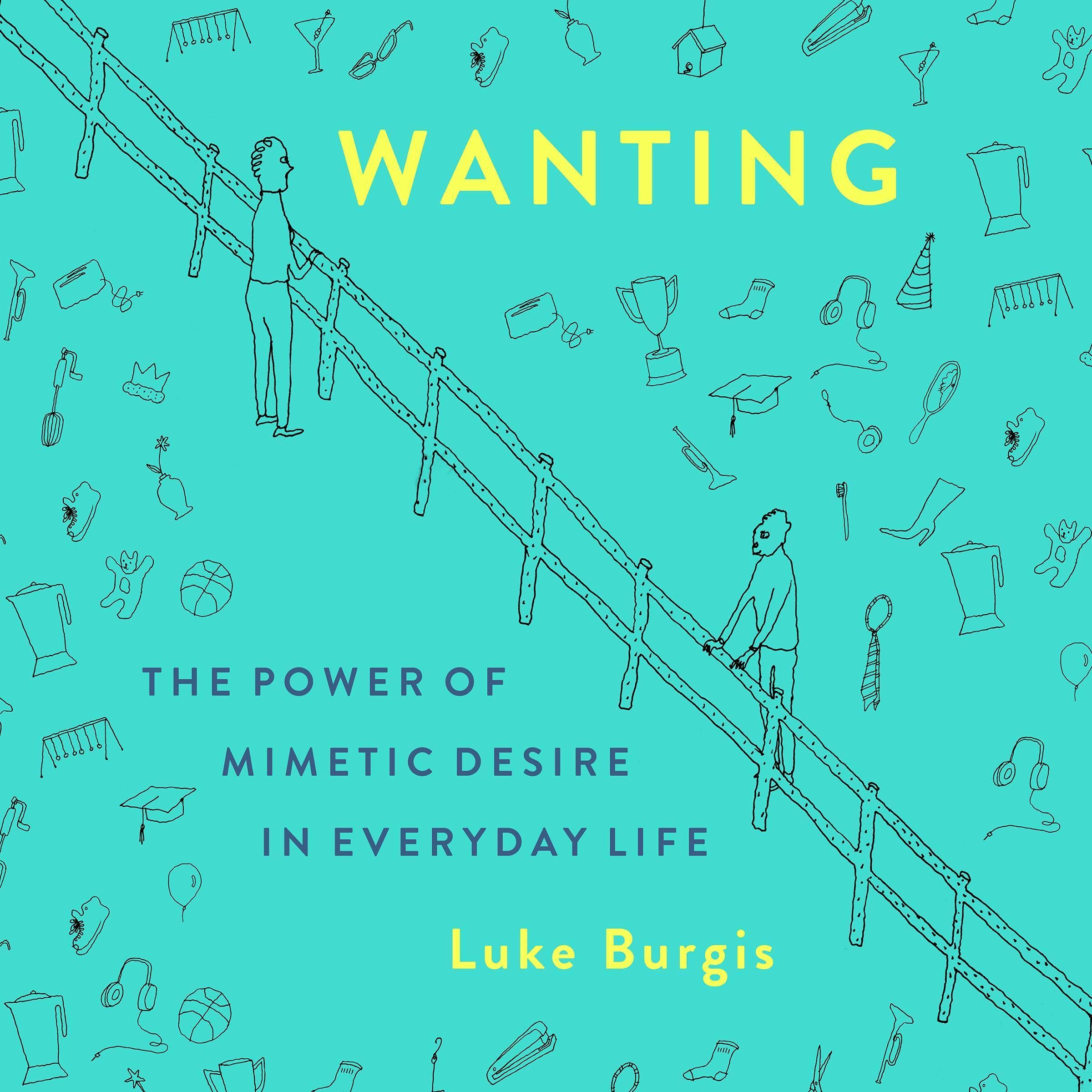
desertcart.com: Wanting: The Power of Mimetic Desire in Everyday Life (Audible Audio Edition): Luke Burgis, Luke Burgis, Sean Patrick Hopkins, Macmillan Audio: Audible Books & Originals Review: A Truly Spectacular Book! - This new book by Luke Burgis could actually change your life for the better. No hype. Just a rare, wonderful fact. In two days, it’s given me new ways of looking at pretty much everything and everyone around me, as well as myself. It may be my favorite book since a guy named Arrian jotted down what his Stoic teacher Epictetus was saying, or at least since an unknown poet wrote the story of Beowulf. The opening pages and chapters are a master class in grabbing and holding a reader’s attention for a topic whose importance may be in an inverse relation to its commonality of discussion in our time. We get to go with the author into PayPal founder Peter Thiel's home for a great conversation, hang out with Luke when the CEO of Zappos, Tony Hsieh, was trying to buy his own startup business, and then stand behind him as he opened the door to a hit man who came to visit about an unpaid bill. We learn about how Lamborghini was created and why the founder decided to walk away from the ultimate form of competition that he would surely have won. And why a Michelin 3 star chef, so ranked for 19 years in a row, asked to be left out of their famous guide. And on and on. There are so many great stories in this book that all shed light on our own lives in really new ways. They are such good stories, you have to run and tell someone right away. The topic of the book is the importance of two things in our lives: Desire and Imitation, or when the two are combined like they always are in our experience, Imitative Desire, or to use a word from the book’s subtitle, Mimetic Desire. From the moment we’re born, we come into the world as masterful imitators of others. It’s the way we get our bearings and begin to enter the adventures to come. And we also enter the world with needs that express themselves as yowling wants. But then the story takes a twist, and our wants begin to greatly outnumber our needs and play an even bigger role that those basic necessities in shaping our thoughts and actions and paths in the world. Socrates long ago urged us all to engage in self examination. The command was “Know Yourself!” We’ve long interpreted that as being about our own beliefs, emotions, and attitudes. Luke lets us know how importantly it’s about our desires—what they are, how we got them, and where they’re taking us. Ultimately, this is a book about inner metamorphosis, a sort of spiritual alchemy in transforming the desire engines of our lives into a more positive configuration and direction. It’s a book of great power and has been desperately needed in our time. Luke: What took you so long? Just kidding. No masterpiece happens quickly, and that’s as true of this book as it is of our best lived lives. I’ve been writing books of practical philosophy for about thirty years, and as I seek to be of help to people, I also try to read all the best current books that promise us new wisdom, great insights, and positive transformation. Most fall far, far short of their hype. Some are simply cons, bereft of usefulness and actually both misleading and dangerous. A few are very good, and rarely, now and then, one is actually great. This book occupies the outer reaches of that last category and is truly exceptional. Please do yourself and everyone around you a huge favor. Get this book and read it as soon as you can, and then read it again. It’s that good. Luke Burgis may have elevated himself with this book into the mantle of “The Most Interesting Man in the World.” I hope a Dos Equis Deal is in the works for him. But I'm equally sure he doesn't even want one, which is the real magic of transcendence to which he guides us in the end. Review: Amazing insight within, must read - I am very happy to have read this book. It has an amazing insight into what drives us to behave/want/do things that we do. It's a force of mimesis, seeking of models, of someone or something to copy and strive to be. Once you learn about it, you realize how much it has impacted your life, and how much it is all around us. It's a dangerous force where if left unrecognized, it can lead to personal and societal hardships. I would give this book five stars but it felt like some conclusions reached were a bit far fetched, or at least not tied up well together to make sense. It almost feels like it was rushed to get finished, or perhaps that's the result of the editorial process? Either way, I would recommend it to anyone to pick it up and explore what this book says.
T**S
A Truly Spectacular Book!
This new book by Luke Burgis could actually change your life for the better. No hype. Just a rare, wonderful fact. In two days, it’s given me new ways of looking at pretty much everything and everyone around me, as well as myself. It may be my favorite book since a guy named Arrian jotted down what his Stoic teacher Epictetus was saying, or at least since an unknown poet wrote the story of Beowulf. The opening pages and chapters are a master class in grabbing and holding a reader’s attention for a topic whose importance may be in an inverse relation to its commonality of discussion in our time. We get to go with the author into PayPal founder Peter Thiel's home for a great conversation, hang out with Luke when the CEO of Zappos, Tony Hsieh, was trying to buy his own startup business, and then stand behind him as he opened the door to a hit man who came to visit about an unpaid bill. We learn about how Lamborghini was created and why the founder decided to walk away from the ultimate form of competition that he would surely have won. And why a Michelin 3 star chef, so ranked for 19 years in a row, asked to be left out of their famous guide. And on and on. There are so many great stories in this book that all shed light on our own lives in really new ways. They are such good stories, you have to run and tell someone right away. The topic of the book is the importance of two things in our lives: Desire and Imitation, or when the two are combined like they always are in our experience, Imitative Desire, or to use a word from the book’s subtitle, Mimetic Desire. From the moment we’re born, we come into the world as masterful imitators of others. It’s the way we get our bearings and begin to enter the adventures to come. And we also enter the world with needs that express themselves as yowling wants. But then the story takes a twist, and our wants begin to greatly outnumber our needs and play an even bigger role that those basic necessities in shaping our thoughts and actions and paths in the world. Socrates long ago urged us all to engage in self examination. The command was “Know Yourself!” We’ve long interpreted that as being about our own beliefs, emotions, and attitudes. Luke lets us know how importantly it’s about our desires—what they are, how we got them, and where they’re taking us. Ultimately, this is a book about inner metamorphosis, a sort of spiritual alchemy in transforming the desire engines of our lives into a more positive configuration and direction. It’s a book of great power and has been desperately needed in our time. Luke: What took you so long? Just kidding. No masterpiece happens quickly, and that’s as true of this book as it is of our best lived lives. I’ve been writing books of practical philosophy for about thirty years, and as I seek to be of help to people, I also try to read all the best current books that promise us new wisdom, great insights, and positive transformation. Most fall far, far short of their hype. Some are simply cons, bereft of usefulness and actually both misleading and dangerous. A few are very good, and rarely, now and then, one is actually great. This book occupies the outer reaches of that last category and is truly exceptional. Please do yourself and everyone around you a huge favor. Get this book and read it as soon as you can, and then read it again. It’s that good. Luke Burgis may have elevated himself with this book into the mantle of “The Most Interesting Man in the World.” I hope a Dos Equis Deal is in the works for him. But I'm equally sure he doesn't even want one, which is the real magic of transcendence to which he guides us in the end.
K**R
Amazing insight within, must read
I am very happy to have read this book. It has an amazing insight into what drives us to behave/want/do things that we do. It's a force of mimesis, seeking of models, of someone or something to copy and strive to be. Once you learn about it, you realize how much it has impacted your life, and how much it is all around us. It's a dangerous force where if left unrecognized, it can lead to personal and societal hardships. I would give this book five stars but it felt like some conclusions reached were a bit far fetched, or at least not tied up well together to make sense. It almost feels like it was rushed to get finished, or perhaps that's the result of the editorial process? Either way, I would recommend it to anyone to pick it up and explore what this book says.
S**V
Fantastic Entry Point for Mimetic Theory
Unlike many pop psychology/business books Wanting starts at first principles and provides a useful and thoughtful background to the core insight central to the book—the Girardian theory of mimesis. I particularly enjoyed the introductory discussion of how children learn through the process of watching and copying as compared to animals where it is more often innate instinct and behavior I found it very useful in providing a foundation for the theory. When explaining these ideas to others I have returned often to that example as the bedrock for my explanation. Afterall, if one assumes this copying as a method for learning continues past childhood it is easy to see how somebody like Girard could reach many of the conclusions he does—although I am not sure that is exactly how he came to these conclusions, still you get the point. Luke Burgis also adds onto Girards theory and importantly differentiates himself from Thiel in a number of ways. I found this important as Thiel, who I greatly admire, is the most famous proponent of mimetic theory today and often the first source for which people encounter mimetic theory. People tend to interpret Thiels version of mimetic theory as "The Mimetic Theory". Burgis makes his own interpretation clear and provides an alternative view in a clean layout with interesting anecdotes. I will add that I found the categorization of thick and thin desires less useful than others may have but recognize they are a practical way of recognizing mimetic theory and implementing it within your own life. Overall it's a fun, quick read and an excellent introduction to a difficult philosophical idea which Burgis is clearly intimately familiar with. 5/5
M**G
I can't stop talking about these ideas even though I'm only a few chapters into the book.
S**E
If you celebrate Christmas, you probably remember the early days when you would ask Santa for the gifts you wanted. I remember writing letters to Santa, or leaving cookies by my futon as a little thank-you for his hard work. Every year, my wishes would change. But have you ever stopped to wonder why you wanted what you wanted? What shapes your desires? What hidden forces are at play when you long for certain things? That’s exactly what Wanting: The Power of Mimetic Desire in Everyday Life dives into. It explores the deeper reasons behind our desires and helps us understand not just what we want, but why we want it. ---------- ▶️ Who Should Read It? I would recommend “Wanting” to anyone interested in psychology, personal development, or social dynamics, as it provides valuable insights into how those around us shape our desires. It’s also great for readers who enjoy exploring philosophical concepts in a practical context, especially in relation to motivation and relationships. Also, those in leadership or marketing roles might find it particularly relevant for understanding consumer behavior and fostering authentic connections. ▶️ How the Book Changed Me ✅ Reinforcing Self-Awareness and Community: The book reinforced the importance of engaging with multiple communities and striving for an objective view of myself. It also offered thoughtful insights into mimetic desire — the idea that our desires are often shaped by the desires of others. This awareness has shifted how I approach my own wants, making me more mindful of where they originate and whether they reflect my true values or external influences. ✅ Encouraging Deeper Questions: The book gave me the courage to ask bigger, more profound questions about life. It reminded me that, although these questions can be challenging, they are ultimately more meaningful and fulfilling. This perspective has prompted me to reconsider how I want to live and to think more deeply about my choices and the direction I want my life to take. ✅ Embracing Life’s Complexities: On a personal level, the book humbled me as both a writer and an individual, teaching me to embrace the unexpected intersections of seemingly opposing forces. It deepened my understanding of how important, though challenging, it is to maintain a focus on facing reality, and made me realize the greatness in that approach. It became an opportunity to reflect on whether I’ve been too focused on shaping things neatly, or whether I’ve been truly present and open to life as it unfolds.
A**L
The best thing about this is book that i can read it more than one time and still find new insights hidden somewhere within it!! The author did good job communicating Rene Girard’s ideas.
P**A
Shows us what really matters in life (and why) and the real human nature with its nasty tendencies (and how to overcome them). Eye-opening, priceless, a must read!
E**A
Must read.the journey to the depths of desire in capitalism is profound and the crisis of imagination is palpable. We need new paradigms this book shows.
Trustpilot
2 months ago
3 weeks ago