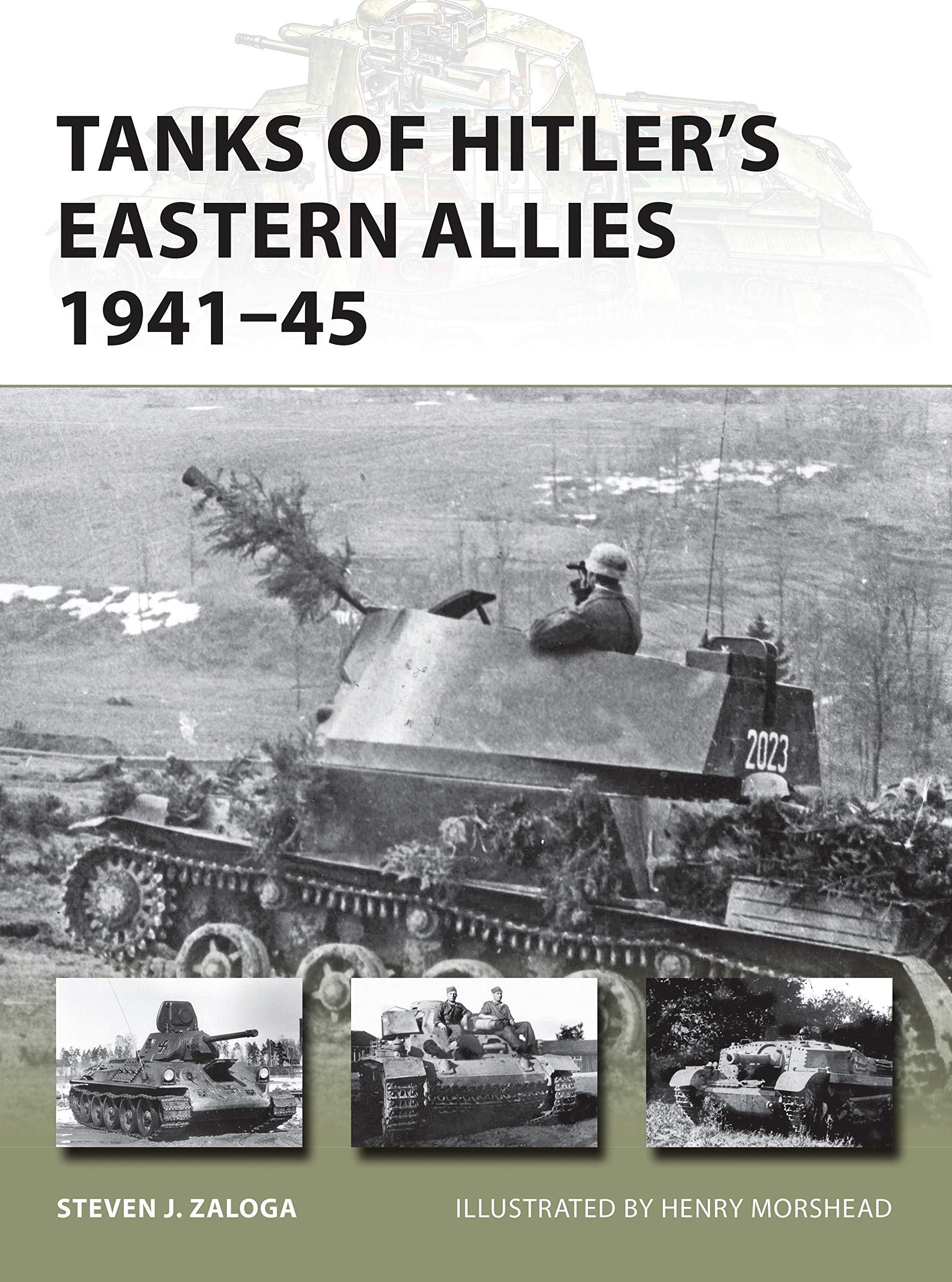
📖 Dive deep into the untold stories of WWII’s Eastern Allies!
Tanks of Hitler’s Eastern Allies 1941–45 by Steven J. Zaloga offers a meticulously researched and richly illustrated exploration of lesser-known WWII armored vehicles. With expert insights and high-quality presentation, this book is essential for military history buffs, modelers, and collectors seeking to expand their knowledge beyond the mainstream.

| Customer Reviews | 4.5 out of 5 stars 40 Reviews |
P**T
Gutes Buch für Militärfahrzeug-Interessierte !!!
Eine sehr gute Illustration über die Militärfahrzeuge der Verbündeten des Deutschen Reiches im 2. Weltkrieg. Für Interessierte und Modellbauer empfehlenswert!
D**S
Steve continues great work
Every book that Steven Zaloga writes is interesting and informative. I like his writing style as it is not dull and conveys the info about the subject with interest and knowledge. As this one covers a not so well know subject a great deal of the info was new to me, which made the purchase even more worthwhie.
M**U
les chars de l'axe
je remercie le vendeur pour son envoi et la qualité de ses services. félicitations également à monsieur Zaloga, qui reste l'un des meilleur connaisseur de l'arme blindé de la dernière guerre.
A**ー
触れられることの少ない第二次大戦のドイツ軍の東部戦線での同盟軍のAFV事情を紹介した本です。
第二次大戦大戦時のドイツの東部戦線の同盟軍であるイタリア、ハンガリー、ルーマニア、スロヴァキア、クロアチア、ブルガリア、フィンランド及びロシア人(バルカン半島に散在するロシア系住民で構成されパルチザン戦に従事した部隊とソ連軍人の捕虜で形成された反ソ連部隊)部隊の使用戦車の入手経緯とその運用歴について国別に解説したものです。 この中でソ連侵攻時に戦車を生産できたのはイタリアとハンガリー(他国で開発された車体にハンガリー独自の改造を加えた)だけで、その他の国は他国からの購入した戦車(フィンランドの様に冬戦争時に捕獲したソ連戦車)で殆どが豆戦車や軽戦車で形成されていました。ブルガリアとクロアチアはパルチザン戦に限定されていてソ連との戦いに投入されることは無かったものの、他の国は弱体な戦車勢力でソ連と戦い、やがてT-34、KV1等と戦いドイツに戦車の供給を要請するのですが良く解らないのがドイツの反応で、ルーマニアの38(t)戦車とスコダT-23戦車のルーマニアでの生産要請を拒否(後にはハンガリーからのⅣ号戦車のライセンス生産も高額なライセンス料を課して事実上拒否します)するばかりでなく、捕獲したソ連戦車も配分しないという態度で、スターリングラード戦でルーマニアやハンガリーが早々と壊滅したのはドイツの自業自得の様に感じます。枢軸軍の敗走が確実になってからは、ドイツもいくらか態度を改めた様ですが遅すぎです。 またハンガリーのニムロッド対空戦車が当初は対戦車自走砲を主任務に、対空は副次的なものと考えられていたのは面白いエピソードでした。 本文にはモノクロ写真(ハンガリーの長砲身75㎜砲を装備したトゥランⅢ、捕獲されハンガリー軍で使用されたM3ステュアート戦車、パンター戦車に似たTas戦車の計画4面図、ルノーR-35戦車にソ連の45㎜砲を装備したアップグレード型等珍しいものがある一方でハンガリーのCV33、CV35の写真が無いのは残念です)、1頁2台のカラーイラスト5頁(1頁はフィンランド軍のⅢ号突撃砲だけは4面図で、フィンランドのBT-42自走砲、ルーマニアのR-1軽戦車、イタリアのL6/40戦車)とルーマニアのR-2(ルーマニアで使用されたLT-35)の見開き2頁の内部透視図、トルディ戦車のインアクションイラスト(水彩画の様なタッチで好感が持てます)で視覚的に助けてくれます。 極表面的ですが余り扱われることの無い中東欧のドイツ同盟軍の戦車とその活動概要を知るにはお勧めできます。
W**2
Really needs to be longer, but outstanding nonetheless
"Tanks of Hitler's Eastern Allies", by Steven J. Zaloga and illustrated by Henry Morshead, is an overview of the tanks fielded by Germany's European allies on the Eastern Front during World War II. The author provides a short summary of each ally and the tanks they fielded, whether home-designed and built, purchased from other nations, improvised from captured weapons, or "gifted" them by the Germans. As usual, Mr Zaloga does a good job of packing as much detail into the book as the space constraints allow. Osprey Publishing's New Vanguard format for "weapons" is limited to 48 pages, and that really isn't long enough for this topic, in my opinion. (Heck, 48 pages would only be adequate for one country's armor, let alone eight.) This isn't the author's fault, of course, and he does a very good job of providing a relevant overview and offering a lot of detailed information in such a small package. However, this format is too small to allow the full depth that this book should have, and often doesn't allow for much in the way of technical discussions of some of the tanks fielded (Italy's, for example). That's not to say that this book is shallow or doesn't give relevant, insightful analysis. It's clear from reading the book, for example, that had Germany provided technical assistance and allowed her allies the opportunity to purchase or build licensed German tanks, these allies would have been much more effective in combat. Instead the Germans let their allies languish with obsolete equipment and get annihilated by the Soviets. And if you're a modeler, there are many good pictures and illustrations of many of the various tank and tank destroyers fielded. I was torn as to what rating to give the book. Mr Zaloga's strong writing and analysis points to five stars (which to me is a "great" rating), while the sparse page count (that of necessity led to the cutting out a lot of information) points toward four stars (which is still a "good" rating). But given how little there is in English about this subject, this book helps fill a large gap, so I'm going with five stars; if you're a WW II grognard, your library isn't complete without it.
Trustpilot
2 days ago
1 month ago