We remain fully operational. Our teams are working around the clock to ensure your deliveries continue safely.

DOWNLOAD THE APP


Customer Services
Copyright © 2025 Desertcart Holdings Limited
DOWNLOAD THE APP
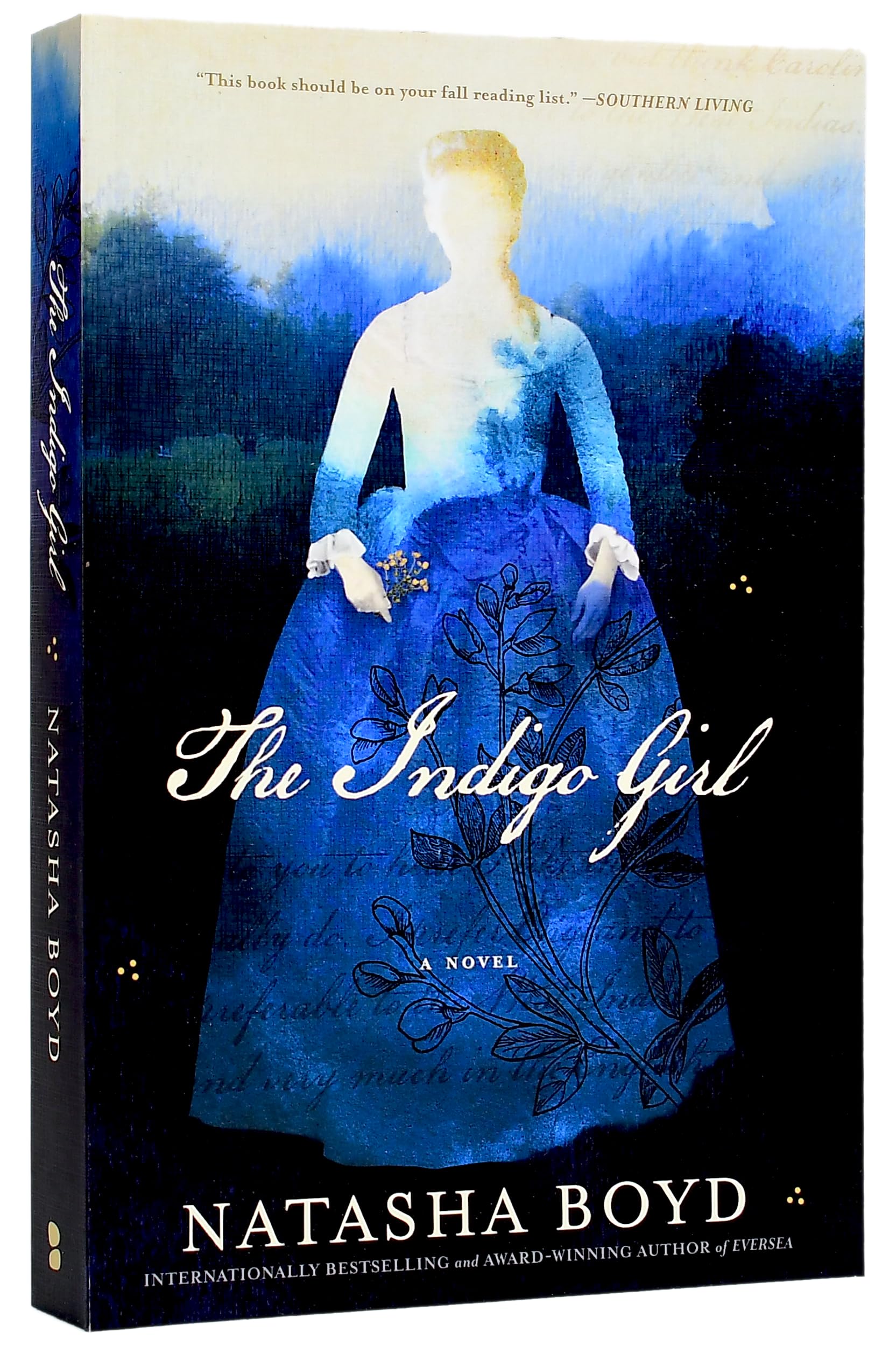
desertcart.com: The Indigo Girl: A Novel: 9781538552926: Natasha Boyd: Books Review: true story about a fascinating Colonial woman - This book is a novel, but most of the characters and events in it are real. Its heroine is Eliza Lucas, who, at age 16, takes over the management of her family’s plantations in South Carolina for several years while her father is away. She finds that a much more congenial task than looking for a suitable husband, as her mother thinks she ought to be doing. Seeking a way to make the barely-solvent plantations more profitable, she remembers indigo, a dark blue dye made from plants, which she saw in the West Indies, where she grew up. Ben, her childhood friend, knew all about the more-art-than-science process of making indigo… but Ben is black, and she has no idea where he is now—or who might own him. Ahead of her time, Eliza strongly dislikes the idea of slavery and sees the plantation slaves she is closest to as friends and coworkers rather than property. The book portrays her struggles, not only to find ways to raise and process indigo, but to work around the prevailing attitudes toward women and blacks that hamper her and endanger her friends. In all this she has one staunch ally: Charles Pinckney, a friend of her parents. Since any lookup of Eliza’s story will reveal that her last name eventually became Pinckney, it’s easy to see where that relationship is headed, but watching it get there is very enjoyable. Boyd’s writing is excellent. She made me really like Eliza and strongly identify with her, and her attempts to launch her indigo crop—which later became vital to her whole colony—were quite suspenseful. This book would work well as a young adult novel, with a main character who is likely to be an inspiration to teenage girls, but I’d recommend it to anyone who enjoys unusual sidelights on history and stories about strong women who overcome obstacles. Review: fun. a good read. Historical Fiction - Read for a bookclub. At first I thought, oh no, another boring book about a female in the 1700’s who thinks marriage would be awful and it is so unfair that her younger brother is more important to the family and society simply because he is male. I felt like the author was throwing in some flowery prose between the same old, same old tiring thoughts or words of main character, Eliza, bemoaning her station in life. (Do authors repeat the same thing over and over because they think their readers are too stupid to remember they have already read it before, more than once?) But I’m happy that the story picked up and Eliza’s disdain was shown in action as well as her intelligence, her kindness, her industry, etc. The real, historical, Eliza, fortunately left letters and other writings so the author was able to craft her character with some depth. She defied some conventions but it was fun to see that she also enjoyed pretty dresses, fancy balls, letter writing, prayers, and friendships with other women. Natasha Boyd was able to write an interesting tale of history I had never heard of before; and without foul language or sex scenes. (Eliza does have an awakening physical attraction to men and musings about sexual relations.) However, a caution - this takes place in South Carolina in the 1700s and so includes slavery. There is implied violence and rape though not explicit descriptions.


| Best Sellers Rank | #16,745 in Books ( See Top 100 in Books ) #41 in Black & African American Historical Fiction (Books) #44 in Biographical Historical Fiction #840 in Women's Domestic Life Fiction |
| Customer Reviews | 4.6 out of 5 stars 20,956 Reviews |
L**)
true story about a fascinating Colonial woman
This book is a novel, but most of the characters and events in it are real. Its heroine is Eliza Lucas, who, at age 16, takes over the management of her family’s plantations in South Carolina for several years while her father is away. She finds that a much more congenial task than looking for a suitable husband, as her mother thinks she ought to be doing. Seeking a way to make the barely-solvent plantations more profitable, she remembers indigo, a dark blue dye made from plants, which she saw in the West Indies, where she grew up. Ben, her childhood friend, knew all about the more-art-than-science process of making indigo… but Ben is black, and she has no idea where he is now—or who might own him. Ahead of her time, Eliza strongly dislikes the idea of slavery and sees the plantation slaves she is closest to as friends and coworkers rather than property. The book portrays her struggles, not only to find ways to raise and process indigo, but to work around the prevailing attitudes toward women and blacks that hamper her and endanger her friends. In all this she has one staunch ally: Charles Pinckney, a friend of her parents. Since any lookup of Eliza’s story will reveal that her last name eventually became Pinckney, it’s easy to see where that relationship is headed, but watching it get there is very enjoyable. Boyd’s writing is excellent. She made me really like Eliza and strongly identify with her, and her attempts to launch her indigo crop—which later became vital to her whole colony—were quite suspenseful. This book would work well as a young adult novel, with a main character who is likely to be an inspiration to teenage girls, but I’d recommend it to anyone who enjoys unusual sidelights on history and stories about strong women who overcome obstacles.
E**N
fun. a good read. Historical Fiction
Read for a bookclub. At first I thought, oh no, another boring book about a female in the 1700’s who thinks marriage would be awful and it is so unfair that her younger brother is more important to the family and society simply because he is male. I felt like the author was throwing in some flowery prose between the same old, same old tiring thoughts or words of main character, Eliza, bemoaning her station in life. (Do authors repeat the same thing over and over because they think their readers are too stupid to remember they have already read it before, more than once?) But I’m happy that the story picked up and Eliza’s disdain was shown in action as well as her intelligence, her kindness, her industry, etc. The real, historical, Eliza, fortunately left letters and other writings so the author was able to craft her character with some depth. She defied some conventions but it was fun to see that she also enjoyed pretty dresses, fancy balls, letter writing, prayers, and friendships with other women. Natasha Boyd was able to write an interesting tale of history I had never heard of before; and without foul language or sex scenes. (Eliza does have an awakening physical attraction to men and musings about sexual relations.) However, a caution - this takes place in South Carolina in the 1700s and so includes slavery. There is implied violence and rape though not explicit descriptions.
S**H
The Indigo Girl, the overwhelmingly beautiful story of a capable, young colonial woman, by Natasha Boyd.
I began this book knowing very little about Eliza Lucas Pinckney and finished it with a new female historical hero. While The Indigo Girl is historical fiction, it is a book that is based on a very real woman who left an indelible legacy in American history. Eliza Lucas took over running her father's plantations, at the age of sixteen and at a time when it was unheard of--in fact "indecent"--for a young woman to even have such aspirations, and realized that it was necessary for her to make a large profit in order to keep her family's business afloat. She decided to take a chance, one that many told her she could not succeed at, and planted indigo. What follows is a story of strength, compassion, and a commitment to bettering the circumstances and living standards of not only Eliza's life, but that of the slaves on her father's plantations, as well. Eliza agreed to teach the slaves and their children to read, in return for their shared knowledge in indigo farming and processing. After some poor outcomes, she eventually became successful in developing indigo as one of the most important cash crops of Colonial South Carolina. The accomplishments of may great women in history often become eclipsed by their male counterparts--as was the case with Eliza Lucas Pinckney. Although it was obviously very well-researched, the addition of fictional characterization, within The Indigo Girl, is necessary and enjoyable. I loved the characters (even the ones I "loved to hate") and the relationships between them and felt that Ms. Boyd's talent for storytelling and creating believable characters and dialogue made Eliza's history come alive. This is an overwhelmingly beautiful story and I was left engulfed in emotions, at the end.
G**L
A GEM of a book!
It is the mid 1700’s, closer to the American Revolution than the American Civil War. Sixteen-year-old Eliza Lucas has been set a daunting task. While seeking to advance his military commission in Antigua, her father wants her to take charge of the business dealings of their three plantations in South Carolina. This will involve supervising planting, harvesting, selling, bartering with buyers, managing multiple accounts, sparring with violent overseers, and dealing with slaves and their internal dynamics and hierarchy. Her mother, on the other hand, has only one goal for Eliza–find a husband. Colonel Lucas has every reason to feel confident in his daughter, but no one can predict the amount of obstacles Eliza will encounter, some of which her father creates. An unmarried teenage girl who cannot vote or own land holds little sway in the business world. Only the most intelligent, respectful, progressive individuals will see past her age, gender and marital status. They are few and far between. With rice being the main cash crop of the region, Eliza sets a new goal. Indigo. It is a revolutionary idea, one that requires ideal conditions and knowledge of the plants and how to transform them into marketable dye cakes. Success eludes her again and again. But never tell a smart, determined woman that something cannot be accomplished. That will only kindle the fire within her. This is a true story, which makes it even more remarkable, and perfect for March–Women’s History Month. The real Eliza left behind writings which were, aptly, passed from mother to daughter for generations. Details lost to time are woven in elegantly by the author. The story is inspiring and the writing is marvelous. Very highly recommended and a terrific read for book clubs.
J**Y
Compelling and Engaging -- a Great Read!
This book is an excellent read. It not only offers details about life in the New World (South Carolina, to be specific) but it gives us an intimate glimpse into what life was like on plantations in the mid-1700s -- the good and the bad. And it does this from the perspective of a 16-year-old girl, Eliza Lucas, who is left to run the Lucas lands when her father abandons the family to fulfill his dream of being an officer in the military. We see the ups and downs, the highs and lows, of plantation life from not just Eliza's perspective but also from that of her most loyal slaves. Eliza is an incredible young woman -- so smart and courageous. Unlike plantation owners she is in contact with, she treats her slaves kindly and even breaks the law by teaching them how to read. Her humanity is commendable. And, despite her father continually mortgaging the family lands, she soldiers on bravely. For example, she realizes early on about the importance of developing indigo dye. Through several trials and errors, she manages to become the state's first and most successful indigo dye maker. She experiences unrequited love, treacherous behavior, heartbreak, loss, and happiness. And through it all, she maintains her spirit and dignity. Oh, and Eliza Lucas is real. Her two sons were more famous than her but people in South Carolina know that without Eliza, her state would likely have been lost. I recommend this book highly.
M**S
Good Book
I am glad the story was told of a strong woman who had compassion. I recommend the read. Really a 4.5 book.
D**S
Wonderful Read
The Indigo Girl is one of the best Historical Fiction books I have read. It is extremely well researched and equally as well written. Eliza Lucas was an amazing woman, and her legacy and impact on South Carolina and our young country is profound. I highly recommend this book!
C**L
The compelling story of Eliza Lucas Pinckney
Fortunately, Eliza Lucas’ father had seen to her education, for, in 1738, he left his plantation and two other properties to her oversight while he returned to his military career in Antigua. Her two brothers were still being educated in England, while Eliza, her mother, and her young sister, Polly, were left in Carolina. Independent and strong-willed, Eliza did not look forward to being betrothed to someone she hadn’t chosen, so she expected to spend her life as a spinster. The only men for whom she felt any attachment were unavailable: her black friend from childhood, Ben, and Charles Pinckney, the husband of her friend. She spurned the only offers she received and her relationship with her slaves made her a pariah to many in the area’s social groups. Trying to keep her father’s holdings afloat after he had mortgaged them and trying to educate both Polly and some of the slaves took all of her time. But she believed if she could grow indigo as she had seen in Antigua, she could make a profit that would turn her father’s finances around. Based on historical documents, including Eliza’s own letters, this book of historical fiction is full of the drama of living in the colonies at this point in time. Written from Eliza’s viewpoint, it is a moving account of a strong young woman and her singular effect on our nation’s history.
Trustpilot
3 weeks ago
3 weeks ago