We remain fully operational. Our teams are working around the clock to ensure your deliveries continue safely.

DOWNLOAD THE APP


Customer Services
Copyright © 2025 Desertcart Holdings Limited
DOWNLOAD THE APP
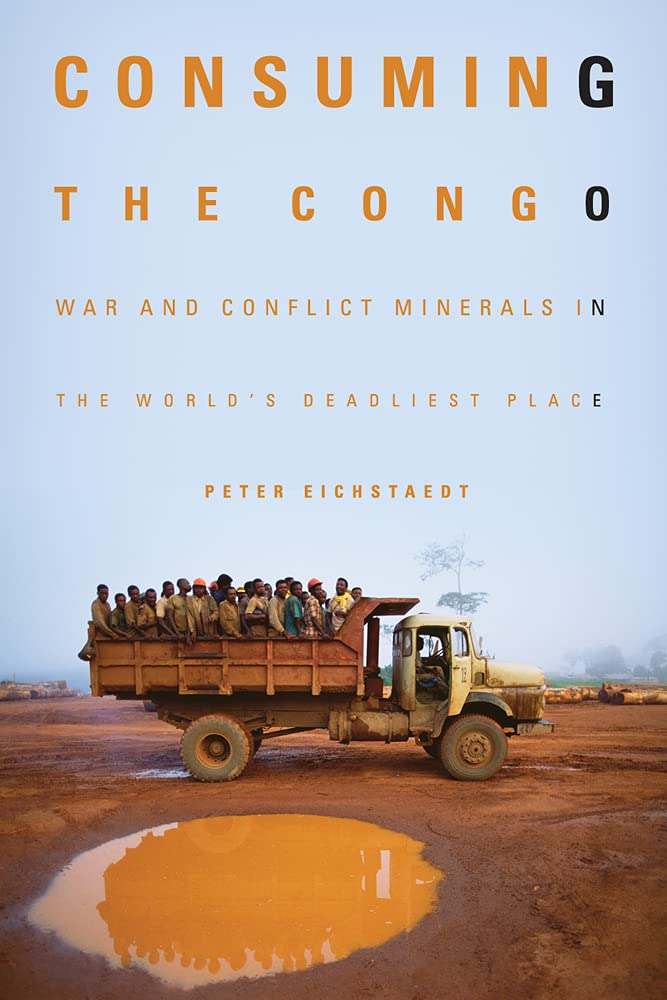
Consuming the Congo: War and Conflict Minerals in the World's Deadliest Place [Eichstaedt, Peter] on desertcart.com. *FREE* shipping on qualifying offers. Consuming the Congo: War and Conflict Minerals in the World's Deadliest Place Review: The root causes of tensions in East Congo - Excellent review of the Hutu/Tutsi tensions imported to Rwanda and now the Eastern DRC as well as the political alignments that have created the current chaos in the DRC. Great laydown of the causes and players from Paul Kagame (not the rescuer you think he is) to Joseph Kony (read the "Wizard of the Nile"). Also shows just how the competition for resources can destabilize a weak state. Review: Very detailed. Almost to the point where I had ... - Very detailed. Almost to the point where I had to flip back and forth sometimes to make sure I was making sense of the text. I will day this book seems to be very well researched with the author spending a lot of time on the ground In a scary place.
| ASIN | 1613736657 |
| Best Sellers Rank | #3,515,189 in Books ( See Top 100 in Books ) #354 in Central Africa History #1,404 in African Politics #1,833 in Globalization & Politics |
| Customer Reviews | 4.0 4.0 out of 5 stars (20) |
| Dimensions | 6 x 0.58 x 9 inches |
| Edition | Reprint |
| ISBN-10 | 9781613736654 |
| ISBN-13 | 978-1613736654 |
| Item Weight | 1.36 pounds |
| Language | English |
| Print length | 256 pages |
| Publication date | October 1, 2016 |
| Publisher | Chicago Review Press |
G**N
The root causes of tensions in East Congo
Excellent review of the Hutu/Tutsi tensions imported to Rwanda and now the Eastern DRC as well as the political alignments that have created the current chaos in the DRC. Great laydown of the causes and players from Paul Kagame (not the rescuer you think he is) to Joseph Kony (read the "Wizard of the Nile"). Also shows just how the competition for resources can destabilize a weak state.
T**Z
Very detailed. Almost to the point where I had ...
Very detailed. Almost to the point where I had to flip back and forth sometimes to make sure I was making sense of the text. I will day this book seems to be very well researched with the author spending a lot of time on the ground In a scary place.
D**Y
The book has some interesting information and interviews, but ...
The book has some interesting information and interviews, but the section about the Sudan just does not make sense in a book about the Congo.
L**W
A Continuing Tragedy: the Eastern Congo
The author, Peter Eichstaedt is a writer and editor who has worked and traveled in Africa. Here he writes of the eastern Congo, a region being destroyed by an entrenched war the scale of which exceeds any previous conflict by any measure. The book's chapters are each like their own essay on the various topics such as mining, armies, individual locations, the effects of war on people, the rape epidemic, the minerals themselves, reform proposals and others. There are descriptions of mines, a buying cooperative, a refugee camp, a rape victim's clinic, a trip to Sudan and more. Some of the story is told through interviews. A wide range of people are interviewed, such as villagers, miners, a Mai-Mai militia commander, a metals middleman (comptoir), women's rape counselors and a victim, refugees, a reform advocate and politicians. There are discussions of the wars' effects on the civilians (worn out), agriculture (disappearing with some exceptions) and wildlife (rapidly disappearing). There are recurrent themes. The vast mineral wealth is not trickling down to the people. The government is too weak to protect the people and its own soldiers, because they are not paid, find ways to make a living off civilians. The fighting is over the wealth and who runs the mines, but ethnic hatred is a factor as there is a lot of senseless violence. Reformers propose systems to identify "conflict minerals" will deter buyers. Critics of the system say that European buyers will shun these minerals, but others will not. Critics are also skeptical that those who tag these minerals will not be honest. There are excellent photos and a good index. The last chapter offers mixed hope for measures that may stem the trade of "conflict metals".
C**T
the author got it all wrong!
The book starts with the Hema-Lendu conflict that was just a short time conflict instigated by Rwandan and Ugandan to give Congolese war an ethnical/tribal aspect. The author talks about Sudanese conflict that has nothing in common with war/occupation of the D.R.Congo by his neighbors. The author does his best to clean Rwandan, Ugandan and Burundian armies as well as corporations involved in looting, killings and occupation taking place in the D.R.Congo. I wonder who funded the author's trips to D.R.Congo and this book. I won't be surprised if I hear that it's one of corporations involved in the destruction of the D.R.Congo. I am shocked by the way the author condemns activists and other advocacy groups who do their best to help end the occupation of the D.R.Congo by his neighbors as well as the looting of his minerals by these countries and foreign corporations. I can't recommend this book to anyone because it misleads about the reality of the D.R.Congo.
K**A
Naja ich hatte mir noch mehr Infos zu den Kriegsursachen und der Rolle internationaler Konzerne im Kongo gewünscht, davon gibt es was, aber nur wenig. Eher eine Reportage, und die hätte man auch interessanter schreiben können. Und was sollen überhauupt die Kapitel über den Sudan? Ohne, daß irgendein Bezug zum Kongo hergestellt wird (was ja durchaus möglich wäre) Insgesamt höchstens mittel.
F**A
Nice book, nothing to say about the condition.
D**N
Bon produit
Trustpilot
2 days ago
1 week ago