Buy anything from 5,000+ international stores. One checkout price. No surprise fees. Join 2M+ shoppers on Desertcart.
Desertcart purchases this item on your behalf and handles shipping, customs, and support to France.
🌐 Elevate Your Home's Comfort with Smart Connectivity!
The Fast-STAT Common Maker is a cutting-edge device designed to enhance your Wi-Fi thermostat experience. It provides a 'C' connection for powered thermostats, ensuring seamless integration and control. With a range of up to 300 ft. and no need for batteries, this device is perfect for modern HVAC upgrades. Compatible with various models, it empowers you to manage your home's climate effortlessly through an app.
| ASIN | B07G2NGFKH |
| Additional Features | Adds Common Connection 'C' for Power Source |
| Backlight | No |
| Brand | Nordic Technology Ltd. |
| Brand Name | Nordic Technology Ltd. |
| Color | Black, White |
| Connectivity Protocol | Wi-Fi |
| Connectivity Technology | Wi-Fi |
| Control Method | App |
| Controller Type | Home Automation Wi-Fi |
| Customer Reviews | 4.3 out of 5 stars 206 Reviews |
| Display Type | digital |
| Included Components | Common Wiring, Thermostat |
| Item Weight | 10 Ounces |
| Manufacturer | Nordic Technology Ltd. |
| Manufacturer Part Number | COMMONMAKER |
| Material Type | Alloy Steel, Aluminum, Metal |
| Model Number | COMMONMAKER |
| Mounting Type | Wall Mount |
| Power Source | Hardwired 24 Volts |
| Smart Home Compatibility | Smart Home Compatible |
| Special Feature | Adds Common Connection 'C' for Power Source |
| Specific Uses For Product | HVAC Control Thermostat Upgrades and Additions |
| Temperature Control Type | Remote |
| Unit Count | 1.0 Count |
| Voltage | 24 Volts |
L**Y
Easy installation and works great.
M**.
Easy to install and GREAT CUSTOMER SUPPORT. Even a novice can do this.
I upgraded two older digital thermostats to smart units. Unfortunately when I started the project, I didn't realize they needed a "C" wire. My set-up had only two wires. My first thought was to pull new wires, but someone advised me against this (told me I should have someone experienced do it as the wires traverse studs). After reading on-line, I learned about these gizmos and decided to give them a try. Prior to buying, I actually called their customer support and asked questions, as I've not done much electrical work in the past. The support person was awesome: patiently explaining how to do this and made me feel confident I could do this. I also learned that I needed to order a power supply. So once I sat down to do the job, I found I didn't really understand the diagrams (and deciding which diagram I needed to follow). So I called customer support again. A different person asked me to send him pictures of how my furnace is wired. He quickly figured out what I needed to do and explained it to me (again). He said to call back if I ran into problems. While I was a little concerned when I cut the wires running from upstairs to the basement, the wiring task wasn't too hard. There's actually two units involved. One went upstairs behind the thermostat. Connecting that was easy. The second unit, which is what was featured in the pictures, was also easy to wire up. Even adding in a power supply wasn't hard. The thermostat booted up just fine the first time. Oh, and think about how you will provide electricity to the power supply. I had to get a power strip to run from the outlet to where I put the connections.
E**R
It Works! Kinda spendy though
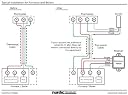
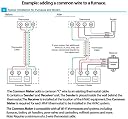
Finding a solution to install my Ecobee thermostat was either this thing, or pull another wire through the walls.. Not an easy task, and likely expensive. We’re at their mercy if you chose the former. I guess they should be rewarded for their engineering, but value for $$ is maybe 2 Stars, PARTICULARLY since the cheapskates don’t include the minimum of 2 wire nuts you’ll need in a typical installation. The actual wiring was very simple in my situation. I’m not sure why, but the instructions don’t say, “Splice the Purple wire to the White wire.” Looking at the wiring diagram SHOWS the connection, but they never actually use the words. There may be other variations, but the extensive diagrams could easily state that, (and provide the wire nuts). Hopefully I’ll never know that there’s too much heat generated by the sender, (or that it will ever happen), since it is now dangling in the bowels of my wall. Bottom line: It works!
P**.
Works perfectly. Super happy with these!
I now have 3 of these. All work perfectly. My house is 100 years old and has a newer part that was added about 20 years ago but none of my thermostats have more than 3-wire cables running to them, and there is no feasible way to run new wiring. I have Nest thermostats and I'm using remote sensors because my main heat and air conditioning thermostats all were put in useless locations. Without the Common Maker, my Nests were too often dropping off the network due to low battery, and also apparently not learning the run-up predictions well because of constant bad data. Now that they're powered all the time, they finally control the temps super well. Two common makers are for air conditioning thermostats that are on the second floors but the AC goes to 3 floors, and one controls old hot water radiators on 2 floors but is in a breezy front hall. All thermo's are staying connected with their remote sensors, and maintaining the temps well. You do need to drill a big 3/4" hole or larger into your wall to push in the "sender" unit. The larger the better if you want to get the thing out in the future. Obviously, you'll want to place that behind the thermostat, but even with a relatively small Nest there is plenty of space to hide the hole, still having room to shift the Nest up or down to drive the screws into a wood lathe if your wall's difficult like that. The instructions are very clear. I do have an engineering degree but I think they should be pretty clear enough for anyone willing to do a little web research if you need help figuring out which wires do what in your own heating or cooling system.
J**G
Recommended by EcoBee
Coming from a pre-Google Nest but wanted a smart thermostat with HomeKit compatibility. Homebridge support was sketchy and only worked if you didn't convert your account over to a Google Home account, which they are going to eventually force everyone to do. So I picked up two EcoBees. The Nest worked fine with my two wire system, but the EcoBee requires a C wire or 24 VAC source. After checking all my options and attempting to re-fish a new line to the thermostat location I decided going with the C-maker would be the least hassle. I took advantage of the purchase to redo the boiler side wiring to clean it up and label everything. The boiler side piece has a fairly big rat's nest of wire to sort out, especially if you have multiple zones, but if you download the additional wiring diagrams from their web site you should be able to compare the existing wiring to what is needed for the C-maker. It would have been nice to have a terminal strip on the boiler side module to allow for neater installations. Overall, setup went fine and I'm not seeing any problems with the operation of the thermostats. If you are installing a smart thermostat yourself and want an inexpensive solution, consider a plug-in 24 VAC transformer, but that might not go over too well because there will be a wall-wart and cable running to the thermostat. If you are installing a smart thermostat yourself it is an expensive but easier alternative to wall-fishing a C wire that will maintain the ascetic appeal of the room. If you're going to have a professional install a smart thermostat, you would be better off having a cable run instead of this solution.
B**N
excellent customer service
I called customer service and they were nothing short of amazing. Took photos of my furnaces motherboard to help with proper wiring and help with the diagram that the company provided. I would have had difficulty getting it right without their direct assistance and the unit works perfectly.
T**H
This latest version works with Nest
My home has only two wires to my thermostats that control zone valves in my forced hot water heating system. I purchased a Nest Wi-Fi thermostat which requires a C-wire. The bottom line is that the Fast-STAT Common Maker does the job. Long story short, older models of the Fast-STAT may not work with the Nest. I cannot speak for other thermostat brands. Here’s the long story. My local HVAC company installed an older model of this Common Maker from their inventory. The basic model of the Nest appeared to be working correctly for that zone after installation. I then wanted to have Wi-Fi capability on another one of my zones, so I then purchased the latest Nest model, Gen3. I connected it in place of the basic Nest model to try it out. The Fast-STAT did not work with it. I contacted the manufacturer, Nordic Technology. Their customer support was great. I learned that the version of their device that was installed by my HVAC company was not compatible with the newer Nest models. Nordic Technology sent me their latest version and then the Nest Gen3 worked. I then moved the original Nest to the second zone, and it again appeared to work with the older version of the Common Maker. However, I discovered that it reported low power on the C-wire when I dug into the thermostat’s menu. I don’t know if that power condition was also occurring in the initial zone where it was installed. Given the compatibility issue with Nest Gen3, I ordered this latest version of the Fast-STAT. After substituting it in place of the older Fast-STAT model, the low-power status message for the C-wire went away. It took some trial and error, but I’m very satisfied with this latest version of the Common Maker with my two different models of the Nest thermostat. Again, the customer support from Nordic Technology was great and it enabled me to troubleshoot the compatibility issue without having to pay for another HVAC company service visit.
A**N
It works!
The photo of this is out-of-date in Amazon - the current version is smaller than what is pictured. I just installed two of these and they work perfectly. The instructions were very good with clear wiring diagrams for the different types of equipment you might be attaching it to. The only improvement I would suggest is some guidance for when you might need do switch from the regular wiring to the dry contact switching with internal transformer. In my case, i needed to use the latter, but only learned that by wiring it up for a "typical installation" and having it not work. It was a quick and easy change to make, though and now everything works great. Note that I am using Ecobee thermostats and a hydronic heating system.
Trustpilot
1 day ago
2 weeks ago