Buy anything from 5,000+ international stores. One checkout price. No surprise fees. Join 2M+ shoppers on Desertcart.
Desertcart purchases this item on your behalf and handles shipping, customs, and support to France.
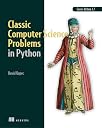
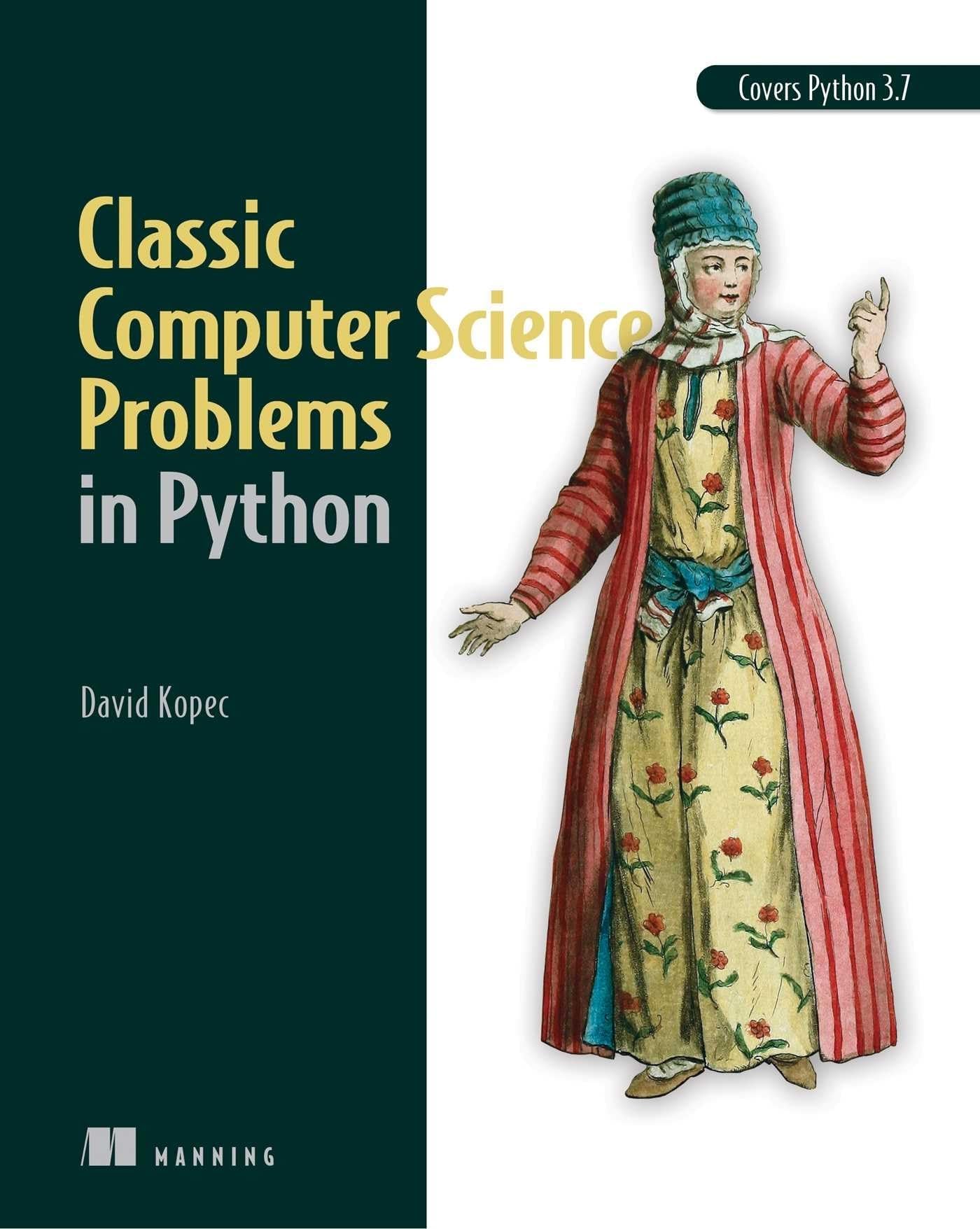
Buy Classic Computer Science Problems in Python: Easy to Advanced Programming Challenges to Sharpen Your Coding Skills and Improve Your Algorithmic Thinking 1 by Kopec, David (ISBN: 9781617295980) from desertcart's Book Store. Everyday low prices and free delivery on eligible orders. Review: A really good new algorithm book - I really liked Classic Computer Science Problems in Python. It covers many interesting algorithms, several of which I had not read about before. My favorites in the book were neural networks, constraint-satisfaction problems, genetic algorithms, and the minimax algorithm. For most of the algorithms, the author develops a framework solution, and then uses it to solve a few different problems of the same kind. The solutions are complete but small programs that you can download from GitHub. They are well suited for exploring the solutions in more detail. For example, I used the neural network program to see how the neuron weights varied between different runs. I found this to be one of the better algorithm books that I have read. I have written a more detailed review on my blog, which can be found by googling. Review: Great Content, But Moves Too Fast, Not Enough Depth - This is a good book, but I don't think it serves a very wide audience well. It covers some of the most famous and popular algorithms out there โ but it moves so fast and goes into so little depth that I can't recommend it to someone junior looking to learn these topics (which seems to be the target audience). I think anyone who already has a handle on all these algorithms, and just wants to learn efficient ways to write them in Python, will be happy with this book. But if you don't know these algos, and/or you're not already very confident in Python, this book is equally as confusing as educational. I know Python well, and I know most of the algos in this book already, so for me those were easy to read over and the Python code made perfect sense. The few that I didn't already know, however, left me confused and frustrated, because the explanations just didn't go into enough granular detail (about the algo logic nor the python implementation) or give enough different examples for me to really make sense of them from reading alone (which a well written book does offer). Final word: If you already know Python and you just want a reference implementation of algos you already firmly understand, this book is a walk in the park. For anyone else there is certainly lots of value in this book, but it may also leave you with as many questions as answers by the final page.


| Best Sellers Rank | 129,426 in Books ( See Top 100 in Books ) 120 in Web Scripting & Programming 141 in Introduction to Programming |
| Customer reviews | 4.4 4.4 out of 5 stars (149) |
| Dimensions | 18.75 x 1.02 x 23.5 cm |
| Edition | 1st |
| ISBN-10 | 1617295981 |
| ISBN-13 | 978-1617295980 |
| Item weight | 381 g |
| Language | English |
| Print length | 224 pages |
| Publication date | 27 May 2019 |
| Publisher | Manning Publications |
H**E
A really good new algorithm book
I really liked Classic Computer Science Problems in Python. It covers many interesting algorithms, several of which I had not read about before. My favorites in the book were neural networks, constraint-satisfaction problems, genetic algorithms, and the minimax algorithm. For most of the algorithms, the author develops a framework solution, and then uses it to solve a few different problems of the same kind. The solutions are complete but small programs that you can download from GitHub. They are well suited for exploring the solutions in more detail. For example, I used the neural network program to see how the neuron weights varied between different runs. I found this to be one of the better algorithm books that I have read. I have written a more detailed review on my blog, which can be found by googling.
J**Y
Great Content, But Moves Too Fast, Not Enough Depth
This is a good book, but I don't think it serves a very wide audience well. It covers some of the most famous and popular algorithms out there โ but it moves so fast and goes into so little depth that I can't recommend it to someone junior looking to learn these topics (which seems to be the target audience). I think anyone who already has a handle on all these algorithms, and just wants to learn efficient ways to write them in Python, will be happy with this book. But if you don't know these algos, and/or you're not already very confident in Python, this book is equally as confusing as educational. I know Python well, and I know most of the algos in this book already, so for me those were easy to read over and the Python code made perfect sense. The few that I didn't already know, however, left me confused and frustrated, because the explanations just didn't go into enough granular detail (about the algo logic nor the python implementation) or give enough different examples for me to really make sense of them from reading alone (which a well written book does offer). Final word: If you already know Python and you just want a reference implementation of algos you already firmly understand, this book is a walk in the park. For anyone else there is certainly lots of value in this book, but it may also leave you with as many questions as answers by the final page.
J**N
Great book...depending on why you bought it
I'm about 6 chapters in now and feel like I'm ready to give an initial review this book. Firstly, if you're new to programming and python then this is not the one for you. I generally like the way each problem or theme is presented and resolved overall, but there are huge jumps in how the solution is built up and I can't help thinking it could have been kept a lot simpler or clearer in places. Really helpful diagrams and commentary though, and personally I appreciate the lack of fluff between subjects. I've bought too many books trying to shoehorn comedy nuggets into every other paragraph or a cheesy segway that adds nothing. Has to be mentioned that there are incredibly useful sections at the end of the chapters giving brief descriptions of how and where these solutions can be used in the real world. It's my experience that very few books on algorithms and/or machine learning actually bother to do this and as soon as I came across this in the sample download I bought the book immediately. As hinted before I struggled a bit comprehending some of the python used, but that's my fault and relative inexperience with it. The author specifies this is the intermediate python programmers and I would go as far as to say this could be changed to "intermediate/advanced." So in summary, I bought this book hoping to see how some familiar problems / concepts are applied from scratch using some fairly advanced python to drag me up to speed and that's exactly what it is. So I'm very happy, but you may not be if you want more of a gentle introduction to both topics.
R**B
Detailed but not very assessable
These classic algorithms are useful to know but the way the book is presented is not very friendly - I bought to help my A level students but no so much help here
G**F
Was looking forward to this but disappointed.
I was looking forward to reading and working with this as I learn Python but received a used copy instead of a fresh print. It wasn't advertised as used otherwise, I wouldn't have returned it. But it wasn't just used, it was man-handled. Luckily, I have the java version.
M**K
If you've already done a decent amount of programming in at least two other languages (including at least one OO), this is a great book to learn about python from. It does not bother with the simple things that you can look up online in two seconds (flow control syntax, defining a simple function, etc.) or OOP concepts. Instead it is a very well chosen set of, as the title implies, classic algorithms with broad use value: K-means clustering, graph searching, constraint-satisfaction problems, even neural network basics. Each of these forms a chapter with a simple, comprehensible generic implementation, presented piecemeal in a narrative and then applied to a handful of different concrete problems. I'd seen most of these techniques before, but I wish my original introduction to them had been this succinct and balanced. Along the way of various features and conventions of python are introduced in a natural way. The author also uses the relatively new (not strictly enforced) typing annotations, which I appreciated as a fan of strong typing. Again, though, if you are out to learn programming with python, this probably is not the book for you. But if you already understand OOP well and want something interesting to survey a new language with, this is a lot of fun.
A**R
This book is great for semi-experienced python users. Every chapter introduces several new pythonic concepts and provides a very nice generic framework for trying out the algorithms described. It is the kind of book where you'd get the most out of it when you work through it.
P**P
Best book
M**S
I am a season programer and really enjoyed this book. Found examples to be quite complete. It has helped me improve my Python skills.
P**U
I've been doing CS / programming for 20 years now, and a professional for 13 years already. Yet I just got this book and for the small size of it, it's just awesome how good quality it is. After 20 years and still can learn new approaches to solving classical problems, new ways to express algorithms, make them simpler, more readable, or better explained etc. I've coded breadth-first tree traversals countless of times, but it's so well structured in this book that I can now visualise it easier. It also goes as far as machine learning. You don't have to be a Python guru for it. If you know Java or any other language, then a couple of days of getting acquainted with Python will be enough to understand this book well.
Trustpilot
5 days ago
2 weeks ago