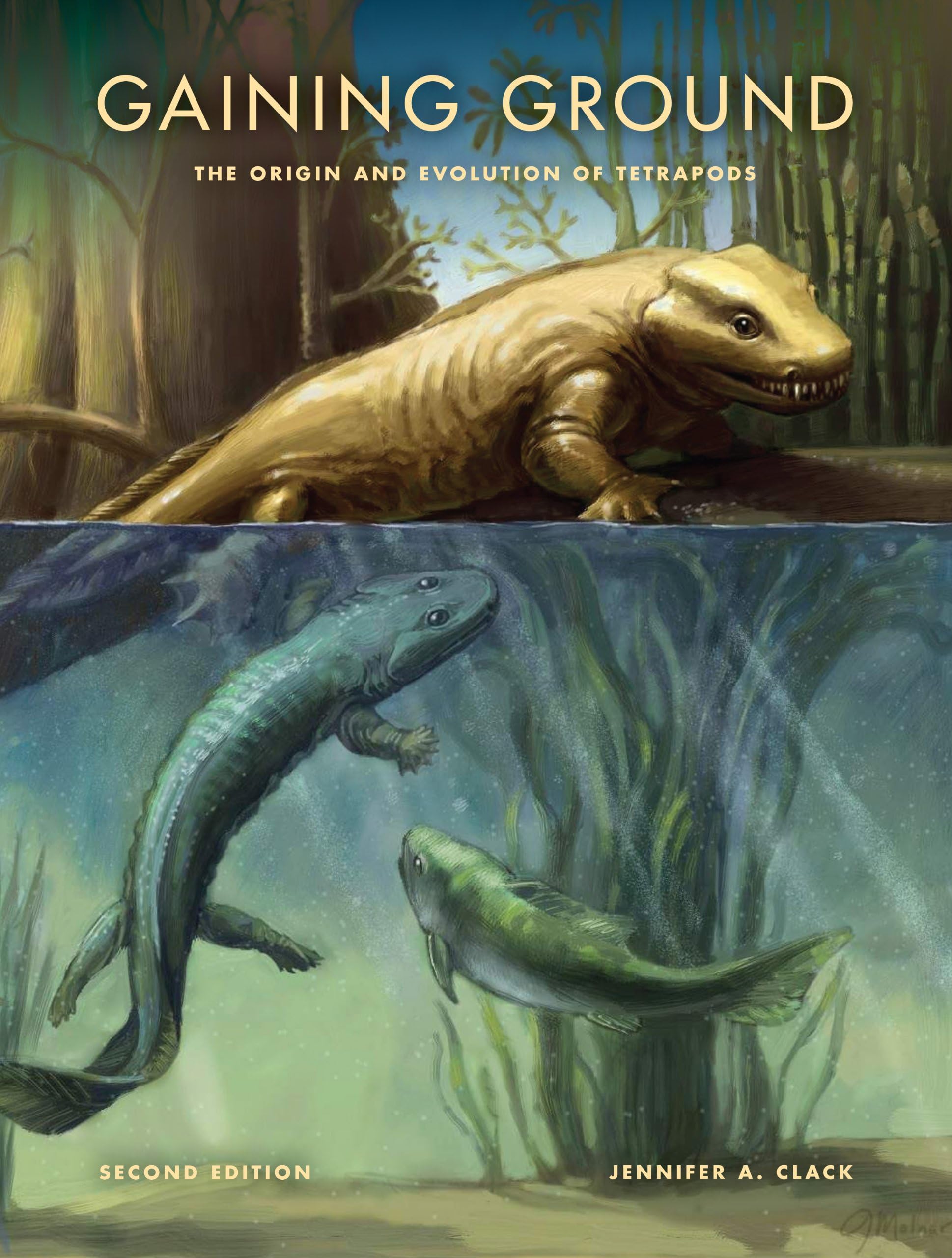
Gaining Ground, Second Edition: The Origin and Evolution of Tetrapods (Life of the Past)
Product ID: 8150341
📅Next day UK dispatch
📚Comprehensive 2nd edition
🦴Detailed tetrapod anatomy
Desertcart purchases this item on your behalf and handles shipping, customs, and support to France.
🦎 Unlock the epic origin story of land life—because knowing your roots is the ultimate power move.
Gaining Ground, Second Edition by Jennifer A. Clack is a definitive, richly illustrated exploration of the evolution of tetrapods from lobe-finned fishes. This updated edition offers detailed anatomical insights, fossil evidence, and evolutionary context, making it a must-have for anyone fascinated by vertebrate history. Shipped next day from the UK, it combines scholarly depth with accessible writing, securing its place as a top-rated paleontology e-book.
| Best Sellers Rank | #2,162,622 in Books ( See Top 100 in Books ) #52 in Paleontology (Books) |
| Customer Reviews | 4.4 out of 5 stars 54 Reviews |
C**N
Clear, readable simplification of a complex topic
As a layperson with some interest in paleontology, I found this book a rewarding read. Clack starts with an overview of the book, followed by a (for laypeople) detailed chapter on tetrapod anatomy. After this, the book looks at the lobe-finned fishes and goes on to present the transition to land in chronological order, focusing on key fossil deposits (Greenland, Quebec, southern Scotland, and more). The book is relatively expensive for an e-book, but is long and packed with detail. The presentation of theory and evidence here is very clear and understandable. There is a reasonable amount of taxonomic and anatomical info, enough to provide some support for the book's claims, but not so much to slow it down. I found it well worth the money, but this is a popular science book with the emphasis on the science. The focus is strictly on the facts; if the topic doesn't interest you, the book won't win you over.
L**M
Tetra stars for tetrapods
This is an impressive book. Dr. Clack has put together a textbook-quality history of fossils and phylogenies to tell the tale of us tetrapods. Included are detailed comparative anatomy tables that brings amateurs up to speed on, well, everything. 18 color plates add nice context. If you can't get enough Tiktaalik or Ichthyostega, this book is for you. Highly recommended... - lc
D**S
Tetrapods Rule
A VERY detailed look at the evolution of tetrapods. It examines not only the bony evolution, but respiratory systems, skulls, teeth, jaws, and hearing. Not for the casual reader, but most informative.
R**S
Great Title
And a truly great book. For anyone who's interested in our early cousins' transition from aquatic life forms to terrestrial tetrapods, I cannot recommend any but Jennifer Clack's "Gaining Ground". This is a wonderful exposition on this most important of events in prehistoric times. I LOVED this book, and highly recommend it to anyone interested in evolution as I am. Thank you Jennifer, for a wonderful work!
H**G
Gaining Ground - I can hardly wait!
I just got this book in the mail this AM! From everything I can tell, it is truly awesome and I can hardly wait to dive into it!
G**K
Too Complex
Too complex for layman to read. I finally gave up on reading it, It requires a graduate degree to understand it.
J**G
Kindle problems
The book is a good read so far. Figures and diagrams are bit of a nightmare. The problems are 2-fold: 1. Can't view diagram and read any accompanying text at the same time. 2. Diagrams and figures are tiny and unreadable. even when you zoom in the image is simply a blown up thumbnail (text in image blurry and unreadable) Does anyone have a remedy for this?
S**Y
Five Stars
Fascinating story, very detailed, lots of pictures of fossils and lots of diagrams.
H**N
How we crawled ashore - 2
This is the long-awaited second edition of Jennifer Clack's classic from 2002. A lot of new spectacular fossil finds during the last 10 years must have shed new light on the issue of how vertebrate animals transformed themselves from fish to lizards. The new edition is, as expected, clear, well written and packed with facts and information. Although the book starts out with brief explanations of basic paleontology, e.g. the meaning of latin anatomy terms, definitions of time eras, etc., the text here is not for the layman. It is a scientific treatise and sum-up of a huge volume of research work done by the author and her colleagues. The text is packed with latin names and terms, which probably will make most lay readers give up before the end. For the scientists or paleontology students it is of course a different matter. The book has a nice appearance, although the black print in my copy tends to be a bit grayish. The illustrations are good looking, clear and very numerous, mainly depicting bones and skeletons - and closely backing up the text. Reconstructions of the animals are fewer, and little attempt is made to describe theories on their lifestyles, ecology etc. The book also contains a number of colour plates. Many of these resemble holiday shots of landscapes around fossil locations, and in several cases with the author included. A few (too few) depict specimens of actual fossils. A curious feature is that all the colour plates, which are located together between pp. 224 & 225, also are printed in black and white, throughout the book at the locations where the subject is dealt with in the text. This seems like a waste of paper. And how, then, did we crawl ashore? In the good old paleontology books it was simple. We had a fish with some slightly arm-like fins just venturing out of the water. A little later we had a somewhat fishy amphibian doing a bit more crawling and then came a proper four-legged land-dweller. End of story. Clack shows in her book just how much more complex the picture is looking now. The amount of 300+ million years old fossil material found is enormous, and the level of detailed studies made possible is impressive. Comparable bones from a number of different species have been investigated one by one, feature by feature. In many cases it is easy to see which features developed into the next step, but the problem is that they do not do it in an orderly way. Specimens show a curious mixture of fish-like and amphibian-like traits in different combinations. Attempts to range the species, i.e. whom begat whom, by using the so-called cladistics method, give different results depending on which part of the animals you choose to look at. The fact emerging is that a lot of experimenting was done back then, and many of the developments happened in animals, which probably never left the water; the new features served other purposes. Accordingly, we by now have a tremendous amount of knowledge, but we still do not know exactly who went ashore for the first time. But that does not make the book less interesting.
A**R
Muito técnico.
Muito técnico para uma obra de popularização científica, entediante. Parece ter sido um livro escrito de cientista para cientistas que alguém lançou para o público em geral.
P**S
Informative and engaging.
Fascinating, clearly written and well illustrated. Anyone interested in tetrapod evolution should consider this as an excellent primer and I would imagine a useful reference for many who are expert in the field.
S**Y
Kindle version let down by very poor quality illustrations
There is plenty of detail in this kindle book, and the uncertainties associated with the detective work required to unpick the history of the emergence of tetrapods are not shied away from. This is a thorough treatment of a facinating subject by an expert in the field, and I'm prepared to dig deep to work my way thru it. But it is badly let down by the really poor quality of the illustrations - detailed annotated anatomical drawings that are so fuzzy, small and just badly reproduced some of them are simply not ledgible. Hopefully others will have found the print version better, but for the Kindle version I think the author (and me) have been badly let down by the publisher. I don't think the format supports the subject matter and no effort appears to have been made to address this.
A**R
Best book around for anyone interested in tetrapods
As an aspiring palaeontologist with an interest in tetrapods this book was perfect for me, amazing detail in the evolution of tetrapods, very helpful
Trustpilot
2 months ago
1 month ago