
Buy anything from 5,000+ international stores. One checkout price. No surprise fees. Join 2M+ shoppers on Desertcart.
Desertcart purchases this item on your behalf and handles shipping, customs, and support to France.
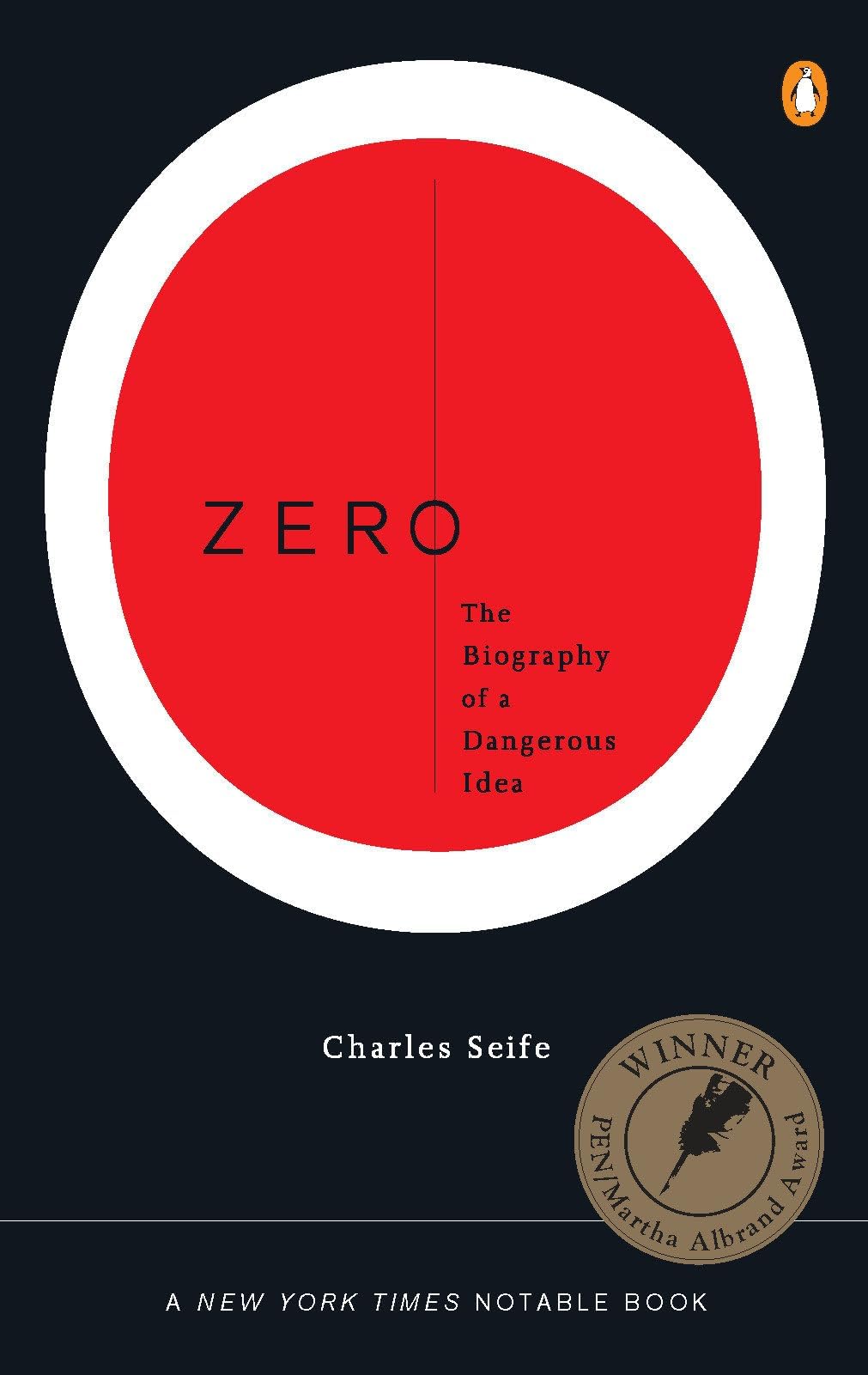
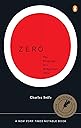
Zero : The Biography of a Dangerous Idea : Seife, Charles: desertcart.in: Books Review: Great thinking in a simple way - Though main focus of the book is Zero - how humankind reached to its concept, its importance in solving crises of concepts faced by scientific society, the book vividly depicts how it helped development of science afterwards and its scope in future. The language is lucid and the way of story telling is captivating. This book is not written for scientists but for the general reader. Persons who are afraid of mathematics, I am sure, also will enjoy this book. Review: Amazing book. Could've been better if it didn't take a quantum leap - The first half of the book was simply amazing, clear and followed a story telling pattern. The book soon introduced some very complex concepts which are not easy to grasp and therefore seemed like a stretch but still the book was able to involve me till the end. All in all of if you have a bit of a geeky side, you might like this book


| Best Sellers Rank | #86,902 in Books ( See Top 100 in Books ) #6,016 in Biographies & Autobiographies (Books) |
| Country of Origin | India |
| Customer Reviews | 4.5 4.5 out of 5 stars (1,165) |
| Dimensions | 20.32 x 12.95 x 2.29 cm |
| Edition | Reprint |
| Generic Name | BOOKS |
| ISBN-10 | 0140296476 |
| ISBN-13 | 978-0140296471 |
| Importer | Penguin Random House India Pvt Ltd |
| Item Weight | 181 g |
| Language | English |
| Packer | Penguin Random House India Pvt Ltd |
| Print length | 272 pages |
| Publication date | 1 September 2000 |
| Publisher | Penguin USA |
| Reading age | 5 years and up |
D**S
Great thinking in a simple way
Though main focus of the book is Zero - how humankind reached to its concept, its importance in solving crises of concepts faced by scientific society, the book vividly depicts how it helped development of science afterwards and its scope in future. The language is lucid and the way of story telling is captivating. This book is not written for scientists but for the general reader. Persons who are afraid of mathematics, I am sure, also will enjoy this book.
K**R
Amazing book. Could've been better if it didn't take a quantum leap
The first half of the book was simply amazing, clear and followed a story telling pattern. The book soon introduced some very complex concepts which are not easy to grasp and therefore seemed like a stretch but still the book was able to involve me till the end. All in all of if you have a bit of a geeky side, you might like this book
A**R
brilliant read
The book takes you in the realm of nothingness of cosmos and its infinite vastness, concurrently. You may be thinking that I am out of my mind ; I am not, the book really takes you to such realm. Zero , Cipher or Sifer or Sunya is the vehicle that takes you to this realm. This realm is a reality of our universe.
A**R
The book is an interesting and useful contribution to undergraduate (PU 1-2) studies and should find ...
Seife's ZERO is far as I know the only book on this very important subject. The book is an interesting and useful contribution to undergraduate (PU 1-2) studies and should find a place in every college library. I would commend the book and the subject to college lecturers. Parthasarathy
G**E
Fantastic read
Zero is the beginning and the end. Zero is the paradox yet is the solution. Zero is at the centre of the blackhole and also in the origin of the observed universe. Zero is when the world would attain the thermodynamic equilibrium.
A**A
A lucid work chronicling the paths, detours, and the journey of Zero through civilisations. A must read.
A must read lucid book for anyone interested in the history of mathematics through its long journey. A splendid work by the author.
D**F
History of the Future Zero
One of the most forceful books of 21st century, written honestly and with the evidence at hand.
A**L
An Intriguing book
First things first—Neither I am a mathematician, nor I particularly like the subject. I read it just because I felt fascinated by the scope of the book. So don’t be put off by the mathematics side of the book, it is not that loaded, and in case you do come across such a part, you can skip it or reread it depending upon your relation with maths. An intriguing book which tracks the journey of Zero and presence of Zero in anything and everything—from infinity to civilizations to history to philosophy to quantum mechanics—how zero shaped these different fields. You will read how a simple idea—a Zero—is at heart of almost everything and yet how our ancestors survived without it for many years. You will read how west saw it and how east saw it. What this innocuous digit tells us and what infinities it beholds in its lap.
H**L
Good read and strange facts in there about ZERO.
K**R
I was looking for a history book, and it got to thecnical for my liking. Not really an easy read.
G**D
I'll admit, writing a book about nothing and making it exciting is probably a challenging thing to do. This is going to be a rather odd thing to bring up at the start of the review, but I have to ask did people read a different book than I did? Seriously, I read through just about every negative review and the points made against the book are barely in the book I read. If anything, they focus in on a minor detail, interpret it wrong, and then give the book a one star. I digress, let me get to the review and then I may go over some points to refute. This book focuses on the history of Zero for the most part. In there it touches upon historical moments in mathematics and later in physics as it gets to the modern scientific era. I personally found the research on the early history quite on point and very fun to read (there's a lengthy bibliography at the end if you feel the need to see his words backed up). The sensational writing didn't bother me at all, because I realize the relationship between the title and the style. Seife is trying to make nothing exciting! If you didn't get that point or got annoyed with that style then you missed out on a really fun read. The author tried to include fairly random historical anecdotes about the people discussed to lighten the mood in the book. I thought these were fun additions and interesting to read as well. Overall the book is written in decently easy to understand language. I have a fairly decent mathematical background and I didn't feel I really needed to know everything to read the first half of the book. However, when Seife starts delving into concepts like Calculus and Set Theory I think knowing how to do calculus was definitely a help in understanding this section. If you're more of a lay reader and more interested in the history than the math then this book really might be a bad choice. The first part is absolutely fascinating, but it does get confusing towards the end, especially when he starts delving into Quantum Theory and Particle Physics. One aspect on the section of early history that I found particularly fascinating was the relation of zero to philosophy. The ancients were heavily influenced by beliefs and philosophy so it's not much of a stretch to think this influence stretched beyond just those subjects and into math and science. So when Pythagoras and Aristotle reject notions of the void philosophically it's reasonable to assume they would find such notions nonsense mathematically. For a long time, and still today, Math is merely a representation of the world we see and observe. They didn't observe voids or vacuum's during Aristotle's time so naturally they wouldn't exactly latch onto it as a real possibility. One thing that really fascinated me was the possible hindrance philosophy and belief (or religion) had in holding back mankind's ability to progress mathematically. The main reason that zero didn't make it into the western world probably had more to do with the stranglehold the Romans put on the people than with their unwilling to believe in the void or infinity, which is also why it was trade that finally used zero. However, there were intellectuals alive and breathing during the Dark Ages and a lot of their hindrance to accept concepts like zero was philosophical. The Church had adopted Aristotle's model of the universe and it was blatantly wrong. (This book does not say Aristotle is at fault for holding back people philosophically, it merely says his view/model, that the Earth is the center of the universe, is wrong. Which it is.) However, the rising power of the Catholic Church adopted his explanation and said it was a fact and back then their word was law. Once mathematics and science came across discrepancies in that proof then Church asserted its power and only tried to tighten its grip on those communities until people revolted against it. I'm not saying zero is the reason we got out of the Dark Ages, but it didn't hurt us any! It probably helped us a lot more in the long run. My point in bringing this up is that things like belief and philosophy can hinder progress in fields like the sciences. (These are not beliefs, as in making assumptions about testable criteria by the way.) It seems to make more sense, that if you must derive some divine notion, you would interpret the data, not try to fit the data into a preconceived belief. Thus belief would interpret the math and math would not interpret the belief. The ancients had this backwards for a long time, which I think that's a major factor and this book touches upon that. As I mentioned above the book can change gears into something very complicated. I think this is kind of the downfall of this book for some people because the confusing explanations at the end leave them on a low note. As the book progressed and got beyond my mathematical understanding I found the explanations a lot more confusing. When it finally got out of the confusing areas I think it picked up again during the sections on the expansion of the universe. I enjoyed the parts of Zero Point energy, but I'm not entirely sure it's written in a fashion that is easily understood. Seife makes comments in a very historical manner and I think that really confuses people at times. Such as one reviewer complained that the books information is outdated on Vacuums and concepts like limitless energy. However, this book does touch on that subject during its discussion of Zero Point energy, maybe it was merely presented in a way that confused readers? I'm not entirely sure; I didn't personally feel confused until he started talking about Set Theory, which I clearly need to brush up on. In the end I simply loved this book. I tore through it in a mere three days and I'm a pretty slow reader. I personally didn't mind the sensationalizing of zero to fairly emphatic levels. This is a book about nothing after all and you might as well make it sound really exciting! Maybe there should've been more exclamation points so we can see how impressive the author's thoughts really are! Anyway I had fun with this book, but I wouldn't recommend it to people that haven't made it beyond calculus or else the second half might get a little confusing. Previously understanding Einstein's work would be a bonus to getting through this book as well. Other than that the first half is absolutely fascinating and I feel I walked away with more knowledge than I went in even if the book repeated a lot of things I already knew. Overall Rating: 4.5 out of 5
A**I
As the title suggests ( and it's written by a mathematician so, although filled with humour, it's very sticking to the point ) this is the biography of how Zero went from non-being important to becoming ( at least according to the author ) an all-important matter. Gotta warn you though: the guy takes this Zero thing very seriously, as far as making fun of ( almost ) the whole of humanity, including his former mathematician colleagues.
Z**H
The way the book ties the concept of Zero across so many disciplines; cultures, discoveries- etc. Fascinating book _ One of a kind
Trustpilot
2 months ago
2 months ago