
Buy anything from 5,000+ international stores. One checkout price. No surprise fees. Join 2M+ shoppers on Desertcart.
Desertcart purchases this item on your behalf and handles shipping, customs, and support to France.
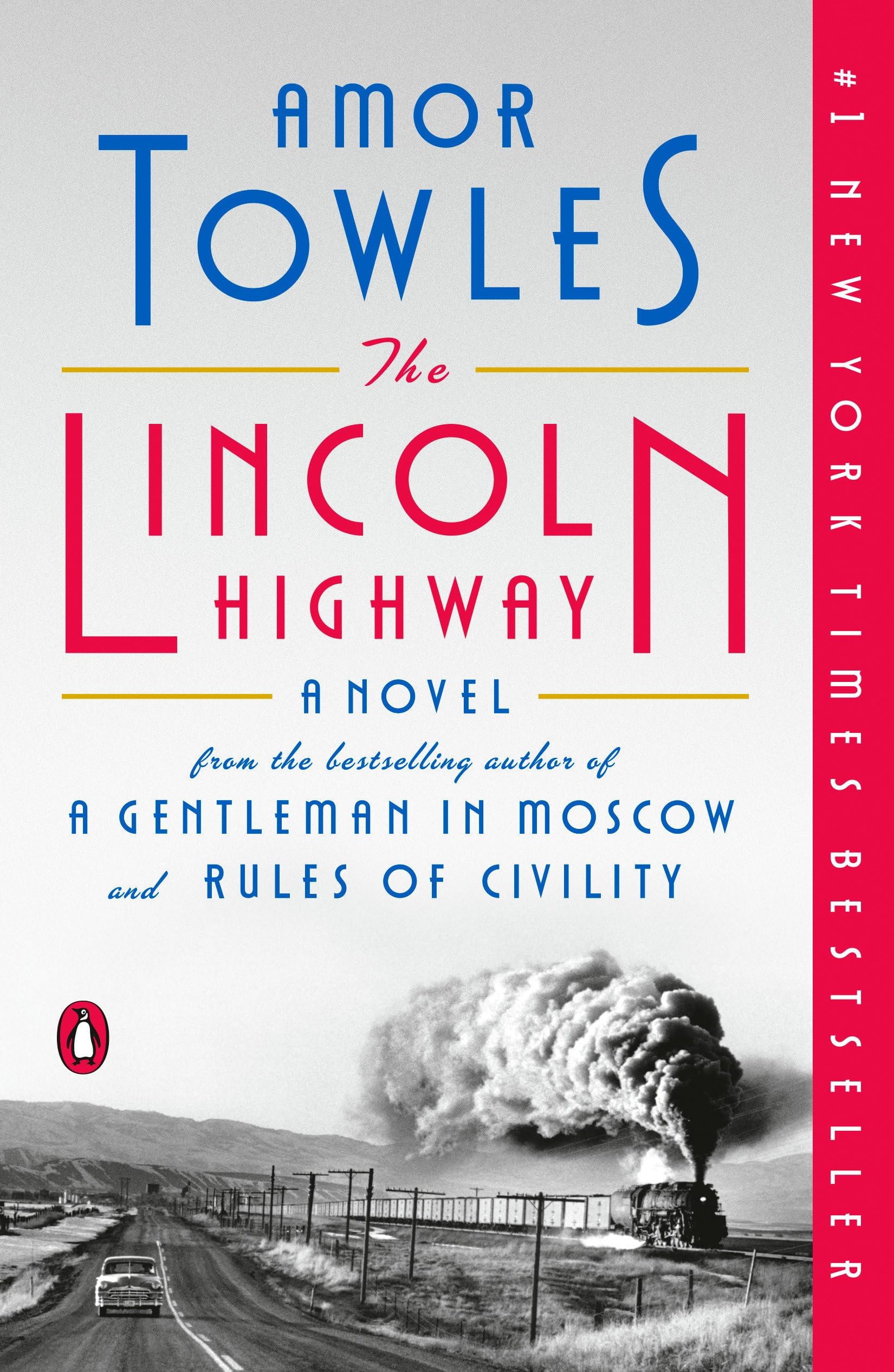
#1 NEW YORK TIMES BESTSELLER More than ONE MILLION copies sold A TODAY Show Read with Jenna Book Club Pick A New York Times Notable Book, a New York Times Readers’ Choice Best Book of the Century, and Chosen by Oprah Daily, Time, NPR, The Washington Post , Bill Gates and Barack Obama as a Best Book of the Year “Wise and wildly entertaining . . . permeated with light, wit, youth.” — The New York Times Book Review “A classic that we will read for years to come.” — Jenna Bush Hager, Read with Jenna book club “A real joyride . . . elegantly constructed and compulsively readable.” —NPR The bestselling author of A Gentleman in Moscow and Rules of Civility and master of absorbing, sophisticated fiction returns with a stylish and propulsive novel set in 1950s America In June, 1954, eighteen-year-old Emmett Watson is driven home to Nebraska by the warden of the juvenile work farm where he has just served fifteen months for involuntary manslaughter. His mother long gone, his father recently deceased, and the family farm foreclosed upon by the bank, Emmett's intention is to pick up his eight-year-old brother, Billy, and head to California where they can start their lives anew. But when the warden drives away, Emmett discovers that two friends from the work farm have hidden themselves in the trunk of the warden's car. Together, they have hatched an altogether different plan for Emmett's future, one that will take them all on a fateful journey in the opposite direction—to the City of New York. Spanning just ten days and told from multiple points of view, Towles's third novel will satisfy fans of his multi-layered literary styling while providing them an array of new and richly imagined settings, characters, and themes. Review: Beautiful Writing, Wonderful Story! - The time was June of 1954, the place was a bankrupt farm in rural Nebraska, and the two central characters in this work of fiction were the Watson brothers, Emmett who was eighteen and his little brother Billy, who was eight. Emmett had been serving a sentence at a boy's reformatory for his part in the unintentional death of a local bully, but when his father died of cancer, a decision was made to release Emmett so that he could return home to care for his little brother. Billy had been staying with neighbors awaiting his brother's return, while the bank had been preparing foreclosure documents on the family property. The neighbors were Sally, a nineteen-year-old friend of the Watson's, and her father. Sally was plainspoken to a fault and somewhat resentful of her lot in life - which seemed to be taking care of her father until some other man for her to take care of would come along, but she cared for Billy with the fierceness of a mother hen watching over her only chick. As the story opened, Emmett, who had been serving his sentence on a work farm in Salina, Kansas, was being driven home to Nebraska by the warden of the reformatory. Emmett had plans to pick up his brother, spend a final day or two in the farmhouse, and then head out to Texas with Billy where he would make his fortune buying, remodeling, and selling houses, all financed by the secret nest-egg of three thousand dollars that their father had managed to hide from his creditors at the bank. But Billy had a different plan. He had found a cache of postcards written by their mother just after she abandoned the family several years before - postcards that their father kept secret from the boys. The postmarks and notes on the cards indicated that after their mother left the family she had traveled along the Lincoln Highway, the nation's first transnational paved thoroughfare, headed for California. (The Lincoln Highway ran from Times Square in New York City to Lincoln Park in San Francisco. The Watson's farm was close to the halfway point on the highway.) Emmett had no interest in reconnecting with their mother, but Billy, who was little more than in infant when she left, did. He eventually managed to convince Emmett that California was growing faster than Texas and would be a better prospect for his home renovation plans. All of their plans, however, were thrown into a cocked hat when Duchess and Woolly, two other young men who were serving time at the facility in Salina with Emmett, turned up at the Watson's farm after having stowed away in the trunk of the warden's car just as the warden and Emmett were preparing to leave Salina and head for Nebraska. Duchess was the son of an itinerate vaudeville actor and spent a lot of time growing up on the road and in and around New York City. Woolly was the son of a socially prominent New York family. Duchess, a charming plotter and manipulator, wanted Emmett - who had his own car - to drive them to New York where Woolly would access a pile of cash ($150,000) which his grandfather had set aside for him in the family safe as a "trust fund." If Emmett would drive them, they would split the trust three ways and Emmett would be set for set up to be a major homebuilder in California. Emmett, who regarded himself as far more sensible than the other two former reformatory inmates, declined, but he eventually agreed to go out of his way and take them to the train station in Omaha where the escapees could board a train for New York City. However, while they were enroute to Omaha, Emmett managed to get distracted by another of Duchess's misadventures long enough for Duchess to "borrow" his car - and Duchess and Woolly headed off to New York leaving the Watson brothers stranded in rural Nebraska. Emmett called Sally who came and transported them to the train station in Omaha where Emmett intended to board a train and head to New York City to get his car back, But after Sally left them at the train station, Emmett realized that his money, the nest-egg of $3,000, was still in the trunk of his car under the spare tire. After some careful research, he found an express freight train that was headed to New York City, and he and Billy secreted themselves in a boxcar. And from there Emmett and Billy Watson began a journey which was marked by personal adventures and encounters with characters very reminiscent those experienced by Huck and Jim as they floated down the Mississippi on their raft in a bygone era. The Lincoln Highway is a character-driven tale that is and pulled along through narratives of each major individual in the story. The manner in which it is presented, through the varying viewpoints, enables readers to gain a fuller perspective of what is actually happening, and it adds to the compelling nature of story. The pages, nearly six hundred of them, turn quickly. While The Lincoln Highway, is a very satisfying reading experience, the plotting is far from predictable and it keeps the reader's attention with unexpected twists and turns, much like any drive along an unfamiliar road. It's a book that is hard to put down, and a story that is difficult to quit. While The Lincoln Highway almost begs a sequel, I hope that does not happen because a furtherance of this tale would only serve to dilute its magnificent impact. This is a wonderful story, Mr. Towles. Your countless accolades are well deserved! Review: Troubled boys on a journey with unexpected twists - This book wasn’t what I expected, and that’s a good thing. I like surprises. The characters are very individualized and three-dimensional. The story had twists and turns, and by the end you realize there are deeper meanings to it. I found myself relating to the characters in different ways. 18-year old Emmett has lost his father, his mother, and then his father’s farm, all while dealing with having just been released from a juvenile work farm for unintentionally killing another boy in a fight. Now he has to make a plan for himself and his 10-year old brother, Billy, to make a new life together. But Emmett’s well-laid plans to travel the Lincoln Highway from Nebraska to San Francisco to start that new life are thrown into chaos by the unexpected appearance of two other boys his age, Duchess and Wooly, both of whom had been at the work farm with him and escaped. Duchess is mercurial and chaotic, though often well-meaning, and Wooly is intellectually challenged, but kind. Along the way, the four boys come to meet some other notable characters who sometimes help them and sometimes challenge them. There are some almost-spoilers below, so stop here if you worry about it…. The name of the book is a bit misleading. The Lincoln Highway is really a “McGuffin” in that it triggers the plot but isn’t actually the planned route they ultimately follow. I didn’t mind that, but it did break the “contract with the reader” if you will, from the initial plan that was laid out early in the book. Really, the plot is driven by Duchess, a troubled boy who has his own motivations, which he justifies in different ways, that throws everyone else’s plans asunder. Frankly, all of the characters have tragic histories, which makes them very interesting. Another oddity about this book is that it starts sort of in the middle of the story (which is actually a plot point stated by Billy, who is obsessed with a book about heroes and their journeys), and at the end of the book you realize that the story hasn’t really ended for some of the characters yet. None of these things really take away from the quality of the story, it’s just something to note that sets this book apart from others and makes it unique. I will say, though, that Duchess was so much the driver of the story that all the other characters were a little weaker for it, where they were mostly reacting to Duchess in one way or another. One thing I definitely did not like, though, was that the dialogue is written without quotation marks. Rather, Towles uses a dash to signify when a speaker has started dialogue, but nothing to signify when they stop the dialogue. Thus, it was occasionally confusing when they stopped and the prose began. Towles also needed more dialogue tags, as sometimes I was confused who was speaking which sentences. Be prepared that this has a bit of a tragic ending that left me concerned for the motives of some of the characters I’d come to like. But overall, it was a worthy read.


| Best Sellers Rank | #7,072 in Books ( See Top 100 in Books ) #74 in Coming of Age Fiction (Books) #250 in Historical Fiction (Books) #290 in Literary Fiction (Books) |
| Customer Reviews | 4.4 out of 5 stars 88,186 Reviews |
R**Y
Beautiful Writing, Wonderful Story!
The time was June of 1954, the place was a bankrupt farm in rural Nebraska, and the two central characters in this work of fiction were the Watson brothers, Emmett who was eighteen and his little brother Billy, who was eight. Emmett had been serving a sentence at a boy's reformatory for his part in the unintentional death of a local bully, but when his father died of cancer, a decision was made to release Emmett so that he could return home to care for his little brother. Billy had been staying with neighbors awaiting his brother's return, while the bank had been preparing foreclosure documents on the family property. The neighbors were Sally, a nineteen-year-old friend of the Watson's, and her father. Sally was plainspoken to a fault and somewhat resentful of her lot in life - which seemed to be taking care of her father until some other man for her to take care of would come along, but she cared for Billy with the fierceness of a mother hen watching over her only chick. As the story opened, Emmett, who had been serving his sentence on a work farm in Salina, Kansas, was being driven home to Nebraska by the warden of the reformatory. Emmett had plans to pick up his brother, spend a final day or two in the farmhouse, and then head out to Texas with Billy where he would make his fortune buying, remodeling, and selling houses, all financed by the secret nest-egg of three thousand dollars that their father had managed to hide from his creditors at the bank. But Billy had a different plan. He had found a cache of postcards written by their mother just after she abandoned the family several years before - postcards that their father kept secret from the boys. The postmarks and notes on the cards indicated that after their mother left the family she had traveled along the Lincoln Highway, the nation's first transnational paved thoroughfare, headed for California. (The Lincoln Highway ran from Times Square in New York City to Lincoln Park in San Francisco. The Watson's farm was close to the halfway point on the highway.) Emmett had no interest in reconnecting with their mother, but Billy, who was little more than in infant when she left, did. He eventually managed to convince Emmett that California was growing faster than Texas and would be a better prospect for his home renovation plans. All of their plans, however, were thrown into a cocked hat when Duchess and Woolly, two other young men who were serving time at the facility in Salina with Emmett, turned up at the Watson's farm after having stowed away in the trunk of the warden's car just as the warden and Emmett were preparing to leave Salina and head for Nebraska. Duchess was the son of an itinerate vaudeville actor and spent a lot of time growing up on the road and in and around New York City. Woolly was the son of a socially prominent New York family. Duchess, a charming plotter and manipulator, wanted Emmett - who had his own car - to drive them to New York where Woolly would access a pile of cash ($150,000) which his grandfather had set aside for him in the family safe as a "trust fund." If Emmett would drive them, they would split the trust three ways and Emmett would be set for set up to be a major homebuilder in California. Emmett, who regarded himself as far more sensible than the other two former reformatory inmates, declined, but he eventually agreed to go out of his way and take them to the train station in Omaha where the escapees could board a train for New York City. However, while they were enroute to Omaha, Emmett managed to get distracted by another of Duchess's misadventures long enough for Duchess to "borrow" his car - and Duchess and Woolly headed off to New York leaving the Watson brothers stranded in rural Nebraska. Emmett called Sally who came and transported them to the train station in Omaha where Emmett intended to board a train and head to New York City to get his car back, But after Sally left them at the train station, Emmett realized that his money, the nest-egg of $3,000, was still in the trunk of his car under the spare tire. After some careful research, he found an express freight train that was headed to New York City, and he and Billy secreted themselves in a boxcar. And from there Emmett and Billy Watson began a journey which was marked by personal adventures and encounters with characters very reminiscent those experienced by Huck and Jim as they floated down the Mississippi on their raft in a bygone era. The Lincoln Highway is a character-driven tale that is and pulled along through narratives of each major individual in the story. The manner in which it is presented, through the varying viewpoints, enables readers to gain a fuller perspective of what is actually happening, and it adds to the compelling nature of story. The pages, nearly six hundred of them, turn quickly. While The Lincoln Highway, is a very satisfying reading experience, the plotting is far from predictable and it keeps the reader's attention with unexpected twists and turns, much like any drive along an unfamiliar road. It's a book that is hard to put down, and a story that is difficult to quit. While The Lincoln Highway almost begs a sequel, I hope that does not happen because a furtherance of this tale would only serve to dilute its magnificent impact. This is a wonderful story, Mr. Towles. Your countless accolades are well deserved!
J**E
Troubled boys on a journey with unexpected twists
This book wasn’t what I expected, and that’s a good thing. I like surprises. The characters are very individualized and three-dimensional. The story had twists and turns, and by the end you realize there are deeper meanings to it. I found myself relating to the characters in different ways. 18-year old Emmett has lost his father, his mother, and then his father’s farm, all while dealing with having just been released from a juvenile work farm for unintentionally killing another boy in a fight. Now he has to make a plan for himself and his 10-year old brother, Billy, to make a new life together. But Emmett’s well-laid plans to travel the Lincoln Highway from Nebraska to San Francisco to start that new life are thrown into chaos by the unexpected appearance of two other boys his age, Duchess and Wooly, both of whom had been at the work farm with him and escaped. Duchess is mercurial and chaotic, though often well-meaning, and Wooly is intellectually challenged, but kind. Along the way, the four boys come to meet some other notable characters who sometimes help them and sometimes challenge them. There are some almost-spoilers below, so stop here if you worry about it…. The name of the book is a bit misleading. The Lincoln Highway is really a “McGuffin” in that it triggers the plot but isn’t actually the planned route they ultimately follow. I didn’t mind that, but it did break the “contract with the reader” if you will, from the initial plan that was laid out early in the book. Really, the plot is driven by Duchess, a troubled boy who has his own motivations, which he justifies in different ways, that throws everyone else’s plans asunder. Frankly, all of the characters have tragic histories, which makes them very interesting. Another oddity about this book is that it starts sort of in the middle of the story (which is actually a plot point stated by Billy, who is obsessed with a book about heroes and their journeys), and at the end of the book you realize that the story hasn’t really ended for some of the characters yet. None of these things really take away from the quality of the story, it’s just something to note that sets this book apart from others and makes it unique. I will say, though, that Duchess was so much the driver of the story that all the other characters were a little weaker for it, where they were mostly reacting to Duchess in one way or another. One thing I definitely did not like, though, was that the dialogue is written without quotation marks. Rather, Towles uses a dash to signify when a speaker has started dialogue, but nothing to signify when they stop the dialogue. Thus, it was occasionally confusing when they stopped and the prose began. Towles also needed more dialogue tags, as sometimes I was confused who was speaking which sentences. Be prepared that this has a bit of a tragic ending that left me concerned for the motives of some of the characters I’d come to like. But overall, it was a worthy read.
J**A
A richly woven journey through 1950s America
The Lincoln Highway by Amor Towles is yet another triumph from a masterful storyteller. From the very first pages, Towles draws you in with his graceful prose and irresistible sense of momentum. The novel is set in 1954 and follows 18-year-old Emmett Watson as he sets off on a journey with his younger brother, Billy, intending to head west and start a new life. But when two friends from a work farm derail their plans, the road leads in a very different direction—east, toward New York City. Towles has a gift for crafting characters who feel fully alive. I found myself deeply invested in each of them: Emmett with his quiet resolve, Billy with his precocious charm, Duchess with his cunning and contradictions, and Woolly with his heartbreakingly innocent view of the world. The alternating perspectives add depth and nuance to their evolving relationships and the moral choices they face. Though the story takes place over just ten days, it has the emotional richness of an epic. The themes of redemption, loyalty, family, and destiny are explored with subtlety and grace. Towles doesn’t just write a road trip—he gives us a moving meditation on the detours life throws our way and how we navigate them. Highly recommended for readers who enjoy character-driven novels that combine literary elegance with narrative drive. Towles proves once again that he knows how to tell a story that lingers long after the final page.
F**Y
Excellent, A Different Adventure Story, Not Really About The Lincoln Highway
I very much liked this novel. Amor Towles is an excellent author and I am a big fan. I have read his first three novels and really liked every one of them. His stories are very different than much of current American popular fiction. That is why one finds a wide range of reviews. I feel the story is only tangentially related to “The Lincoln Highway”. Therefore do not expect a road trip type story depicting all of the towns along the way. This is a very different modern adventure story. No matter the level of excellence, not everyone will enjoy this novel. It is a really a coming of age adventure novel set in the 1950s in the United States. There are shifting narrators. At times the story seems to meander, but I felt it mostly always came back on course and apparent diversions become woven into the story. In this context, one must pay attention. On the other hand, the story is clearly written. It is mostly modern American conversational English. As such it makes for a good, but not simple, candidate for an audiobook. I purchased the novel on Kindle and also the accompanying audiobook. I listened and read simultaneously. I am glad that I did both. Sometimes I purchase an audiobook and listen rather than read whilst commuting. This book is a bit too intricate for that as far as I am concerned. I gave it my full attention. In the event one enjoys this structure of a story, one may enjoy “A Man Called Ove” by Fredrik Backman. The stories are completely different. But the clever turns of phrase and story are part of that story also. Both also include a very interesting female secondary character. In summary I really like this book. I can completely understand how someone else might not. It is not a light work of simple fiction. With a book like this, if it gets slightly tedious I simply take a break and get back to it when I feel I am ready. Amor Towles is one of my favorite contemporary American authors. But his works are different. Thank You for taking the time to read this review.
J**T
Brilliant writer; so-so book.
The story captured me in the beginning, as did the opening 'players': Emmett, Billy, Duchess, Woolly, Sally, even the warden, whose opinion of Emmett mattered in setting the stage for him to fulfill his role as a 'good guy' in the story, someone to root for all the way. But I expected at some point for the author to address Billy's dreams of finding his mother by following the trail left by her letters. Billy's character was the one I enjoyed most. With his innocent, inquiring mind, Billy is responsible for all the elements of the story coming together and making this read worthwhile. Without him, I would have put this book down half way through. Pretty words and talented writing alone don't make a story. This book wore me out and the ending was perhaps poetic justice, but out of character for Emmett. I longed for more of the story to reveal more of Emmett and Billy's story, but instead, the book was hijacked by a pair of hitchhiking prison escapees. Once they appeared, they took over the storyline. I still want to know what became of Billy and his big brother. The story didn't live up to my expectations. I bought several copies in advance and gave them as gifts; but that fell rather flat, as either no one read it, or they didn't enjoy it. Amor Towles is a wonderful writer and this book was a joy to read. No., a delicious pleasure is more fitting. Amour just didn't take the story where I longed for it to go. I will read more of his work because he is a masterful storyteller.
K**E
A journey worth taking.
*Very minor spoilers* The Lincoln Highway by Amor Towles. "When it comes to waiting, has-beens have had plenty of practice. Like when they were waiting for their big break, or for their number to come in. Once it became clear that those things weren't going to happen, they started waiting for other things. Like for the bars to open, or the welfare check to arrive. Before too long, they were waiting to see what it would be like to sleep in a park, or to take the last two puffs from a discarded cigarette. They were waiting to see what new indignity they could become accustomed to while they were waiting to be forgotten by those they once held dear. But most of all, they waited for the end." I was taking a training and noticed that my (new to me) coworker next to me had a book themed sticker on their laptop. When the break rolled around we talked about books. She told me she just finished the Lincoln Highway and that she really liked it. I put the book on my wishlist and a day or so later found my wife bought it for me. At this point, I knew it was hardcover and had a train on the cover. By happenstance, I'd finished my last book when this one arrived so on sight of hundreds of unread books I read the newest one in the pile. The Lincoln Highway is the story of three young men and an adolescent boy traveling across the United States in 1954. They all have their motivations for their trek. The book is an interesting review of mid-century America. There's a jail break, a lengthy discourse on making preserves, revenge, manslaughter, mental heath, an erotic circus, a mythic hobo, a professor writing about heroes from the Empire State Building, a washed up alcoholic vaudevillian Karl Marx impersonator, nuns, fetuccini, sneaking aboard freight trains, silver dollars, and salvation. More than anything I suppose the book is about family, specifically fathers. What I enjoyed most were the characters. As the preceding paragraph might suggest the characters can be larger than life as are the situations they find themselves in. At nearly 600 pages the characters have plenty of time to develop. I will say despite the length a few pages seemed wasted. While this book is definitely about the journey there are a few parts of the book that seem to slow down. By the end of the volume there are also a quite a few plot threads that aren't resolved which is probably my chief detraction from the book. In spite of a few resolutions missing from the book I didn't necessarily feel cheated or that I'd wasted my time with the book. Towles' writing, characterization, and settings are superb. He also drops a few lines of prose that are terrific. Overall I'd definitely cross the country with these characters again. 5/5.
L**E
Great Book!
4.5 stars. This book does not move quickly, but once it grabs you it does not let go. I loved all these characters, even the troubled ones. The language here is beautiful, and Towles plays with it throughout, dishing up lyric grace and rough dialect in unexpected ways. I was rooting for all of these characters to get to the home they were seeking. I so wish there was a sequel, because I would love to spend more time with all of them.
F**R
Greatly enjoyed this book. Will look for other books by this author.
Goodreads Choice Awards for 2021 gave 5th place to this book in the category “Historical Fiction”. Two thoughts: [1] The books that came out 1st thru 4th must be absolutely marvelous [2] Just because a story takes place in 1954, should that book have to be classified as “historical” fiction? Maybe reserve that category for books such as “Killer Angels”, which fictionalized historic figures during historical times. For those who assume “The Lincoln Highway” is about a road trip on the Lincoln Highway, my feeling is: not really. The planned trip goes awry quickly, and in the opposite direction, too. But that’s okay because this book is focused on characters: especially on three older boys (Emmett, Duchess and Woolly) and Emmett’s 8-year-old brother, Billy. The three older boys met and became friends at youth correctional work farm. They came from diverse family backgrounds and certainly had different ways of thinking and reacting to circumstances. And Billy is, well, Billy: young, intelligent, idealistic and vulnerable. The boys’ plans continue to go awry for a myriad of reasons: the effects of a flawed upbringing, bad decision making, absolutely crazy decision making, others doing bad things, others doing good things, etc. For anyone wanting to read a story that linearly goes from A to Z, you may become absolutely frustrated with the flow of events as things rarely go as expected. And yet, I greatly enjoyed this book. Go figure. Bottom Line: Great characters. Interesting story. Clever, almost poetic, ending. Note: Some reviewers rated this book low because they felt it wasn’t as good as the author’s other books. So I am definitely going to read some of those other books.
R**O
Entertained as much by the language as by the characters and story.
Superbly written with a sprinkling of metaphors that make you smile with their originality and the immediacy of their imagery. A delight to read.
A**H
Excellent
Thoroughly enjoyble. Packed with interesting and amusing characrers backed up by a great plot. Looking forward to Amor Towles' next offering.
G**L
A wonderful read
Such an “escapade” is the Lincoln Highway! Beautifully drawn characters are the young men and boy whose tales are intertwined. With the intention of travelling the highway to San Francisco as envisioned by young Billy, in search of the mother of him and Emmet, the pair are sidetracked through the actions of the other young men and find themselves heading for New York. The journey with them is full of action and snippets of homespun wisdom. Do take the journey with them.
L**I
Un bellissimo racconto on the road
Scritto benissimo e ritengo possa rientrare nei "classici" che resistono nel tempo
R**.
Another great novel from Amor Towles
A wonderful saga, well written as always. Highly recommended.
Trustpilot
2 weeks ago
1 month ago