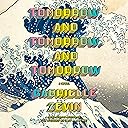

NEW YORK TIMES BESTSELLER Sam and Sadieโtwo college friends, often in love, but never loversโbecome creative partners in a dazzling and intricately imagined world of video game design, where success brings them fame, joy, tragedy, duplicity, and, ultimately, a kind of immortality. It is a love story, but not one you have heard before. "Delightful and absorbing." โ The New York Times "Utterly brilliant." โJohn Green One of the New York Times โs 100 Best Books of the 21st Century One of the Best Books of the Year: The New York Times, Entertainment Weekly, TIME, GoodReads, Oprah Daily From the best-selling author of The Storied Life of A. J. Fikry : On a bitter-cold day, in the December of his junior year at Harvard, Sam Masur exits a subway car and sees, amid the hordes of people waiting on the platform, Sadie Green. He calls her name. For a moment, she pretends she hasnโt heard him, but then, she turns, and a game begins: a legendary collaboration that will launch them to stardom. These friends, intimates since childhood, borrow money, beg favors, and, before even graduating college, they have created their first blockbuster, Ichigo. Overnight, the world is theirs. Not even twenty-five years old, Sam and Sadie are brilliant, successful, and rich, but these qualities wonโt protect them from their own creative ambitions or the betrayals of their hearts. Spanning thirty years, from Cambridge, Massachusetts, to Venice Beach, California, and lands in between and far beyond, Gabrielle Zevinโs Tomorrow, and Tomorrow, and Tomorrow examines the multifarious nature of identity, disability, failure, the redemptive possibilities in play, and above all, our need to connect: to be loved and to love. Review: How This Book Resonated With Me - I learned about this book because a friend of mine was reading it as part of her book club. I thought maybe it would have been a fun topic for discussion. I ended up getting it and reading it in 3 nights while trying to go to sleep. She was not happy with me when I told her I'd read it and she was only a third of the way through. Nor did she connect with the characters at all, thinking them alien and strange. That assessment extended to me when I told her I saw elements of myself in the characters, especially Sam and his experience with Sadie. Superficially, the book is about 3 people who form a company to develop video games. In reality, and the reason it is powerful, is it grapples with creation and the development process, how love evolves over life-long friendships, and how the feelings associated with mutual intellectual pursuit and romantic attraction can become entangled. The book has nice lessons on how love persists even after a romance ends, how love persists but transforms over time, and how love can involve emotional and intellectual intimacy without romance. I really enjoyed the book because it tied into personal experience from 30 years ago. I was able to remember them and relive them. In my case it was aerospace-related development isolated with my equivalent of Sadie, but the emotional experience was much the same. It was wild and crazy and exhilarating and terrifying, but I would not have skipped it for the world. The video games described in the story aren't real but sound like games I would like to play. I don't know how realistic the development process is; my software development experience did not involve games. My only game development experience has been creating objects that go in a game, and that's more artwork than software development. One thing that did not sit true was the MIT professor Dov and the dysfunctional relationship he had with his student. I've studied there. I never saw anything like this. In reality, someone like Dov would have run afoul of the disciplinary committee quickly. Leaving this subplot out of the book would not have lost anything. In summary, I enjoyed the book because I resonated with the characters and it made me relive some of my life experiences. It's probably not for everyone, but I found it a an impactful and fun read. Review: A Love Letter to Video Games (and the friends we made along the way) - This book seems to be sweeping the nation as the new โThe Fault in Our Starsโ. Itโs got higher than 4 and a quarter stars for having 300,000 reviews, which means itโs a box office smash (at least as far as books ago). So what is it about? Is it a romance? An adventure? A family saga? Kind of all three, but also not all three. Itโs the story of two people who create a video game company. These two, a girl and a guy, used to be friends as pre-teenagers, but had a falling out. In college, they both fall into programming which leads to video game making, which leads to the story at hand as they become friends and business partners. Also, itโs about the other people that come into their life as a result of that, such as the best friend/roommate who goes from theater major to video game producer and the girlโs college professor. The story takes place from 1995 up to present day. Letโs talk about the two main characters. One is Sam. His trauma is that he has a foot that was broken in a million places, a handicap which has made him taciturn and stoic, though he reads like autisticโoveranalytical, judgemental, aloof. The second is Sadie who also found solace in video games, as her sister had childhood cancer and became the focus of the familyโs attention. She bonded with Sam since they both were often in the childrenโs ward of the hospital. Sadie has bouts of depression and insecurity, even though sheโs a game-making genius. This leads to an affair with her foreign-born video game professor whoโs one of โthoseโ types (egotistical, pompous, always thinks heโs right and everyone elseโs opinion is wrong) and much unhealthy relationshippage occurs. From the first chapter, I wasnโt sure how this would go down. Since the first main character is Sam, it sounded โThe Curious Incident of the Dog in the Night-Timeโ. The writing sounded like writing. The dialogue did not sound like how people talk. But I gave it the benefit of the doubt and continued. It starts out almost being a sick kids romance (The Fault in Our Stars, Everything, Everything, Five Feet Apart) But I was able to get past that and into the core of the book, which is about the creation of video gamesโwhat ludonarration means, video games as art, as ways to make the audience feel something. It romanticizes the idea of video game development, ignoring things like โcrunch timeโ, running a business, office politics, and other meta elements that come with complex media production. Instead, the author focuses on the relationship between the people working on the project (e.g. game producers as public figures such as Will Wright or Richard Garriott). The author is writing video games not as they were but how she wishes they could be. Which would be fineโฆ if the majority of this book didnโt take place in the past. See, the big video game they make is called โIchigoโ and the way they talk about it, it seems to be along the lines of โLimboโ or โUndertaleโ. It sounds artsy and avant-garde, which would be fine if this took place today. But in 1995, there were no such things. Video games didnโt make people cry in 1995. And they certainly werenโt used as pack-in games for new consoles, which is what this game becomes (as part of a plot point). The top games in 1995 were Quake, Duke Nukem 3-D, Command and Conquer, Super Mario 64, etc. War games. Shooters. Well-established franchises. You couldnโt be successful unless you were at least a little bit commercial. There is no freakinโ way someone would have made an artsy game as the pack-in. (They werenโt even using pack-ins anymore by this time.) And certainly not a game from a new unproven studio with just two people. There were no Bastions or Insides or Journeys or even Bioshocks that you could point to and say โhereโs a successful example of the video game weโre making and thatโs why this is going to work.โ So thatโs what bothers me the mostโthe backdrop is not plausible, and I pointed out a hundred times where โthis wouldnโt have happenedโ, โno way should this have happenedโ, โthe industry would have reamed them out if this happenedโ. The only game during this era I could even try to point to that succeeded was โMystโ. And that game succeeded because it had a big new gimmickโthe CD-ROM which allowed complex graphics and FMVs. No such innovations in this book. It wasnโt until 2003 that companies started taking chances with non-traditional games (e.g. โKatamari Damacyโ and โShadow of the Colossusโ). On the other hand, maybe this is the author writing about video games and how they evolved as she wishes they had been. Instead of it all being guns and gore and misogynistic heroes like Duke Nukem and Solid Snake, she wrote a universe where video games catered toward all genders instead of just guys. Thereโs no reason video games had to be marketed toward boys. It was just what they did in the eighties because executives believed in โthere are toys for boys and toys for girls and there is no crossover.โ There is good writing here. I particularly fell for the beautiful chapter in the third act break (no spoilers!). If you donโt know anything about video games as an industry, you will enjoy this book. If you do, you will probably be tempted to throw it away because of how unrealistically it portrays the industry. Myself, Iโm halfway on it. The story itself feels like something that could make an excellent Netflix short series. The video game backdrop drove me nuts, but Iโd be lying if I said this wasnโt the kind of book I wish I could write.


D**N
How This Book Resonated With Me
I learned about this book because a friend of mine was reading it as part of her book club. I thought maybe it would have been a fun topic for discussion. I ended up getting it and reading it in 3 nights while trying to go to sleep. She was not happy with me when I told her I'd read it and she was only a third of the way through. Nor did she connect with the characters at all, thinking them alien and strange. That assessment extended to me when I told her I saw elements of myself in the characters, especially Sam and his experience with Sadie. Superficially, the book is about 3 people who form a company to develop video games. In reality, and the reason it is powerful, is it grapples with creation and the development process, how love evolves over life-long friendships, and how the feelings associated with mutual intellectual pursuit and romantic attraction can become entangled. The book has nice lessons on how love persists even after a romance ends, how love persists but transforms over time, and how love can involve emotional and intellectual intimacy without romance. I really enjoyed the book because it tied into personal experience from 30 years ago. I was able to remember them and relive them. In my case it was aerospace-related development isolated with my equivalent of Sadie, but the emotional experience was much the same. It was wild and crazy and exhilarating and terrifying, but I would not have skipped it for the world. The video games described in the story aren't real but sound like games I would like to play. I don't know how realistic the development process is; my software development experience did not involve games. My only game development experience has been creating objects that go in a game, and that's more artwork than software development. One thing that did not sit true was the MIT professor Dov and the dysfunctional relationship he had with his student. I've studied there. I never saw anything like this. In reality, someone like Dov would have run afoul of the disciplinary committee quickly. Leaving this subplot out of the book would not have lost anything. In summary, I enjoyed the book because I resonated with the characters and it made me relive some of my life experiences. It's probably not for everyone, but I found it a an impactful and fun read.
E**U
A Love Letter to Video Games (and the friends we made along the way)
This book seems to be sweeping the nation as the new โThe Fault in Our Starsโ. Itโs got higher than 4 and a quarter stars for having 300,000 reviews, which means itโs a box office smash (at least as far as books ago). So what is it about? Is it a romance? An adventure? A family saga? Kind of all three, but also not all three. Itโs the story of two people who create a video game company. These two, a girl and a guy, used to be friends as pre-teenagers, but had a falling out. In college, they both fall into programming which leads to video game making, which leads to the story at hand as they become friends and business partners. Also, itโs about the other people that come into their life as a result of that, such as the best friend/roommate who goes from theater major to video game producer and the girlโs college professor. The story takes place from 1995 up to present day. Letโs talk about the two main characters. One is Sam. His trauma is that he has a foot that was broken in a million places, a handicap which has made him taciturn and stoic, though he reads like autisticโoveranalytical, judgemental, aloof. The second is Sadie who also found solace in video games, as her sister had childhood cancer and became the focus of the familyโs attention. She bonded with Sam since they both were often in the childrenโs ward of the hospital. Sadie has bouts of depression and insecurity, even though sheโs a game-making genius. This leads to an affair with her foreign-born video game professor whoโs one of โthoseโ types (egotistical, pompous, always thinks heโs right and everyone elseโs opinion is wrong) and much unhealthy relationshippage occurs. From the first chapter, I wasnโt sure how this would go down. Since the first main character is Sam, it sounded โThe Curious Incident of the Dog in the Night-Timeโ. The writing sounded like writing. The dialogue did not sound like how people talk. But I gave it the benefit of the doubt and continued. It starts out almost being a sick kids romance (The Fault in Our Stars, Everything, Everything, Five Feet Apart) But I was able to get past that and into the core of the book, which is about the creation of video gamesโwhat ludonarration means, video games as art, as ways to make the audience feel something. It romanticizes the idea of video game development, ignoring things like โcrunch timeโ, running a business, office politics, and other meta elements that come with complex media production. Instead, the author focuses on the relationship between the people working on the project (e.g. game producers as public figures such as Will Wright or Richard Garriott). The author is writing video games not as they were but how she wishes they could be. Which would be fineโฆ if the majority of this book didnโt take place in the past. See, the big video game they make is called โIchigoโ and the way they talk about it, it seems to be along the lines of โLimboโ or โUndertaleโ. It sounds artsy and avant-garde, which would be fine if this took place today. But in 1995, there were no such things. Video games didnโt make people cry in 1995. And they certainly werenโt used as pack-in games for new consoles, which is what this game becomes (as part of a plot point). The top games in 1995 were Quake, Duke Nukem 3-D, Command and Conquer, Super Mario 64, etc. War games. Shooters. Well-established franchises. You couldnโt be successful unless you were at least a little bit commercial. There is no freakinโ way someone would have made an artsy game as the pack-in. (They werenโt even using pack-ins anymore by this time.) And certainly not a game from a new unproven studio with just two people. There were no Bastions or Insides or Journeys or even Bioshocks that you could point to and say โhereโs a successful example of the video game weโre making and thatโs why this is going to work.โ So thatโs what bothers me the mostโthe backdrop is not plausible, and I pointed out a hundred times where โthis wouldnโt have happenedโ, โno way should this have happenedโ, โthe industry would have reamed them out if this happenedโ. The only game during this era I could even try to point to that succeeded was โMystโ. And that game succeeded because it had a big new gimmickโthe CD-ROM which allowed complex graphics and FMVs. No such innovations in this book. It wasnโt until 2003 that companies started taking chances with non-traditional games (e.g. โKatamari Damacyโ and โShadow of the Colossusโ). On the other hand, maybe this is the author writing about video games and how they evolved as she wishes they had been. Instead of it all being guns and gore and misogynistic heroes like Duke Nukem and Solid Snake, she wrote a universe where video games catered toward all genders instead of just guys. Thereโs no reason video games had to be marketed toward boys. It was just what they did in the eighties because executives believed in โthere are toys for boys and toys for girls and there is no crossover.โ There is good writing here. I particularly fell for the beautiful chapter in the third act break (no spoilers!). If you donโt know anything about video games as an industry, you will enjoy this book. If you do, you will probably be tempted to throw it away because of how unrealistically it portrays the industry. Myself, Iโm halfway on it. The story itself feels like something that could make an excellent Netflix short series. The video game backdrop drove me nuts, but Iโd be lying if I said this wasnโt the kind of book I wish I could write.
N**E
I donโt often write reviews, but when I doโฆ
It has been a long time since a book has left me as mesmerized and energized as this one, and a long time since Iโve felt compelled to write a book review. Which is to say , Tomorrow and Tomorrow and Tomorrow is that kind of a book , a fantastic book. A book that leaves you wanting to do something , to be someone , just beyond the horizon of your own predictability. It is the sort of book that lingers on your lap for some time after youโve turned the last page, makes you want to clear your morning schedule after youโve been up all night reading, just to spend a little more time luxuriating in Zevinโs infinite world of possibility. Tomorrow and Tomorrow and Tomorrow is the kind of book that makes zealots of complacent readers and idolaters of aspiring and established writers alike. I will admit, I was in no way drawn to the premise of this book. I have no interest in gaming. Or programming. In fact , this 400 page novel, ostensibly about three Harvard and MIT educated video game programmers, sat on my nightstand looking pretty for about a month. And it would have ended there except Iโm an aesthete by nature, and it really was pretty. So it could not go ignored for too long. The cover is a work of art in and of itself. Psychedelic Tomorrows appear like scratchboard art etchings, suspended against a โstorm tossed seaโ- the iconic Great Wave off Kanagawa originally fashioned in 1831 by Japanese artist Katsushika Hokusai. And while they say you shouldnโt judge a book by itโs cover , in this case , you would be wise to do just that. TTT is not just a book about gaming. Yes itโs the story of three programmers coming together to build something that will come to define a generation. But itโs more than that. Itโs a book about coming together to build something that is more than the sum of its parts. A book about friendship, ambition, disability, and triumph and all the different kinds of love you will inevitability experience along the way. Zevinโs world is a physical world but also a digital one, a world of infinite possibilities. A where players can be reborn and cheat death a thousand times. A place where disability wonโt impede your ability to soar to new horizons. Or to craft those horizons. Her characters are unforgettable. All MIT and Harvard prodigies in their own rights, we have Sam, a disabled Jewish-Korean orphan, Sadie, an Ashkenazi California native and Samโs childhood best friend, business partner and fellow gamer. And thereโs Marx, a Korean Zac Morris of sorts whose effortless beauty, generosity, and charisma often obscure the fact that he is as brilliant and creative as his quirkier tech-centric peers. In the 400 beautifully written pages of Zevinโs latest novel , These characters come together to form one of the strangest and most beautiful love stories youโll come across in modern day literature. Friendship, as it turns out โ-may be the greatest love of all. I wonโt say more . At a certain point . You have to let the work speak for itself . Five stars
B**D
A beautiful story of friendship, love, loss, and the need to create
I had no idea what to expect when I started Tomorrow, and Tomorrow, and Tomorrow. I had heard what an amazing book it was, that it was the book of the year for several outlets, and that it was a story about two friends making a video game together. But wow, was this book incredible! It touches on so many things, including the ups and downs of a multi-decade friendship, love, death and trauma, LGBTQ+ rights, womenโs equality in the video game industry, mental health, race, and disability. I really donโt want this to be a spoiler, so I donโt want to give away too many plot details, but here is a brief synopsis: Sadie and Sam meet when they are around 12. Sam is in the hospital after a car accident. After their friendship is tested for the first time, they donโt talk for years, but they meet up again in college. Itโs then that they decide to build their first video game together, along with their producer and friend, Marx. They create a game company and continue making more games over the years as their company grows and they become leaders in the video game industry. During this time, their friendship continues to be tested in so many ways as new colleagues come into their lives and love interests develop. A huge tragedy strikes, driving them apart for years. But in the end, their friendship comes full circle and begins healing once again. I LOVED the character development in this book. Sam, Sadie, Marx, and their colleagues and loves all felt so realโall with their own strengths and weaknesses. There are a couple very unique parts of this book. In one, Sam and Sadie are playing a video game Sam built, and the story is written from the perspective of their characters. Another breathtaking part has to do with a character in a coma and how they are processing the world around them. You donโt have to be a gamer to enjoy this book, because the true heart of this story revolves around the characters lives and relationships with each other. If youโre looking for a unique, beautiful, sometimes heartbreaking story, I highly recommend this book!
M**E
Tomorrow x 3
I was very disappointed with this book as the first 1/3 of it was simply enchanting and roped me right in. It's the mid-1990s in Boston and we quickly meet Sadie, an MIT freshman and Sam, her dear old friend from LA, who's now a student at Harvard, as well as Sam's handsome roommate, Marx. Three precocious college kids, who enter into an informal partnership designing a video game that becomes an international sensation and changes their lives as they establish a booming gaming design business in LA. All three have interesting past histories that are woven into the first chapters in very engaging flashbacks. No spoilers here, but perhaps unsurprisingly, with their great success comes doubt, apprehension and disagreement about what their shared future might bring, as well as sexual tensions and petty jealousies. I found myself genuinely moved by the issues Sam and Marx encountered as they matured into adults but the author seemed determined to make Sadie unreasonably and increasingly selfish, shrewish and unlikeable as the story continued into the 2000s and ended in 2014. It frankly puzzled me that a young female writer would draw her heroine like that when she was so empathetic to her two male characters and their more complex and poignant personalities. Unfortunately for me, Sadie never redeemed herself and brought down the buoyant mood of the story's beginnings. There are lots of details and descriptions of video gaming throughout the book, which I enjoyed at first but eventually tired of, as I have no experience with nor particular interest in the phenomena. Certainly, readers who are fans might well have a very different reading experience of this aspect than I did. And there are some wonderful supporting characters, including Sadie's wise grandmother, Sam's beautiful single mother, Marx's parents and a young gay male couple who become friends and colleagues with the leading trio, who I wish were all more fully fleshed out. Instead we just get more of Sadie's rather incomprehensible insecurities and paranoia. I think the book needed stronger editing and perhaps some cutting in the middle section. Nevertheless, I did find most of the book emotionally involving and I'm curious about reading the author's earlier success, The Storied Life of A.J. Fikry. And I look forward to Gabrielle Nevins' next book.
F**R
Young adults create video games while also trying to survive their personal angst
The author wrote that this novel was about work and equally about love. To me, this story has three major themes: friendship, enduring a one-sided romance and love in its many different forms. Maybe thatโs the difference between the authorโs intention and this readerโs interpretation. The book is also about starting a successful video-gaming company, though I saw that as the backdrop upon which the bookโs characters lived their lives. This is very much a character-driven novel. And I simply enjoyed reading about these characters as they began living the start of their professional and emotional lives. This part constitutes the majority of the story. But then, at some point, the book takes a dramatic turn, making the story sadder and yet, counterintuitively, also a bit more fanciful (in parts). Still, the ending subtly evokes hope, but without subjecting the reader to a trite fairytale ending. Bottom line: Good character-driven drama. Has a โfeels-realโ tone (even though not everyone can create a successful video-gaming company).
L**R
great book even if not a gamer
Finally got this out of my tbr listโฆ.so glad I did. I am not a gamer but it fascinates me how people become immersed in games like I do in books! The concept that ties these two worlds together is games and books are a way to escape, immerse yourself in another world, and hopefully learn something about yourself or the world you are in. Itโs living a thousand lives via technology rather than the crisp clean pages of a book. This story was so much more than about gamingโฆitโs also about human emotions and life events that touch even the most introverted of us. I enjoyed this book immensely and learned a lot of new words which was so refreshing! Great readโฆ.i would recommend whole heartedly!
D**9
Book Review
A beautiful story of success, friendship, loss and love. Characters were flawed but relatable. Story was well written.
P**P
Great story, good characters, and allllllll that video game lore
Great story. Intriguing interpersonal conflicts. Finely-etched characters....I *know* these people. And, of course, for people who love such things, lots and lots of video game lore. Zevin's fictional characters are as diverse as the factual America; my only criticism of Zevin's work is that she wears her characters' diversity on her sleeve. That is to say, the characters would still have been strong (arguably more so) if Zevin had chosen to be subtle with their diversity. Let the storytelling do the storytelling. Political undercurrents are more intriguing, more entertaining, and more artistically satisfying than political rallies. I will read this novel again after a few years, and I will keep an eye out for Zevin's next work.
F**O
Fast delivery, nice book
Very nice book, really recommend it!
B**K
Love story with a gaming backstory
Enjoyed the book, love story with some ups and downs. Had a bit of nostalgia from some of the games mentioned in the books.
L**T
Great read
Enjoyable drama following the lives of 3 friends for about 30 years through youth and young adulthood. Interconnected relationships, lots of love and complications. Backdrop of tech and gaming.
K**O
Probably the best book I've read in decades
This book made me cry and get angry at people I don't know for the first time since high school. 10/10 read for any millenial who grew up with vidya and would like 400 pages of nostalgia hit.
Trustpilot
3 weeks ago
1 month ago