
Buy anything from 5,000+ international stores. One checkout price. No surprise fees. Join 2M+ shoppers on Desertcart.
Desertcart purchases this item on your behalf and handles shipping, customs, and support to France.
🚀 Unlock Russian fluency with the ultimate beginner’s blueprint!
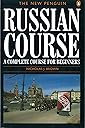
The New Penguin Russian Course is a 528-page, perfectly bound comprehensive beginner’s guide that teaches Russian from alphabet to conversational grammar. Praised for its logical structure and deep focus on spelling and grammar, it’s designed for dedicated learners aiming to master Russian beyond holiday phrases. With a 4.6-star rating from over 1,850 reviews, it’s a proven resource for building lasting language skills.

| Best Sellers Rank | 15,645 in Books ( See Top 100 in Books ) 29 in Vocabulary Reference 30 in Grammar, Structure & Syntax 85 in Language Training by Language |
| Customer Reviews | 4.6 out of 5 stars 1,889 Reviews |
R**8
The best beginners book.
I've tried a few Russian Courses (including the BBC Talk Russian), but they didn't seem quite right. These courses were more aimed at learning to speak some basic Russian (holiday) phrases, rather than a good understanding of the language itself. In learning this way, though, I think you actually make it harder for yourself (even to learn the holiday basics). If you're thinking of choosing between the BBC course and this one, I'd suggest this. The BBC course gives you a very basic understanding of the Russian alphabet (one page!) and then focuses on teaching holiday phrases. This may seem ideal (if you're just going to St Petersburg for a week), but it isn't very easy this way. To learn the alphabet simply from a list of letters and then expecting you to read words through listening to them isn't the best way. In this (Penguin) course, there is a very good opening chapter (see the "Look Inside") that teaches you the alphabet properly. This is critical! (And it doesn't take long to learn). You need to understand how to pronounce the letters, and understand them in context, before you can move on to learning phrases. True, you do get to "hear" the words in BBC Talk Russian, but learning how they sound is no substitute for being able to remember Russian words accurately from their spelling. Whereas there is light emphasis in the BBC book on both learning through spelling and listening, there is strong emphasis here on learning through spelling. The good thing is that Russian (unlike English -- think: "thorough") is a very literal language, and most words sound exactly like they are spelled. You don't really need to learn them by ear (it helps to fine-tune your understanding, but you're far better (given how quickly this book teaches it) learning how to read Russian properly first). It's like learning to read a map and navigate: would you prefer to be presented with a key to the map and road systems and then simply learn the routes you needed, or would you be better being talked through the symbols and roads in logical sections and given a good grounding in the basics to navigate any route? This is a fairly comprehensive course, that aims to take you to "A-Level" standard. It's something you can constantly pick away at, but if you're simply looking to learn some holiday Russian, you would still be better (in my eyes) using this book to get a good basic understanding of the alphabet and grammar -- and then learning a few lists of holiday phrases (or then using BBC Talk Russian) after. The way the book is laid out is perfect, and has clearly been written by somebody who knows how to teach languages. For example: as you are learning the alphabet, you are also given lists of useful words to spell (in Russian), so not only are you learning the alphabet, but you are growing a vocabulary as you go). The book is perfectly structured, and moves from the alphabet to handwriting to learning phrases to grammar in a logical and easy to digest way. Throughout, you are also given useful titbits that help you to see the language in action. If you put in the work, then this book will reward you well. It is ideal for beginners; if you just want to learn holiday Russian, then use this book to understand the basics for a couple of weeks and then move onto holiday phrases. You will learn how to form basic sentences (rather than just learning phrases). You will develop a ground-level understanding of the language, whereas if you put your efforts into the BBC book, you will simply learn a list of automated phrases. The bottom line is that Russian isn't the simplest language to get by in, but if you put the time in this book will make it easy to learn. Use this book daily (and revise constantly), and you will soon be confident in basic Russian. It will also take you far further if you work through the whole book, to the point where you can comfortably type, write and speak Russian to conversational level. One last thing: there is an excellent site for practising the Russian alphabet (and other aspects of Russian), and if you search "practice russian" you should find it. Best of luck, and I hope this review was helpful if you're wondering where to start.
D**X
A comprehensive grammar guide for beginners
One year ago when I began to devote myself to learning Russian, I didn't know one solitary word of this beautiful and sometimes grammatically complex language. I followed the good advice of previous reviewers and purchased this text book immediately. I can say one year later on, it was a very wise choice. This book is layered in a very logical and easy to understand manner. The six grammatical cases in Russian are excellently explained, as are all the chapters on the basic essentials, such as the alphabet, handwriting, verb conjugations, numbers etc. The one thing any newcomer to learing Russian must remember: You need dedication, practice, time and then more practice. If you have these ingredients then this book will be a perfect guide and will help you immensely in your quest to learn this remarkable and fascinating language. The only downside to this book is that it can't pronounce the words for you, and believe me there are many instances when pronouncing a Russian word using english letters is near impossible to sound correctly. What you might think is the right sound for a Russian word, can sometimes be quite embarrassingly off the mark. But don't let this put you off, you can't get any more from a beginner's guide. I can boast that after learning seven or eight hundred words and six grammatical cases (N.A.G.D.I.P or (L))in one year, with limited time spent in Ukraine is quite an achievement(as I have never studied any other language!) and I owe it to this remarkable book. By the way your knowledge of English grammar will also benefit from reading and studying this text.
A**R
Quite good for its size, but it has one big flaw
The book has a typical no-nonsense approach, without pointless drawings, so it covers quite a lot for such a small book. The layout and style used to be much more common than in modern textbooks: introduce new vocabulary for every chapter, start with one or more grammatical themes, offer several examples and a dialogue, and then give exercises to practice. The grammar in introduced with simple explanations, avoiding unnecessary jargon, and it has a reasonable amount of examples to illustrate them. The total vocabulary used is about 1500 words, which is reasonable for a beginner, although you are expected to take it from there and expand your vocabulary considerably unless you intend to keep your Russian to a very simple and straightforward exchange of short, simple sentences, rather than a proper conversation, or the ability to read normal literature. Of course, the book is not intended to be the only resource to learn the language, so you need to complement it with other materials, especially sound. Another good thing about the book is that it starts introducing the Cyrillic script, and in chapter 2 introduces the cursive writing as well, which looks almost like a completely different writing system to the untrained eye, but it is something essential for anyone who is serious about learning the language. The downside is the pronunciation. Ideally, the book should offer the option to purchase a CD/mp3/tape or whatever, because Russian is not exactly an easy language to pronounce for a non-Slavic speaker; this is why I gave it 4 stars, and why I hesitated to even give it 3. The book describes how to "pronounce" the letters of the Russian alphabet, but the explanations are extremely inaccurate, and your pronunciation will be atrocious if you just follow the explanations. For example, it says that the Russian K sounds like in "kangaroo", but this is wrong, because the k in kangaroo has an aspiration, whereas the Russian K never has aspiration. The book should have picked a word like "sky" that doesn’t have an aspiration and it is practically identical to the Russian one; this might sound like nit-picking, but the difference is very significant to Russian ears. Same thing with T: the example says it sounds like "tan", but it actually sounds like in "stand", where there is no aspiration. It also says that Ш sounds like something in Welsh, which is not true (you can find the sound in Chinese, though), and ж is supposed to sound like in “pleasure”, and although it is not too far off, the tongue should be curled backwards. Russian has several sounds that don't exist in English, so saying that it sounds like X or Y in English is just useless, because you'll pronounce the wrong sound. Without sound files, the book should have provided a serious phonetic transcription like the IPA, even though most English speakers don't know it, and provide a 3-5 page explanation on how the symbols are correctly articulated; at least you would have an accurate transcription of the real sounds if the ideal resources are lacking, i.e. recorded sounds by native speakers. Have you ever struggled to understand a foreigner trying to speak your language, because a lot of sounds were very… weird? Chances are they also used a book in their language that said "The letter R in English sounds like XXX in Chinese/Vietnamese/whatever". Now you know how you'll sound without sound files or accurate transcriptions.
C**T
We're so lucky really...
Since beginning to learn Russian I have bought a fair few books, but know I study from a core few... including the New Penguin Russian Course. It's a great book, packed full of informtion and could potentially lead you to an A level. It's design for the more serious student rather than those looking to learn casual phrases before going on holiday. Russian is a difficult language to learn, so bear in mind that it's going to take a long time and will require oodles of hard work and dedication. Don't think weeks or months; be realistic and tell yourself it's going to be a number of years before you'll become reasonably proficient. I guess that's why so many people give up? To begin with, you'll feel you're forgetting words as fast as you learn them, but as you go over and over it those words begin to stick into your brain. My biggest headache (and I suspect others might agree) is that I had to learn English grammar in order to begin to understand Russian grammar. We're so lucky that we have a plethora of resources available to us nowadays. So allow me to recommend a few ideas... The New Penguin Russian Course, Michel Thomas Russian Course (audio), Oxford Russian-English dictionary (mine's downloaded onto my iphone, so it goes everywhere with me, Oxford Russian Grammar and Verbs, Internet radio (listen to native Russians chatting even though you might not initially understand what's being said... it helps you tune in to the intonation) and buy Russian films with English subtitles. If you can, try and find a native Russian speaker who'll help you to correct pronunciation and other aspects, particularly cases. If you're unable to find someone locally (I was very lucky in rural Dorset) then try the online community, Language Exchange. Learning to read Russian is fairly easy; you'll make silly mistakes for a while, but take it slowly and you'll soon be astonished with yourself. With that it mind, don't forget Google translate. It's a pretty usefull tool, though it does modify some of my naughty words! Good luck.
P**3
A fantastic beginner book
This book is superb for those wanting to learn Russian. It's ideal for those who've never learned a single Russian word but also those up to intermediate level, in my opinion. It is so easy to understand and the author explains difficult aspects of Russian grammar very well, in his easy-to-digest writing style. I particularly like that the exercises contain the page reference numbers of where the answer was first taught - so you can flick back through the book and remind yourself of how a verb changes in a certain form, or a rule etc., in order to be able to answer the question. My old book didn't have this and I had to spend ages looking through the book or my dictionary which made progress slow and infuriating! Read this book from the beginning, do all the exercises and you can't go wrong. The author writes with an informal tone which makes it pleasurable to read and understand - again unlike other books I've seen. Like the author says the hardest bit about learning Russian is the vocab; once you have your head around the grammar it's just a case of learning new words. Best book I've seen so far for learning basic Russian, I can't recommend it enough.
K**R
Thorough and interesting guide to the Russian tongue.
I purchased this book on the strength of the reviews here. The book does a marvelous job of introducing the Cyrillic alphabet, which is one of the biggest hurdles to a new learner. There are many interesting cultural insights that as well as helping give you a fuller picture of the Russian speaking mindset, actually clues you in to some essential etiquette. Some have marked this book down because they found it to hard going or too dense in terms of grammar. To those people I would say, it's Russian, it's mostly hard, deal with it! Short of paying for an immersion course or going to live in Russia there is no way around the fact that you must understand grammar before you start learning any other language, especially one that does things as differently as Russian when compared to English or French. The book does in fact provide brief explanations of any grammatical terminology it uses so if you are reasonably sentient there is no problem. Just give it time, concentration and practice and you progress at a satisfying pace. Only possible draw-back is the lack of accompanying audio, but you could order this along with the Michel Thomas Russian Foundation by Natasha Bershadsky. This is also very good at introducing the sounds of Russian, the intonation patterns and much grammar as well. The Michel Thomas is good but combined with this Penguin book you will soon start to feel at home in this beautiful language that can appear quite alien at first.
L**S
An excellent course in Russian going to A level which You do in your own time, well worth buying
I havent properly started this language book yet as it is a course and therefore i will scan it and learn from it start to finish as it is meant to be- looking at a glance though and speaking a small mixture of Russian and Polish, i can see that this book of perfect size, not overwhelmingly large or to small which is great if you have dyslexia like myself contains all i need to start reading and speaking Russian which i think is a beautiful language, i'd advise you get some accompanying books including the Oxford Russian/English-English/Russian range including Grammer and Verbs and a phrase/sentence book just to aid you along the way.
A**R
... on Amazon as “a bestseller” and it is a good (solid) reference book
It is marked on Amazon as “a bestseller” and it is a good (solid) reference book. The explanations are short and clear with examples followed by exercises. I read a review on Amazon complaining that there were not enough exercises to practice. I would agree with that, but considering that the book covers the main grammar points, provides texts and dialogues to read and all that on almost 500 pages including a glossary, I think if the author included more exercises the book would be thicker than “War and Peace” (about 1000 pages). It is called a complete course for beginners, and of course, we all different, somebody can communicate in a new language in a year, somebody might find studying a language is a very hard work but if I were to learn the Russian using this book as a “self-tutor” (as it suggests in the description) I would struggle. First, there is no audio material, which is strange, because nowadays almost every language course book either has CDs or links to audio files you can listen to or download. I want not only to be able to read dialogues in the book but to listen to them and be certain that I read them correctly. Second, not a huge problem, but as the Russian language teacher it always surprises me when in the 1st or 2nd lesson (like in this book) the author wants you to learn the Russian handwriting. Why do you need to spend a whole lesson on it especially at the beginning? It is not that important in learning any language. Handwriting is something you can learn later. Third, quite a lot of dialogues, “useful” phrases are built around vodka, drinking vodka”. I wonder if it’s a specific subject of interest for the author or he thought that it was essential for any student studying Russian to know the vocabulary around drinking alcohol and vodka. Fourth, being a Russian I can’t help noticing a few small mistakes in the Russian texts, exercises or dialogues. And when I read them I think: “No, I wouldn’t say it like that in Russian, it doesn’t sound Russian”. For example, in lesson 13 there is a dialogue in which one of the speakers says: Я уже прочитала три романа Достоевского по-русски. – I have already read three novels by Dostoevsky in Russian. Instead of «по-русски», I would say «на русском (языке)». But I can use the expression «по-русски» if I need to say that I read in Russian in general: я читаю по-русски. Or another example (lesson 17) - Скажите, пожалуйста, когда открывается этот магазин? (Tell me, please, when does this shop open?) - в 11 часов. (at 11 o’clock) Here when I want to know the time the shop is opened I would ask not «когда» but «во сколько» or «в котором часу». If somebody asks me: “Когда открывается этот магазин?”, my first reaction would be to say, for example, «сегодня» (today) or «через год» (in a year). But in general, I believe, this book can be a very useful grammar reference book in case if you need to check yourself or quickly learn this or another grammar topic, though I personally wouldn’t recommend it as a self-study book for a beginner.
M**.
Muy buen libro
Tenía mis dudas pues como dice el título es para principiantes. Yo ya tenía conocimiento del alfabeto, ya podía leer y entender algunas palabras, también cantar algunas canciones que me gustan. Sin embargo, a pesar de todo, mi conocimiento del idioma Ruso es bastante precario. Me llamó la atención por los comentarios de los compradores que mencionan que a pesar de ser muy básico abarca todo lo necesario para poder comunicarse y darse a entender aunque sea con un vocabulario limitado respecto a un hablante nativo en la vida diaria PERO suficiente para tener una conversción básica. Lo primero que revisé fue el índice de contenido y cubre varias de las cosas que yo no podía entender y nadie te explica, como el uso de las conjugaciones, los casos y los aspectos ya que el idioma Ruso no maneja artículos y preposiciones como en el Español, Inglés, Alemán, sino prefijos y sufijos (análogo al Latín). Vamos, no te quiero preocupar haciendo parecer algo imposible el idioma sino más bien animar a comprar este libro pues cubre muchos temas concentrados en un solo lugar. He tomado cursos en línea que solo son memorizar palabras y frases que no sirven para conversación fluída. He visto tutoriales y libros (pdf) que si bien te animan a aprender, estos solo cubren algunos pocos temas específicos y tienes que ampliar la información buscando en diferentes medios. Lo que me gustó de este libro es que contempla un poco de todo y cubre lo necesario para entender el mecanismo del idioma. Yo soy programador de computadoras, manejo varios lenguajes y veo a los idiomas de una manera sistematizada. Es decir, me parece más importante aprender cómo funciona que solo memorizar palabras, frases, etc. pues una vez que entiendes y aprendes las reglas, el vocabulario adicional lo puedes ir aprendiendo sobre la marcha y solo aplicas las reglas que ya conoces para utilizarlo y agregarlo al uso diario. Hay que memorizar vocabulario, eso es indudable, pero es más importante aprender las reglas de cómo usarlo. Reitero, asi a simple vista y ya conociendo algo del idioma es un libro PARA PRINCIPIANTES, vas a requerir más fuentes y continuar aprendiendo pero te va a ayudar a iniciar el camino en el idioma Ruso de la manera correcta. Ya para terminar, he tenido el pasatiempo de aprender varios idiomas aunque sea de forma simple pero ayuda mucho a comprender algunas cosas, por ejemplo, si algo no lo entiendes traducido al Español, seguro lo entiendes traducido al Inglés u otro idioma, ayuda mucho a entender la mecánica de los idiomas y tener comparativos o equivalencias que hacen más clara la comprensión. Algo más, el autor escribe de forma muy amena y agradable, no va a ser pesado leer y ponerse a estudiar. Apenas voy comenzando el primer capítulo pero en base a lo poco que ya conocía sobre el idioma Ruso les puedo decir que es un gran libro. Vean los comentarios de más compradores, no se van a arrepentir...
S**D
Ideal for the independent learner
I cannot recommend this book highly enough. I've been learning Russian independently for about a year now, and I bought this book along with a college textbook being used at a local university. Amazingly, even though this book is far less expensive, I consider it superior to that textbook as well as other Russian textbooks I've seen. This book is great for the self-learner because it has many exercises and examples throughout, and everything is explained in a logical manner. Also, unlike most college textbooks, all of the solutions are in the back, so you can check and correct your answers (presumably you are buying this book to learn Russian and not to pass the class, so I'm sure there's little motivation to simply copy the answers to complete an assignment). The exercises directly relate to the associated lesson, and you'll be amazed at how much you'll learn after completing a lesson, as you'll be able to understand passages that were once unreadable to you. Be warned that the book is deceptively thin. You might look at the book, which is smaller than most textbooks, and figure that it's light on information. Trust me, it's not. Although on the outside it looks like a beach-read paperback novel that you'll be able to get through in a day or even a week, each page is packed with information, and you'll have to spend a lot of time on many lessons before these concepts sink in. Russian of course is a difficult language for a native English speaker, so don't expect to fly through this book. You shouldn't use this as your only resource if you are learning Russian. The biggest downside to this book is that it won't help your listening or your speaking (understandably, since it has no audio). You'll need to find another resource to work on these areas. Do not neglect this! I made the mistake of ignoring listening and speaking for the first few months, and I ran into an odd situation with a native speaker where I was able to read and write a few simply things in Russian but found it almost impossible to understand a single word or pronounce anything correctly (very embarrassing). In addition, you'll need to do a fair amount of studying and memorizing outside of the lessons. I found that I would learn words and grammar rules but then "forget" them after a few days or a few weeks. A lot of the grammar and declensions simply have to be drilled and memorized by brute force. Hey, nobody said Russian was easy. In short, this is an absolutely fantastic resource for a beginner who wants to learn to read and write in Russian. It is well worth the price. Get it, and you will not be disappointed. Udachi Vam!
D**L
Gut strukturiertes Buch, gut geeignet fürs Selbststudium
Alles in allem ist das Buch sehr gut, da es Wortschatz und Grammatik in sinnvolle Blöcke unterteilt und von Kapitel zu Kapitel auf diesen Kenntnissen aufbaut. In jedem Kapitel befindet sich dabei eine Vokabelliste, eine Liste mit Sätzen als Anwendungsbeispiele dieser Vokabeln, sowie ein Block Grammatik. Am Ende jedes Kapitels sind Übungsaufgaben zu finden, die die Lerninhalte des Kapitels abfragen und mit dem am Ende des Buchs zu findenden Schlüssel selbst korrigiert werden können. Es sei anzumerken, dass jedoch mehr als nur diese Übungen angebracht sind um den Stoff auch auf Dauer zu behalten - hierzu sind weitere Lernangebote zu empfehlen. In manchen Bereichen merkt man dem Buch sein Alter an, so findet man ab und an nicht mehr ganz aktuelle Wörter oder auch Sätze in den Beispielen/Übungen zu denen meine russische Freundin etwas verdutzt meinte 'Das klingt aber komisch, das würde eher ein alter Mann sagen'. Das ist jedoch nicht überzubewerten - es muss erwähnt werden, erreicht jedoch kein Ausmaß in dem es der Qualität des Buchs für das Selbststudium einen Abbruch tut. Alles in allem ein sehr gutes Buch.
G**K
Good language book for studying Russian
The book is well written and systematic. The only negative thing I have about it is the size of the font which is small. In Russian alphabets, some alphabets look quite similar. When the print is small, sometimes it is hard to tell which alphabet it is. It would help if it includes an audio CD for the pronunciation of the words.
M**N
Smells Good
One of the best smelling books I have ! And it teaches you good Russian too.
Trustpilot
3 weeks ago
1 month ago