We remain fully operational. Our teams are working around the clock to ensure your deliveries continue safely.

DOWNLOAD THE APP


Copyright © 2025 Desertcart Holdings Limited
DOWNLOAD THE APP



Buy anything from 5,000+ international stores. One checkout price. No surprise fees. Join 2M+ shoppers on Desertcart.
Desertcart purchases this item on your behalf and handles shipping, customs, and support to France.
🌠 Unlock the universe’s secrets with 37% more speed and clarity!
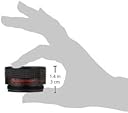
The Celestron Focal Reducer & Field Corrector is a precision accessory designed for Schmidt-Cassegrain telescopes that reduces focal length and f/ratio by 37%, converting an f/10 system to f/6.3. This results in a wider field of view and shorter exposure times, ideal for deep-sky observing and astrophotography. Fully multi-coated for maximum light transmission and housed in durable machined aluminum, it supports all standard SCT accessories and comes with a 2-year warranty and US-based expert support.

| ASIN | B00009XVHZ |
| Additional Features | Dual Focal Length Functionality |
| Best Sellers Rank | #11 in Telescope Reflectors #98 in Telescope & Microscope Accessories |
| Brand | Celestron |
| Built-In Media | Reducer - Corrector |
| Coating | Fully Multi-Coated |
| Compatible Devices | Celestron Schmidt-Cassegrain telescopes (C5, C6, C8, C9.25, C11, C14) |
| Customer Reviews | 4.7 4.7 out of 5 stars (718) |
| Exit Pupil Diameter | 31.75 Millimeters |
| Eye Piece Lens Description | Plossl |
| Field Of View | 0.04 Degrees |
| Finderscope | Reflex |
| Focal Length Description | The original focal length of the telescope, before using the reducer corrector, is not explicitly mentioned in the provided information. However, it can be inferred that for an f/10 system, the reducer corrector reduces the focal length by 37% to make it an f/6.3 system. Thus, if the focal length of the f/10 system is F, then the focal length after using the reducer corrector would be 0.63F (f/6.3… |
| Focus Type | Manual Focus |
| Global Trade Identification Number | 00050234941754 |
| Item Dimensions D x W x H | 2"D x 2"W x 2"H |
| Item Weight | 150 Grams |
| Manufacturer | Celestron |
| Manufacturer Part Number | 94175 |
| Model Name | Celestron f/6.3 Reducer/Corrector |
| Model Number | 94175 |
| Mount | Equatorial Mount |
| Objective Lens Diameter | 200 Millimeters |
| Optical-Tube Length | 105 Millimeters |
| Power Source | Not Obtainable |
| UPC | 050234941754 |
| Unit Count | 1.0 Count |
| Warranty Description | 2-YEAR WARRANTY |
| Zoom Ratio | 7 |
Y**R
Must have.
Excellent optics. Reduces exposure times. Quality manufacturing.
C**K
An essential accessory for deep sky viewing or photogrqphy with a Celestron SCT
The focal reducer is easy to screw on and of, and it fits snugly onto my Celestron 8SE. It provides a crisp, clear wider field of view, allowing me to see or photograph a larger area of the sky. It feels sturdy and well-built, with knurled rubber for ease of grip. It is a good value for the money, and recommend it for anyone getting started with a Celestron SCT.
J**Y
Worked well, easy to install
I put this on my celestron 8se SC telescope with the goal of increasing the field of view (because I have a zwo asi224mc camera with a relatively small sensor area). It was easy to install and worked quite well. Before buying it, I was worried that the focal plane would shift so much that I would not be able to focus within the limits of my focusing knob. But that worry was unfounded and I got to focus easily. I could fit the Dumbbell nebula with enough contextual background in the field of view of my camera. As far as I could tell, I did not observe significant vignetting. My plan is to leave it in the back of the telescope forever and only take it off when doing planetary observation or imaging (which requires higher magnification).
N**N
Visual or Video -A Great Accessory
I am sorry that I did not buy this accessory two years ago. It all began with a used Celestron C5. Then I bought a very nice used Nexstar 8SE and thought wow, I should have done this go-to thing sooner. After a year or so, I moved up to a new Celestron CPC925 and decided to explore video astronomy with an inexpensive Samsung SBC-2000 security cam. Most SCTs have a focal ratio of about f/10 (focal length divided by aperture) but a camera works better with a faster (shorter focal length) scope. The usual way to do that with a video camera is to screw on a small .5x reducer. So I bought on of those for $35 and was just amazed at the detail and colors in the Dumbbell Nebula. Then someone over at Cloudynights.com suggested that try adding a f/6.3 reducer (stacking reducers). So I bought the f/6.3, screwed in on the back of the CPC925, replaced the visual back and diagonal, mounted the camera (without the .5x) and stayed up until 2AM looking at the Orion Nebula. Before heading for bed, I pulled the camera, put in a 20MM 68 degree APOV eyepiece, and had another "Wow!" moment. The Celestron f/6.3 reducer-corrector really brightens the image, widens the field of view, improves contrast and detail, and flattens the image improving the look of stars near the edge of the field of view. Many people leave them on all of the time except when looking at the moon and planets or other high magnification situation. There are other and cheaper reducers on the market and they do work. However not all of them offer the same degree of improvement at the edge of the field of view. Rod Mollise writes "...6.3 r/cs are one of the best--if not the best--SCT accessories to ever come down the pike" and "I'll put it this way...the 6.3 rarely comes off the rear cell of the C8."
R**D
Solid Construction, As Advertised Optical Performance.
My main motivation for buying this was to fit the sun (and moon) into the field of view of my APS-C (24 x 16 mm) camera sensor using my Celestron 8" SCT (2000 mm FL). Using a full frame sensor is not an option since the C8 will vignette. This device also allows a slightly wider field of view and lower f-number for deep space object astrophotography. Handy reference numbers for those wishing to photograph the Eclipse or just the entire moon: Max focal length when using an APS-C camera is about 1260 mm. When using a full frame, about 1900. But only if you can center the target and keep it centered. (To photograph the moment of eclipse use 400mm APS-C/600mm Full Frame and no solar filter.) This device is not useful for solar system astronomy, except the sun or moon, or when using eyepiece projection photography. But you can always just take it off. One huge advantage of this device is that you get just about the same performance as you would with an Edge HD telescope, and the field flattener costs half as much. If you buy an Edge HD 8" OTA you get a built-in field flattener, but still have the longer focal length, and hence smaller field of view and slower f-number. To see the whole sun or moon, or a more of the Pleiades in a camera, you would have to buy another focal length reducer, about $300 bucks. Since the Edge HD comes at a $400 buck premium over the SCT you spend an additional $700 bucks to get to the same optical setup you get with the the SCT plus this item at about $150 bucks. Go with this plus the SCT and save $550 bucks, and you will even have less glass between you and the stars to boot. The construction is very solid, you should have no problem hanging a DSLR (or better a mirrorless camera) off of this thing.
M**N
Buy this, you need it.
A brilliant solution to a problem I didn't know I had. I have been doing a lot of astrophotography with my celestron scope. This is a tremendous help. Before, when trying to get a photo of the entire moon, I was taking maybe 22 photos and stitching them together on the PC for one combined picture. It took a long time to photograph and to stitch. With the reducer, the field of view is wider (but less magnification) and it took just 6 shots to get the entire moon, and I could possibly have done it in 4. With the Deep Sky Imager I am taking much superior shots of the Orion Nebula. It looks far superior with a much wider field of view and it also makes things brighter which eases the exposure problem. The product is easy to install. I can do it as the telescope continues to track. Unscrew the eye piece, screw on the reducer then screw the eyepiece into the reducer and you are ready for your wide angle shots. Summary: it is really improving my photography.
B**G
Works with Celestron C6
Glad to have it for my c6. I'm just a hobbiest, but it seems to be good quality, and it fits.
M**R
I use this often. works great!
I use this often. works great!
A**.
I have Celestron C8, this has a focal ratio of F/10. You don't necessarily need to know what that means but Astrophotographers would describe this as a "slow" ratio. Great for planetary obsevation. For nebulae, star clusters etc, still a great all-rounder, but some nebulae are quite large and/or diffuse. The focal reducer gives F/6.3. (faster). This means a wider and brighter field, though magnification can be applied to it, as normal. The Pleiades are almost all available in a low powered eyepiece, the moon is fully observable. When I went comet hunting, it gave me a better all-around view, before zooming in for the Nucleus and Coma. This may be classed as a luxury item, but it Does enrich the brightness and gives wider angle vistas. There are comments that it flattens the field. This means that at the margins of the view, in an SCT, the stellar points of light, can become slightly elongated. This is corrected with this lens. A good purchase for me, I would recomend, a good astronomer's tool, gives options. Is easy to add and take off the Telescope tube, in low light, thanks to the solid/well spaced screw thread.
R**S
Bought for my Celestron C5. Works well, nicely machined, solid and let's you have two telescopes for the price of one!
M**S
Fantastisches Teil für großere SC Teleskope. Scharfes Bild bei der empfohlenen Abstand zu Kamera Chip von 105mm. Die Korrektion am Rand ist für mein Geschmack besser als bei der Antares Variante, eventuell bei mir der Fall, da ich ein Celestron besitze.
F**B
Ainda não tive a oportunidade para utilizar. Mas o produto parece ser de boa qualidade, bem construído, em alumínio fundido e pintado, lente multi-coated.
A**A
Puedo decir sin temor a equivocarme que el aditamento ha superado con creces mis expectativas. La corrección de campo que hace es espectacular, mejora mucho la imagen y además ha vuelto a mi C11 en un telescopio súper luminoso. Probadísimo de manera muy satisfactoria en visual, y asumo que se comporta igual de maravilloso en fotografía, sólo que yo personalmente no he podido probarlo en ese rubro dado que mi aparato es de la serie CPC y por lo tanto tiene montura AZ y no cuento ni siquiera con una cuña ecuatorial para intentar hacer alguna foto de cielo profundo. Pero en visual, mis respetos para ese reductor de focal. Lo recomiendo mucho.
Trustpilot
2 weeks ago
3 weeks ago