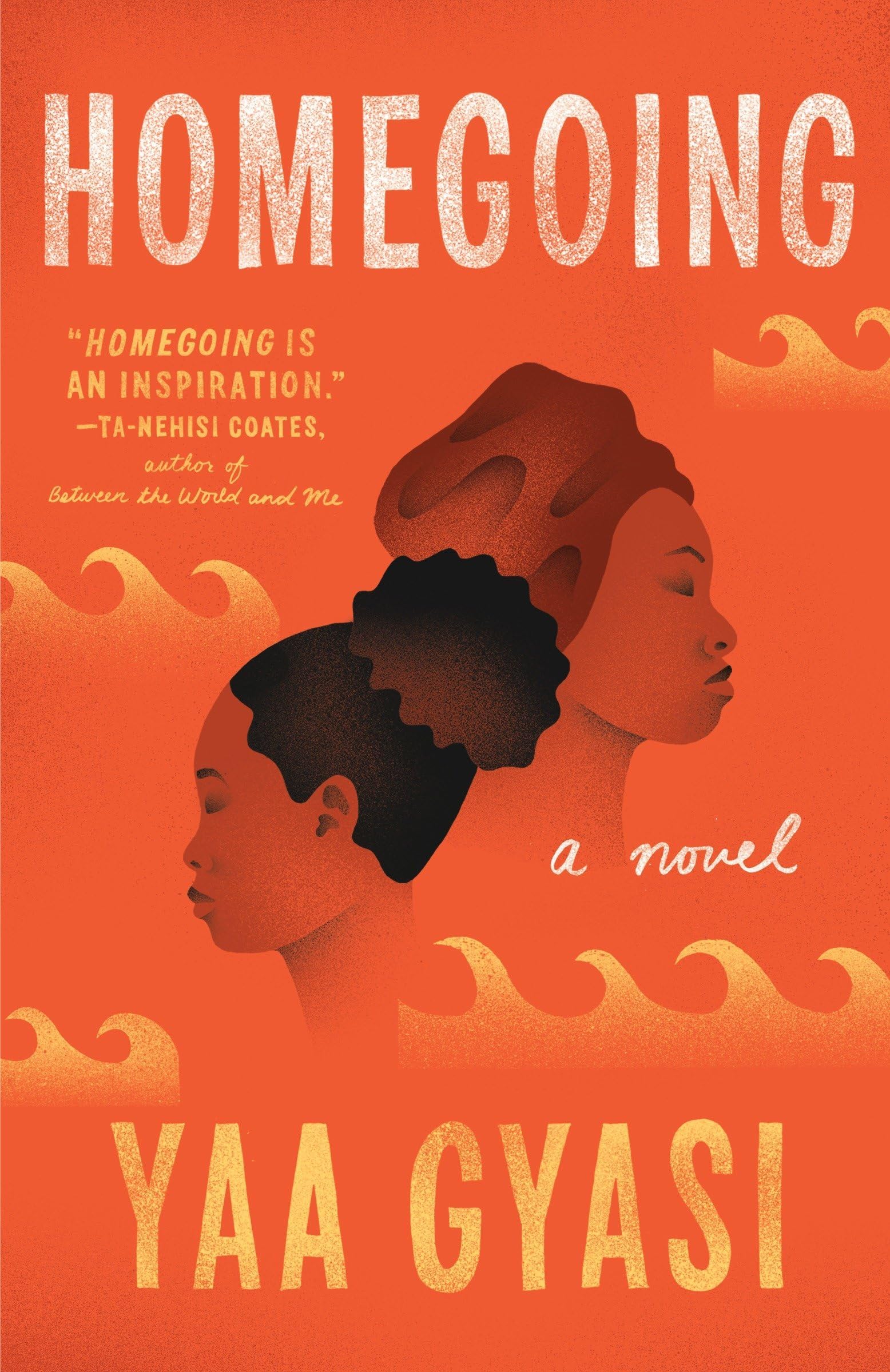
Homegoing
Product ID: 42491051
Buy anything from 5,000+ international stores. One checkout price. No surprise fees. Join 2M+ shoppers on Desertcart.
Desertcart purchases this item on your behalf and handles shipping, customs, and support to France.
INTERNATIONAL BESTSELLER • WINNER OF THE NATIONAL BOOK CRITICS CIRCLE'S JOHN LEONARD PRIZE • WINNER OF THE PEN / HEMINGWAY AWARD FOR DEBUT FICTION • Ghana, eighteenth century: two half sisters are born into different villages, each unaware of the other. One will marry an Englishman and lead a life of comfort in the palatial rooms of the Cape Coast Castle. The other will be captured in a raid on her village, imprisoned in the very same castle, and sold into slavery. One of Oprah’s Best Books of the Year, Homegoing follows the parallel paths of these sisters and their descendants through eight generations: from the Gold Coast to the plantations of Mississippi, from the American Civil War to Jazz Age Harlem. Yaa Gyasi’s extraordinary novel illuminates slavery’s troubled legacy both for those who were taken and those who stayed—and shows how the memory of captivity has been inscribed on the soul of our nation. Review: Captivating. I couldn't put it down. - What a book! This book was chosen for my March book club and I didn't really know what to expect. And when I opened the book and saw a family tree on the first page, I was thinking, "Oh boy. This is going to be a long one." But I couldn't have been more wrong. I couldn't put it down. This was such an engrossing book that even when I forced myself to stop and go to bed (well after midnight most nights) I couldn't sleep because I would be thinking about the book. It's really a series of short stories that follows eight generations of a family, starting with two half sisters living in colonial Ghana. Each chapter focuses on the next generation until eight generations pass and it ends in present day America/Ghana. It's a very interesting way to write this story which would be prohibitively long if written in a traditional narrative. As such this method keeps the reader engaged as time jumps ahead, but keeps the story manageable. The chapters focus on the new generation and sometimes they interact with previous generations, but often they don't because of death or separation. It wasn't until chapter 4 that I realized I wouldn't be reading more about the characters I had become invested in chapters one and two (the two original sisters) and I was a little sad. But every chapter is like that because Gyaasi does such a wonderful job creating rich characters. I really enjoyed how Gyasi incorporates historical events into the stories which I felt really illustrated the impacts these abstract historical events had on the people who actually lived during that time (the chapters with the Fugitive Slave Act and the convict labor were particularly powerful to me, but the Asante wars and the storylines in Africa were very illuminating too.) I just found the book so powerful on so many levels, from compelling characters that you cared about to a broader picture of the horrors of slavery and the slave trade and how it affected Africans in Africa, not just the men and women who lived through slavery in America. It made me ruminate on my own family (white descendants from European immigrants) and how life has changed from generation to generation and my own awareness of my family history (which only goes back a few generations.) You know, so few people know family that is more than two generations back, and as those older generations go, it is less likely that the new ones will know anything about them and the lives they led and the things they did. The book can be very bleak as much of the time covered by the novel takes place during slavery and Jim Crow and segregation but it has a hopeful ending. Overall, I just can't recommend this book enough. Just excellent. Review: Character driven history of slavery and its long-lasting effects - More like 4.5 stars, because I feel like my small critique is more about my likes as reader than a flaw in the book/with the writer. Homegoing is at times a hard book to read given the topic. It is also fascinating to trace a story that we all know much deeper into its history than we are generally accustomed to. And the characters...wow -- a week after finishing the book, and I still think about some of them and their sad, sad stories. The book starts with a genealogy chart, and here is where I knew that I was in trouble (but I'm thankful I didn't turn back and close the "cover" (Kindle user)). I tend to struggle with novels that have such a cast of characters that one needs a chart to figure out the relations. And need the chart, I did. I went back to the chart at the start of almost every chapter (especially later in the book) to remind myself of which side of the family (Effia or Esi) and who the character's parents were. It is these familial connections that tie the book together and allow us to see the long-lasting impact of the institution of slavery. The book is structured so that each chapter is the story of a singular character (essentially, though again, because it follows the ancestry, that character's story is always part of another character(s)' story as well. And here is one of my small issues: each chapter, despite its connections to the other chapters, reads a bit like a short story. That is, I didn't ever feel "done" with that particular character and just kept wanting to know more of his/her story. I would wait anxiously to get the chapter about one of the offspring, but that generally did not satisfy my desire to know more of the original character's story. (This, ultimately, is both quibble and compliment, I suppose). Then there is the language. The unique turns-of-phrase and vivid analogies and metaphors make you feel like you are reading stories written by an aged and well-lived storyteller (as opposed to this young 20-something Iowa MFA). The language truly feels authentic to Ghanian culture. And it's beautiful. I did find the reading experience at the beginning to be richer and more immersive than in the later chapters of the book. I'm not sure why, but Gyasi's clever and unique use of language becomes less frequent later in the book. Perhaps this is representative of the book's shift into American culture and away from Ghana. On the whole, I did have trouble keeping track of all the characters (the book spans almost 300 years; what can I expect?), but it was a powerful enough read that I am still thinking about it (and ready to read Whitehead's The Underground Railroad!) a week after finishing it.


| Best Sellers Rank | #2,520 in Books ( See Top 100 in Books ) #4 in Black & African American Historical Fiction (Books) #33 in Family Saga Fiction #50 in Multigenerational Fiction (Books) |
| Customer Reviews | 4.5 out of 5 stars 42,426 Reviews |
A**S
Captivating. I couldn't put it down.
What a book! This book was chosen for my March book club and I didn't really know what to expect. And when I opened the book and saw a family tree on the first page, I was thinking, "Oh boy. This is going to be a long one." But I couldn't have been more wrong. I couldn't put it down. This was such an engrossing book that even when I forced myself to stop and go to bed (well after midnight most nights) I couldn't sleep because I would be thinking about the book. It's really a series of short stories that follows eight generations of a family, starting with two half sisters living in colonial Ghana. Each chapter focuses on the next generation until eight generations pass and it ends in present day America/Ghana. It's a very interesting way to write this story which would be prohibitively long if written in a traditional narrative. As such this method keeps the reader engaged as time jumps ahead, but keeps the story manageable. The chapters focus on the new generation and sometimes they interact with previous generations, but often they don't because of death or separation. It wasn't until chapter 4 that I realized I wouldn't be reading more about the characters I had become invested in chapters one and two (the two original sisters) and I was a little sad. But every chapter is like that because Gyaasi does such a wonderful job creating rich characters. I really enjoyed how Gyasi incorporates historical events into the stories which I felt really illustrated the impacts these abstract historical events had on the people who actually lived during that time (the chapters with the Fugitive Slave Act and the convict labor were particularly powerful to me, but the Asante wars and the storylines in Africa were very illuminating too.) I just found the book so powerful on so many levels, from compelling characters that you cared about to a broader picture of the horrors of slavery and the slave trade and how it affected Africans in Africa, not just the men and women who lived through slavery in America. It made me ruminate on my own family (white descendants from European immigrants) and how life has changed from generation to generation and my own awareness of my family history (which only goes back a few generations.) You know, so few people know family that is more than two generations back, and as those older generations go, it is less likely that the new ones will know anything about them and the lives they led and the things they did. The book can be very bleak as much of the time covered by the novel takes place during slavery and Jim Crow and segregation but it has a hopeful ending. Overall, I just can't recommend this book enough. Just excellent.
V**L
Character driven history of slavery and its long-lasting effects
More like 4.5 stars, because I feel like my small critique is more about my likes as reader than a flaw in the book/with the writer. Homegoing is at times a hard book to read given the topic. It is also fascinating to trace a story that we all know much deeper into its history than we are generally accustomed to. And the characters...wow -- a week after finishing the book, and I still think about some of them and their sad, sad stories. The book starts with a genealogy chart, and here is where I knew that I was in trouble (but I'm thankful I didn't turn back and close the "cover" (Kindle user)). I tend to struggle with novels that have such a cast of characters that one needs a chart to figure out the relations. And need the chart, I did. I went back to the chart at the start of almost every chapter (especially later in the book) to remind myself of which side of the family (Effia or Esi) and who the character's parents were. It is these familial connections that tie the book together and allow us to see the long-lasting impact of the institution of slavery. The book is structured so that each chapter is the story of a singular character (essentially, though again, because it follows the ancestry, that character's story is always part of another character(s)' story as well. And here is one of my small issues: each chapter, despite its connections to the other chapters, reads a bit like a short story. That is, I didn't ever feel "done" with that particular character and just kept wanting to know more of his/her story. I would wait anxiously to get the chapter about one of the offspring, but that generally did not satisfy my desire to know more of the original character's story. (This, ultimately, is both quibble and compliment, I suppose). Then there is the language. The unique turns-of-phrase and vivid analogies and metaphors make you feel like you are reading stories written by an aged and well-lived storyteller (as opposed to this young 20-something Iowa MFA). The language truly feels authentic to Ghanian culture. And it's beautiful. I did find the reading experience at the beginning to be richer and more immersive than in the later chapters of the book. I'm not sure why, but Gyasi's clever and unique use of language becomes less frequent later in the book. Perhaps this is representative of the book's shift into American culture and away from Ghana. On the whole, I did have trouble keeping track of all the characters (the book spans almost 300 years; what can I expect?), but it was a powerful enough read that I am still thinking about it (and ready to read Whitehead's The Underground Railroad!) a week after finishing it.
J**N
A Must Read
Right off, in the beginning, I have to be open and honest with my readers. I was really excited about this book before it came out. I heard so many things about it from people who got an advanced copy that I was hyped for this book. Well, that sounds strange as it is about slavery, but I am guessing most understand what I mean. One of my main passions is understanding race/race relations. I have been waiting for this book for that reason. I even pre-ordered it months before it came out on Amazon. Now I have read Homegoing by Yaa Gyasi and I have to write- if you care anything about race, telling the story of slavery, great writing, or anything like that, this book needs to be on your shelf. Homegoing begins with two stories of half sisters from Ghanna- Effia and Esi. Effia winds up married to a British slave trader, while Esi winds up as one of his slaves, yet they do not know the other is present in the same castle. Each is presented with a precious black stone before they leave their respective villages and face their futures. From that point on, each chapter alternates with the descendants of each of these women. Each chapter looks at significant times in their descendants' lives. Effie's son Quey's story, for example, begins when he is older and is asked to return to his mother's village. The problem is he is now of mixed race, so there are some ramifications to his identity in the world- he is neither English nor from Ghanna. Ness' story on the other hand, the daughter of Esi, is more of a tragic story because she is a slave woman's illegitimate daughter. She is property rather than of privilege. She is a slave who picks cotton in Alabama. Her life is very different from Quey's. The incredible part of Gyasi's stories are they are not straightforward and don't necessarily go where one thinks they are headed. There are heartbreaking stories, there are romance stories, there are stories about identity, and many other deeper topics. One family does struggle a bit because of where they begin life, but that doesn't mean the other family has it any easier. The problems are just different. What I really enjoyed about seeing how the generations progress is how some of the great grandchildren have elements of their great grandmother. Some say similar things for example or have a way about them that just reminds the reader of a previous story. It isn't overtly done though and that is what is fun. There isn't a character who comes up and states something to the effect of- "That is just like what your grandmother used to do." That would be too easy. Gyasi allows to reader to pick up certain things because you, as reader, know each person's history. This book could have easily fallen flat, but I am so grateful that it didn't. This isn't just a good book to talk about race, identity, history, etc, but it is also great writing and storytelling too. Even though the reader only gets a glimpse of a character's life, one feels comfortable and knows that person. The book isn't necessarily the feel good story though and a few times I had to put the book down because I couldn't take what I just read, but it is an important book. I read The Underground Railroad right next to this one and I am telling you that will be a great companion piece to this book, when it comes out. This was an ambitious and risky book and it really paid off. Gyasi weaves the stories so well together that they stand on their own, but savvy readers will pick up little hints on ancestry. Seriously, get this book. This was a 5 star book!
M**)
5/5 - My Favorite Book of 2016
Talk about ending my reading year with a bang; Homegoing by Yaa Gyasi blew me, and my expectations, away. It was everything I could ever ask for in a book, and the stories will stick with me for the rest of my life. “The family is like the forest: if you are outside it is dense; if you are inside you see that each tree has its own position.” This is, hands down, the best family saga I've ever read, and this is only Yaa Gyasi's debut novel! In three-hundred pages, Yaa Gyasi shows us seven generations in fourteen different points of view; each of which will leave you haunted, and start important discussions about the world we live in today. This book leaves a powerful message about immigration and our views on it in today's world. For this alone, it should be required reading. 2017 is going to be a very important year; we all need to educate ourselves not only about current events, but also events of our past. America is a melting pot, and it is a beautiful thing that we shouldn't be ashamed of. We need to stop segregating, and begin embracing. This book even touches on the broken cycle that is the war on drugs, and police brutality. Yes, slavery was abolished in America in 1865, but that truly only abolished it on paper. Instead, whites incarcerated blacks for looking the wrong way, and forced them to do their punishment/sentences with more "legal" manual labor. This book heavily talks about the coal mining era and how terrible our journey was to make America "great". Seriously, if you read this book and still say "All Lives Matter" I will personally punch you in the throat. “Evil begets evil. It grows. It transmutes, so that sometimes you cannot see that the evil in the world began as the evil in your own home.” There is also a strong underlying emphasis on nature vs. nurture, which readers won't be able to ignore. Seeing traits getting passed down and seeing the similar mistakes each side on this family tree is so interesting. The biggest of all these important messages is probably about the main theme that is the slave trade. How people think that even in 2016 it is still okay to own people is astonishing. How slavery impacts every generation, and pretending that it never happened doesn't help us grow or become better. Slavery, and the inexplicable horrors and devastation it creates, has to be talked about, and taught more accurately about. We have to learn from the past to create a better and equal future, where people aren't forced into the roles they are given. “Weakness is treating someone as though they belong to you. Strength is knowing that everyone belongs to themselves.” I loved all the characters and all their impactful points of view, but I couldn't help but love Ness a little more than the rest. In only twenty pages, she will stay in my mind and heart forever. She was so strong, so brave, and so very heartbreaking. I would be so incredibly proud to have someone like her in my family tree. Honestly, I wish every white American could read this, and see these generations and the struggles they did not ask for, but were forced upon them, and learn. This would open the eyes of so many people, if only they would start their journey to battle the racism and the hate that is still so prevalent today. I know I sound like a broken record, but this book is so important. Homegoing is a story unlike any other I've ever read; as stated above, we follow the seven generations of two half-sisters who never even got the chance to know one another. Both of their lives start in what will eventually be Ghana, a country on the West Coast of Africa. And even though they are born in a very close proximity to each other, they are from different tribes. One is married to a British man of great importance and they live together in a communal castle that is a hub for slave trade. While one of the sisters gets acquainted with her new life away from her tribe, the sister she never knew is getting prepared in that same castle, but to be sold out of the insufferable dungeons below. From there we get to see the different threads that originated from these two star-crossed sisters. And even though you only get to spend about twenty pages with each family member, you can't help but love them all. This book is so intelligent, and so well plotted. Yaa Gyasi deserves every dollar she received for this book before it was published, and this book deserves every ounce of hype it receives, because it is so important and impactful. I think it needs to be said, that I think the best way to read this book is to read it two chapters at a time. This makes it so that you will read roughly the same time period of the two different family trees of the half-sisters. Sometimes, some of the old characters show up with pretty important cameos in their descendant's points of view, and each time it felt like Christmas morning. I also became addicted to looking at the family tree every new point of view. I couldn't help it, this story was so immersing and I was so addicted. “The need to call this thing “good” and this thing “bad,” this thing “white” and this thing “black,” was an impulse that Effia did not understand. In her village, everything was everything. Everything bore the weight of everything else.” Please give the book a shot. It is worth all the hype and will change your life. I will forever cherish this book and its message, while gifting it to all my loved ones. If I could only recommend one book in 2016 it would be Homegoing by Yaa Gyasi. It is truly nothing short of a masterpiece.
M**S
Unflinching and Important
“Homegoing” by Yaa Gyasi is a masterpiece of storytelling, an import work of historical fiction, and a completely captivating read! Half-sisters, Effia and Esi, from different villages in west Africa (now Ghana) find much different fates, when one marries a British officer and remains in Africa, and the other is captured and sent to America on a slave ship in the 1700s. The novel follows their offspring from the eighteenth century until 2000. It is a fascinating and unflinching look at slavery, colonialism, and civil rights, with beautifully written individual stories of characters you will not soon forget. Highly recommend.
S**S
Homegoing: A tale of generations
Homegoing begins in 18th century Ghana and ends in the present day. Effie and Esi are half sisters who never meet. Effie marries a British man and lives in comfort at Cape Coast Castle. However, the castle also houses the people who will be sold off in the Gold Coast Slave trade. Esi is kidnapped from her village and is housed in the dungeon of the castle in horrific conditions. She is sold off to American as a slave. Her children and grandchildren are raised in slavery while Effie's family remains in Ghana and navigates the wars between the Asante and Fante nations. The also fight to avoid colonization by the British. Each chapter deals with the story of a different family member. I enjoyed the American portions of the novel, mostly because that was a more familiar story for me. The portions in Ghana were interesting, but due to my ignorance of African history, it was a bit difficult to follow at times. I won't try to recount it here. The stories that take place in America move from the civil war to the migration of African Americans to the north, where they are often not accepted and in danger. It also addresses the issues of light skinned Africans who can pass for white. I gave this book four stars because I had difficulty following the story at times. Each chapter is titled for a different character. You have to read a few paragraphs/pages to figure out who the character is and how they are related to past characters. The chapters jump between Africa and America. There is a family tree at the beginning of the book and I found myself consulting it frequently. I could not keep the characters lineage straight in my mind. I think I would have had an easier time if I had read this in one or two sittings. That said, this is a five star book for content and writing. I appreciate the unique style of telling a family saga, it just did not work for me.
F**K
Poetic and powerful
A beautiful saga about the families of two half-sisters from 17th century Ghana through modern day, told through chapters of a chatacter from each generation. Every word is precisely chosen to carry its message. I cried over tragedy, as well as over triumph. African and African-American history that is heartbreaking and homegoing.
L**Y
Best book ever!
10stars Homegoing. Wow. How am I even supposed to review this masterpiece? I don't feel like anything I say will give this book any justice, but for all you book lovers, even non book lovers, I'm going to try. Homegoing is a story told over hundreds of years starting with a Matriarch. Two half sisters in eighteenth century Ghana live two opposite lives without ever knowing each other. One, Effia, gets married to an Englishman and goes to live in the Coast Castle and is surrounded by the comfortable life of luxury. The other, Esi, gets captured into the Gold Coast's slave trade and is trapped under this same castle, enduring the worst conditions imaginable. Their ancestors evolve over hundreds of years all from this starting point of these separated half sisters that never meet; one coming from love, the other the product of rape. . There are two strands in this story. Effia's family descendants live through warfare in Ghana as slave trade increases and the British armies come to take over their land and people. Esi's descendants live through slave trade in America and all the hardships that come after it; the Civil War, The Great Migration, coal mines, drugs and jazz in Harlem. Reading Homegoing was something I felt like I LEARNED. Reading of the factual happenings is one that I will never forget. I felt so engaged in this story and the timeline in which it was told that tied directly to this ancestral family tree. The prose was written beautifully in a way that made the reader feel like they were there. The scenery was captured in a picturesque way, and I fell in love with each character. The timeline was told so fluidly and although so many characters were introduced, I found it easy to keep them apart and to sync them with their previous ancestors. Gyasi also created a helpful family tree in the beginning of the book that served as a great reference. The story was inspirational, confident, and impressive. A shocking debut. Yaa Gyasi was born to be a writer of such emotional subject matter and I am so thankful she graced us with this compelling novel. Roxanne Gay said it best: "Homegoing is a very confident debut novel. Exceptionally engaging and the strongest case for reparations and black rage I've read in a long time." This book will stick with me forever. I was sobbing by the end, and am still very emotional writing this review. This should be required reading. One of the best books I have EVER read.
M**S
Imprescindible
Imprescindible para entender una parte fundamental de la historia negra y afroamericana. Imprescindible porque es una lectura accesible a todo el mundo y deberia ser un basico a leer cuanto antes mejor...
W**Y
Must read
Brilliant and artistic storytelling about life through generations in a surprisingly concise manner.
I**O
It was a gift
It was for a gift, but it arrived in perfect shape
L**A
A travel trough the 2 Africas...
... the one that stayed and the one that was forced to leave. Intense, cruel, magic, real, pitiless. A book that you feel inside, with each character.
L**N
This book is a brilliant and important read
My favourite read of the year so far. Such a feat to have captured such a huge span of history, and made it feel personal. You live it along with the characters. I was moved to tears several times, and can't stop thinking about it afterwards. I think it might be the only book I have ever read that on finishing it, I wanted to re read it immediately.
Trustpilot
1 day ago
2 months ago