We remain fully operational. Our teams are working around the clock to ensure your deliveries continue safely.

DOWNLOAD THE APP


Customer Services
Copyright © 2025 Desertcart Holdings Limited
DOWNLOAD THE APP
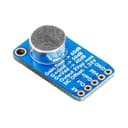
![Adafruit Electret Microphone Amplifier - MAX9814 with Auto Gain Control [ADA1713]](/_next/image?url=https%3A%2F%2Fm.media-amazon.com%2Fimages%2FI%2F617HiQizzGL.jpg&w=3840&q=75)
🎧 Hear the Unheard, Amplify Your Genius
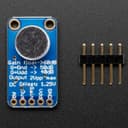
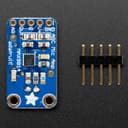
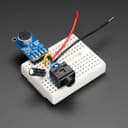
The Adafruit Electret Microphone Amplifier - MAX9814 with Auto Gain Control (ADA1713) is a compact, high-sensitivity audio amplifier designed for professional and creative projects. Featuring automatic gain control, it dynamically adjusts to varying sound levels, capturing audio from faint whispers to loud environments with a 60dB signal-to-noise ratio. Compatible with analog and digital converters up to 3.3V, this mini powerhouse is ideal for voice and video recording applications, delivering studio-quality sound in a sleek, easy-to-integrate package.
| ASIN | B00SLYAI9K |
| Antenna Location | Voice recording, video recording |
| Audible Noise | 60 Decibels |
| Audio Sensitivity | 30 Decibels |
| Best Sellers Rank | #185,465 in Electronics ( See Top 100 in Electronics ) #33 in Microphone Elements #1,135 in Audio Component Amplifiers |
| Brand | Adafruit |
| Built-In Media | Amplifier |
| Color | Multicolor |
| Compatible Devices | Amplifier |
| Connectivity Technology | XLR |
| Connector Type | XLR |
| Customer Reviews | 4.5 out of 5 stars 100 Reviews |
| Enclosure Material | Plastic |
| Frequency Range | 20 hz 20 khz |
| Frequency Response | 20 KHz |
| Hardware Platform | Sensors |
| Impedance | 2000 Ohms |
| Item Dimensions | 2.36 x 0.59 x 3.94 inches |
| Item Weight | 0.01 Pounds |
| Manufacturer | Adafruit |
| Mfr Part Number | FBA_ADA1713 |
| Microphone Form Factor | Mini |
| Model Name | FBA_ADA1713 |
| Model Number | ADA1713 |
| Number of Channels | 1 |
| Polar Pattern | Unidirectional |
| Power Source | Corded Electric |
| Recommended Uses For Product | Voice recording, video recording |
| Signal-to-Noise Ratio | 60 dB |
| Special Feature | Automatic Gain Control |
| UPC | 748347526912 711978442593 |
A**Y
Better than I expected
I was blown away at how sensitive this thing was. I used it for a costume piece that picked up surrounding sounds (ie music), which I then disseminated into a light display. Even when no music was playing, however, this thing was able to pick up some of the faintest sounds; when I had it placed against my temple, I'm pretty sure it was picking up the sound of blood rushing through my veins with my heartbeat. This is nice when you don't want to be fiddling with a gain control, but the fact that it kind of 'normalizes' sounds around you has some consequences I hadn't considered. For one, I had programmed dimmer colors for quieter sounds; this made that whole exercise relatively pointless. Above all else, I didn't have a single issue with this thing--it worked like it was supposed to, without issue, the whole time I was developing with it. I'm pretty impressed.
D**L
Works perfect when connected to an arduino
Works perfect when connected to an arduino. Bought three of these to run three different sets of lights for an art project for my daughter. They pick up sounds from even across the room with the highest gain.
J**H
Microphones!
I used these microphones as part of a project to enable a recorder that only has line-in to record microphone audio. Powering the microphones directly from a large Li-Ion battery, and using a voltage converter to power the recorder, then supplying decoupling capacitors, with the microphones in stock configuration for gain and attack, and I get perfect line level output back to my recorder. Levels might not be perfectly compliant, but nothing the recorder's own level compensation can't handle. The recorder is stereo, so I used two microphones.
R**R
Hey it works pretty darn good
I have looked at many online circuit schematics - but I'm just not an electrical engineer. I design structure - not circuits. So, when I find gems like this I'm delighted. Among other things - this device actually works exceptionally well - it's easy to put together with the instructions the manufacturer gives you, all the parts are reasonably cheap and available here on Amazon. Power it on, and lo and behold - it really does work well.... with some caveats 1) WAY too much amplification out of the "box" so to speak - but they tell you how to dial it down 2) The microphone is omnidirectional - any noise from any direction is picked up and it tends to drown out anything interesting you might have wanted to hear. I honestly wish the manufacturer would swap it out with a cardioid mic. Those are the only two dings I have, otherwise a great product for little money.
D**L
Great for Sampling and Spectrum Analyzer, etc
This is a sensor designed for recording the music, though it does have aggressive auto-gain, it works well for my stereo spectrum analyzer project.
I**Y
Works great
This was sensitive enough to pickup soft sounds for a project using an Arduino nano. It works great.
D**O
Pics up everything and then some
This mic pics up everything...me speaking directly into it and my kids talking in the next room. Although next time i'd probably go for the cheaper option and get one without auto gain
I**K
Works well, but definitely larger than expected
I was hoping this would be small enough of a form factor to fit inside a quad, but it's actually really, really large - somewhere near an inch on the long side? So maybe I'll find a use for it somewhere else - it just doesn't fit for that :'(
Trustpilot
1 month ago
1 week ago