We remain fully operational. Our teams are working around the clock to ensure your deliveries continue safely.

DOWNLOAD THE APP


Customer Services
Copyright © 2025 Desertcart Holdings Limited
DOWNLOAD THE APP
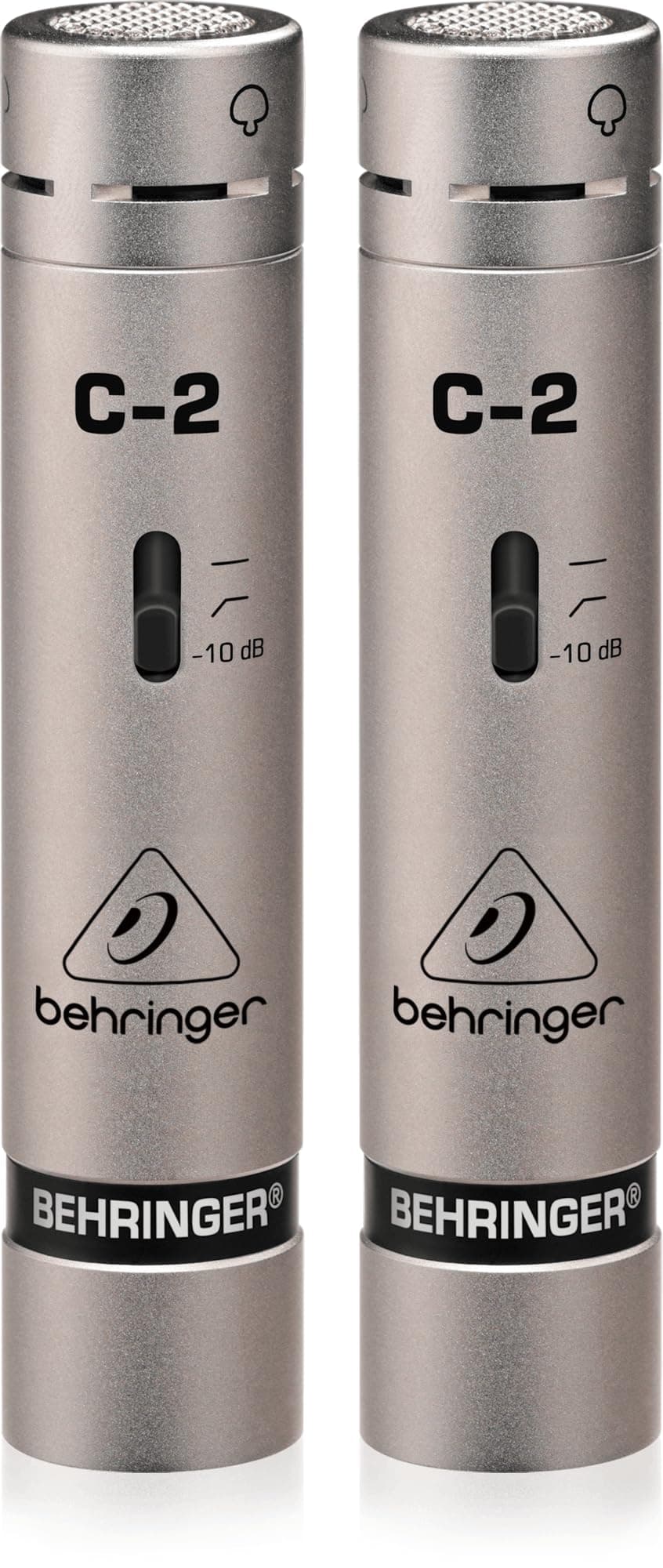

🎧 Elevate your sound game with the Behringer C-2 — stereo clarity that won’t break the bank!
The Behringer C-2 is a matched pair of cardioid condenser microphones designed for stereo studio and live recording. Featuring ultra-wide frequency response, switchable low-frequency roll-off, and durable metal construction, these mics deliver clear, detailed sound with effective feedback rejection. Ideal for professionals and enthusiasts seeking high-quality stereo capture at an unbeatable price point.


| ASIN | B000CZ0RLU |
| Antenna Location | Singing, Streaming |
| Audible Noise | 136 Decibels |
| Best Sellers Rank | #10,321 in Musical Instruments ( See Top 100 in Musical Instruments ) #103 in Multipurpose Condenser Microphones |
| Brand | Behringer |
| Built-In Media | 2 Matched Studio Condenser Microphones |
| Color | Black |
| Compatible Devices | Sprachaufzeichnungsgerat |
| Connectivity Technology | XLR |
| Connector Type | XLR |
| Customer Reviews | 4.6 4.6 out of 5 stars (2,752) |
| Enclosure Material | Metal |
| External Testing Certification | Não aplicável |
| Frequency Response | 8 KHz |
| Global Trade Identification Number | 00411378072979 |
| Hardware Platform | Camera |
| Item Dimensions | 11.89 x 5.12 x 3.35 inches |
| Item Part Number | 4033653080224 |
| Item Type Name | BEHRINGER |
| Manufacturer | Music Tribe US |
| Mfr Part Number | C-2 |
| Microphone Form Factor | Handheld |
| Model Name | C-2 |
| Model Number | C-2 |
| Number of Channels | 1 |
| Polar Pattern | Unidirectional |
| Power Source | Corded Electric |
| Signal-to-Noise Ratio | 75 dB |
| Special Feature | Stand |
| UPC | 411378072979 |
| Warranty Description | Please refer to http://www. Music-group. Com/warranty. Aspx. |
C**R
Crisp, Clear Matched Microphones...
Compared to other matched cardioid condenser microphones, these are a true bargain. Because of the low price, I was skeptical about their performance, but after reading numerous positive reviews, I pulled the trigger. I am not disappointed at all. I've installed this matched pair of mics in our church sanctuary as stereo room mics, to capture ambient noise, the audience and minor reflected sound. This helps add to a real-life feel for our live stream. They are perfect for this application. Mounted to the ceiling and pointed towards the audience, they pick up the detailed noise of conversation, clapping, singing and some stage reflections. The built in low-pass filter helps tune these to reject omni-directional bass and instruments. They are easily operated using the 48-volt phantom power switches from our mixer and with crisp highs in the 20K range, even the lightest high-end noise is captured. The bodies are cast from durable metal, and they include mic clips, that are dual-threaded for easy mounting. Time will tell if these will remain functional for years to come, but after tailoring these with EQ, panning and some delay on one side, they are impressive, and have already greatly improved our live stream. Highly recommended...
M**K
Great Priced Behringer C-2 2 Matched Studio Condenser Microphones
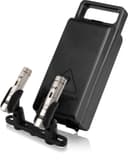
I've been using the Behringer C-2 matched studio condenser microphones for various recording projects, and they have proven to be a reliable and affordable option for capturing high-quality audio. Here's my detailed review: Pros: Matched Pair: The C-2 microphones come as a matched pair, ensuring consistent audio quality between the two. This is particularly beneficial for stereo recording applications like drum overheads, choirs, and live performances. Affordable: One of the standout features of the C-2 microphones is their price point. They offer excellent value for money, making them an accessible option for beginners and home studio enthusiasts without compromising too much on quality. Good Sound Quality: These microphones deliver clear and detailed sound, with a relatively flat frequency response. They are well-suited for recording acoustic instruments, vocals, and ambient sounds. The low-mass diaphragm captures nuances with impressive accuracy. Versatile Applications: The C-2 microphones are versatile and can be used for a variety of recording scenarios. Whether you’re miking a piano, acoustic guitar, or using them as overheads for drums, they perform well across different applications. Durable Build: Despite their low cost, the microphones are solidly built with a metal casing that provides durability. They feel sturdy and can withstand regular use in both studio and live settings. Accessories Included: The package includes a stereo bar, windscreens, and a carrying case. These accessories add to the value and convenience, making it easier to set up and transport the microphones. Cons: Self-Noise: The C-2 microphones have a higher self-noise level compared to more expensive condenser microphones. While this is generally not an issue for louder sources, it can be noticeable in quieter recordings. Sensitivity: These microphones are quite sensitive, which can be a double-edged sword. They pick up a lot of detail, but they can also capture unwanted background noise if the recording environment isn’t well-controlled. Limited Low-End Response: The low-frequency response is not as robust as some higher-end condenser microphones. This can be a limitation when recording instruments or voices that have significant low-end content. Requires Phantom Power: Like most condenser microphones, the C-2 requires phantom power to operate. This isn’t a major drawback, but it’s something to consider if your recording setup doesn’t already include a phantom power source. Overall Verdict: The Behringer C-2 matched studio condenser microphones offer excellent value for their price. They provide good sound quality, versatility, and durability, making them a great choice for beginners, home studio enthusiasts, and even professionals looking for an affordable stereo pair. While they do have some limitations, such as higher self-noise and a less robust low-end response, these are minor issues considering the overall performance and cost. I highly recommend the C-2 microphones for anyone looking to enhance their recording setup without breaking the bank.
G**V
Excellent for the price
Incredibly inexpensive.. For the money the sound quality is just fine.. They wont win any awards versus my Sm-81s but for the price I can totally get em in the ball park with a bit of eq. I am using them in multiple rehearsal rooms for drum overheads in a ORTF setup. With minimal fuss I can a solid overhead sound with any halfway decent drummer. Also comes with a case and a decent stereo mount.
R**T
Great inexpensive location recording mike
These are small diaphram, phantom powered condensor mikes. As such, they have an even off-axis frequency response well suited to ORTF recording. I've been using a pair of these mikes in an ORTF configuration to record chamber music. Mostly my wife's string quartet. I bring the mikes in on center axis, in an ORTF configuration (angled away from each other at about 110 degrees spread, capsules about 8 inches apart), about 6 feet in front of the group's front line, about 6 feet off the ground. I then take the raw recording into Cool Edit and apply some EQ to get a balance that sounds natural to my ears, and just a bit of reverb to sweeten the sound. Most people move the mikes in and out from the ensemble to balance the instruments with the sound of the room, but that's pretty much guesswork. By emulating room sound in the post processing, I get exactly the sound I want. Sounds pretty pedestrian, doesn't it? You should hear the results. I have friends who do location recording using Neumann, Schoeps and the like. My recordings sound better. They really do. Not because these are better mikes. It's because being both an acoustic musician and an engineer, I know what sound I want to get and using the gear I have, both hardware and software, make it happen. You can do that with these mikes. If you haven't got the budget for the Big Guns like Neumann and the like, but want to get a very good location recording of your own, you can do that with these microphones. They are well suited to acoustic recordings of chamber ensembles, school band, orchestra, or even vocal choir. Read up on the ORTF recording technique. Record direct to digital. Post process in software for EQ, using your ear to get what sounds most like they did live, and sweeten a bit with a small amount of digital reverb. You'll amaze yourself.
K**Z
まさに今、舞台のフットマイクに使用してます Highが若干多めにエアコンの音を拾っている感じですが、EQで処理したら問題無いレベルです 金額以上の効果を発揮してると思います いい感じに集音出来ています コスパを考えたら最高だと思います 勿論、高額のマイクと比較したら質は劣りますが、使い方を工夫すれば、使える代物ですね
A**S
Los micrófonos son de excelente calidad y funcionan muy bien, y que traiga estuche es buenisimo
A**O
Muy buena calidad a un precio excelente
K**U
... das Ergebnis ist der Hammer! Kaufentscheidung: Hab nach einem möglichst kurzen Kleinmembran-Mikrofon gesucht, um es an einer Canon C70 als Aufsteckmikrofon für Umgebungsgeräusche im Dokumentarbetrieb (bzw. als Referenz zum Synchronisieren mehrerer Kameras) zu verwenden. Das Sony ECM-XM1 Richtrohr, das ich auf meinen C200/C300 Kameras verwende war mir einfach zu groß für die kleine Kamera. Außerdem bin ich mit dem Ergebnis so eines Shotgunmikrofons schon lange unzufrieden, da (vor allem in kleinen Innenräumen) ein sehr halliger Ton aufgenommen wird, und ich die Richtwirkung eigentlich nicht brauche. Ein Kleinmembran-Mikrofon mit Nieren-Charakteristik sollte zwar etwas weniger Lautstärke, aber dafür weniger Hall liefern. Also hab ich mir die letzten 3 Wochen alles an Youtube Videos zu dem Thema reingezogen, was ich finden konnte - Ergebnis: Ich bin jetzt Profi was den Vergleich zwischen 1 Million verschiedener Mikros betrifft - hab aber nach wie vor keine Ahnung ob meine Idee funktionieren könnte. Also hab ich einfach das allergünstigste Angebot (von einer bekannte Marke) gekauft, dass Amazon im Angebot hatte - das Behringer C-2 im Doppelpack für Stereoaufnahmen. Erster Eindruck: Die Mikros fühlen sich wertig an, das Zubehör wirkt brauchbar. Mehr gibts da nicht zu sagen. Erster Test: Hab eines der beiden Mikros an den XLR-Eingang 1 gehängt, das alte Sony an Eingang 2. Dann bin ich von der Kamera weg, hin und her und um die Kamera rum gelaufen und hab vor mich hingesprochen. Und dann hab ich mir das Ergebnis angehört. Ja, das Behringer ist erwartungsgemäß etwas leiser, dafür um so viel klarer im Ton, weniger Hall und (damit hatte ich gar nicht gerechnet) es hat auch eindeutig weniger Grundrauschen! Zweiter Test: Also hab ich das C-2 an einer Tonangel befestigt und etwa 30 cm über meinen Kopf platziert. Als Vergleich hab ich diesmal meine Sennheiser G3 Funkstrecke mit ME2 Lavalliermikrofon an den zweiten Eingang gehängt. Was soll ich sagen? Klar, das Lavallier klingt voller (da näher an der Audioquelle) aber das C-2 klingt erstaunlich gut. Würde ich glaub ich in manchen Situationen sogar dem Anstecken vorziehen. Dritter Test: Jetzt, wo ich schon so in Fahrt war, hab ich auch noch das Rode NTG4+ Shotgun auf die Angel montiert, und mit dem C-2 verglichen. Eindeutiger Gewinner - das C-2 (wobei man dazu sagen muss, im Freien, würde das NTG wegen seiner sehr gerichteten Bauart wieder die besserer Wahl sein). Fazit: Für € 56,- ein Paar Kleinmembran-Mikrofone zu bekommen, die diese Qualität liefern ist unglaublich! Ja, es gibt garantiert Mikros mit besserem Klang, aber allein der Schritt hin zu einem "brauchbaren" Kleinmembran war ein Sprung nach Vorne! Jetzt bin ich gespannt, wie groß der Unterschied zu einem € 100,- oder € 200,- Mikrofon ist (oder zu einem € 2.000,- Shoeps ;-) )
G**O
Tres bonne qualité
Trustpilot
1 week ago
3 weeks ago