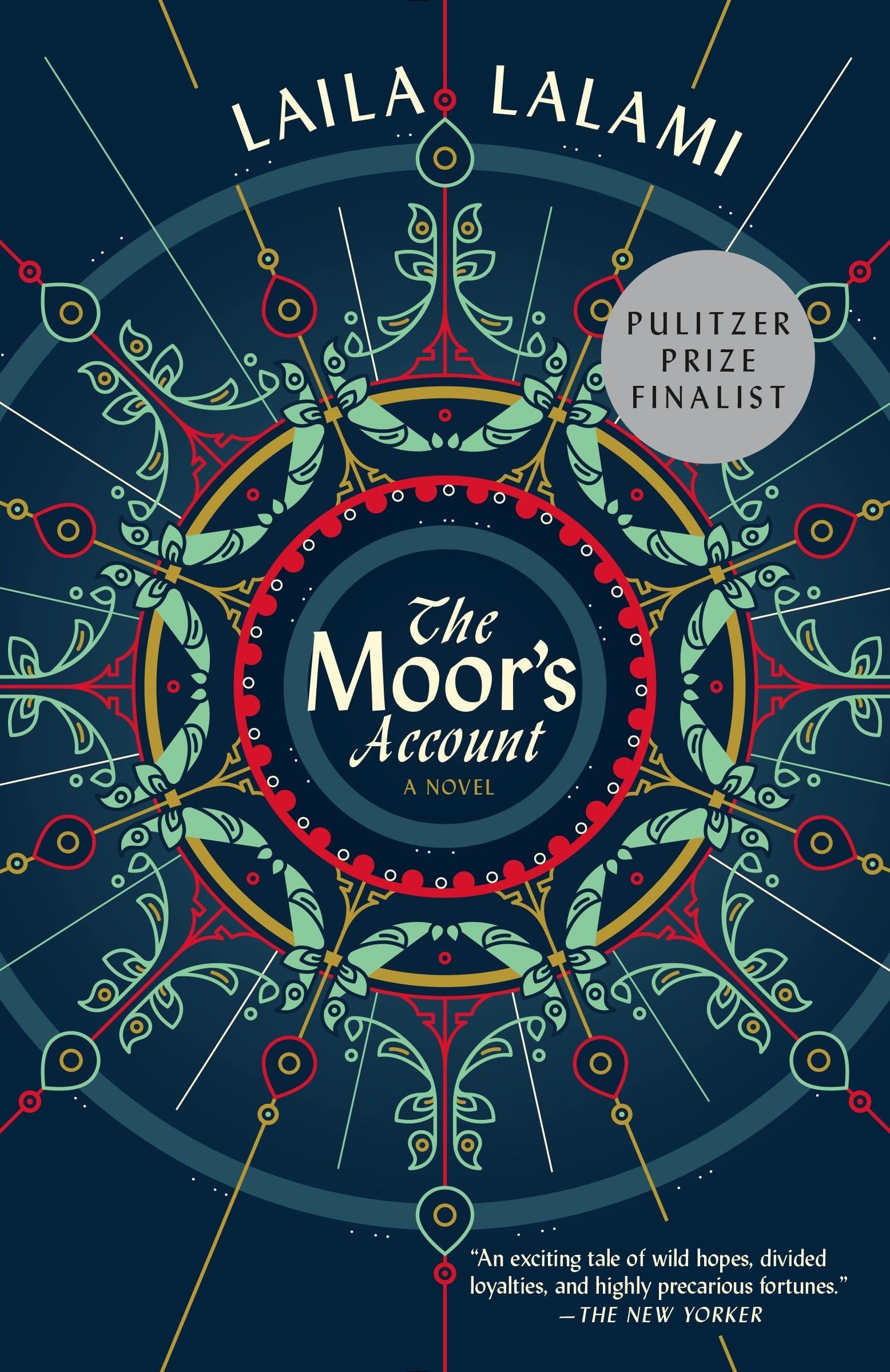
The Moor's Account
Product ID: 17128610
Desertcart purchases this item on your behalf and handles shipping, customs, and support to France.
desertcart.com: The Moor's Account: 9780804170628: Lalami, Laila: Books Review: Eloquent narration. This is by far the best book I've read in ages. - Thirty-year-old, Moor Slave, Estebanico, had been in bondage five years. Prior to his enslavement, he lived in Azemmur, Morocco, with his widowed mother, sister, and twin brothers. When a drought hits the country, he did a selfless act by selling himself into slavery to help his family. A Castilian forced him to give up his birth name, Mustafa Ibn Muhammad Ibn Abdussalam al-Zamori, after he purchased him from Portuguese traders in Seville. Later, his master, after losing in a card game, paid his debt by selling Estebanico to a nobleman, Andres Dorantes. Captain Dorantes and Estebanico sailed to the New World with Spanish conquistador Panfilo de Narvaez, in 1527. In several ships, five-hundred men landed in La Florida in 1528. Estebanico named it the Land of the Indians. Narvaez and a small scouting party from each ship, which included Dorantes and Estebanico went ashore. A masterful schemer, Narvaez plotted evil against the Indians in his quest for gold and land. Disastrous results followed. He appeared as an ineffectual and close-minded leader, who imperiled the lives of his men. In 1536, eight years later, Estebanico, Dorantes, Castillo and Cabeza de Vaca are encountered by Spanish soldiers. Later, they are questioned by the Spanish Viceroy. He asked for collective information from Dorantes, Cabeza de Vaca and Castillo concerning their journey among the Indians. However, Estebanico, overlooked by the Viceroy, wanted to candidly describe the events as he witnessed them. He realized the three men had elaborated, omitted, fabricated, and held back important details. Estebanito narrated a candid, eloquent, and fresh description of his journey to the New World, the Land of the Indians. Estebanico’s narration is colorful, and expressed with warmth, emotion and sensitivity. I felt emotionally drawn into his story. You feel his longing for home; his yearning to be free like the day he was born. A learned man, you applauded Estebanico’s reversal of roles when he became an advisor to the Spaniards that had trickled down from five-hundred to a little more than a dozen, and then four because of death and disease. You cheered for him when he found love and married his assertive wife, Oyomasot, of the Avavare tribe. You understood his frustration when Dorantes, a manipulative and self-absorbed man, delayed his freedom. You rallied for him as he planned and prepared to obtain his freedom. You felt his fear for the outcome of the Indians, his new friends and followers, when they were detained at a Spanish outpost. The Indians believed Estebanico, a Shaman who healed the sick. During his enslavement, Estebanico did a self-exploration of his life, which revealed his unfairness and greed. He realized he had not listened to the instruction of his father during his youth and ignored reproof. His father, a notary, wanted him to follow in his footsteps; to have a respectable career and future. But Estebanico desired wealth and became an affluent merchant. Through his craving for greed, Estebanico bartered and sold three slaves. During his own enslavement, he felt the pangs of guilt, and realized how he had deprived men of their rights. His journey leads to maturity, humility, and spiritual growth. Provided is a fascinating chronicle of the many Native American tribes Estebanico and the Spaniards encountered. This revealed the Native Americans, a spiritual peoples, who initially expressed trust and kindness to all men they encountered from across the sea. This is also an account of man’s insatiable desire for wealth and gain, and how his desire was flamed by manipulation of authority, violence, and death and his own eventual retribution. Ms. Lalami provided meticulous research in her historical fiction of the Americas. The Moor’s Account is emotionally charged with Estebanito/Mustafa’s description of his life. This novel deserves five stars. Ms. Lalami wrote a believable and compelling story. The history of the Moors in Spain should be avidly read by all. This history, which is overlooked, dates back to the 700s. The Moors ruled Spain until the fifteenth century. Review: Suspenseful yet meaningful fiction - In 1527, Pánfilo de Navárez, a Spanish conqueror, led an expedition of 600 people into the New World. What follows we know only from three Castilian accounts of the expedition. Each wrote his own account of the journey. These accounts we call history. History is storytelling, and from whose lips the story springs will change its trajectory entirely. Although we cannot return to the past, historical fiction serves to illuminate those parts of history that may have been left in the dark. The imagined memoir Mustafa ibn Muhammad, Laila Lalami’s Moor’s Account gives voice to Mustafa, the first slave in the New World and the fourth survivor of the Navárez expedition. Telling the tale of his life in the New World, Mustafa carefully traces and details extreme travail the four of them faced in the New World. Parallel to his account of hardship in the New World are stories of his childhood in Azemmur, his fall from grace as a merchant who sells slaves, and his selling himself into slavery to provide for his family. As he recounts his past and looks towards his future, Mustafa finds that he must seize his freedom and utilizes storytelling to secure a future for him and his wife in the New World. The Moor’s Account is, while an elegantly written historical novel, ultimately is a loving homage to storytelling. Referencing Scheherazade early in the novel, Lalami establishes a clear theme of storytelling as a means of survival, seizing power, and freeing oneself, as she demonstrates how Mustafa wins favor with his master by telling him of his past, establishes that the Castilians’ writing their accounts is their writing history itself, and illustrates how Mustafa ultimately becomes free through the fiction he weaves. The novel itself is an exemplary example of storytelling: gripping and vivid, it not only seizes the reader with an intense survival story, but leaves a lasting impression as it demonstrates the possibility of transcendence, no matter what the sin. Telling a fascinating story in lambent prose, The Moor’s Account is the perfect for the reader craving pitch-perfect fiction that packs meaning into every page.


| Best Sellers Rank | #206,977 in Books ( See Top 100 in Books ) #37 in African Literature (Books) #272 in Hispanic American Literature & Fiction #3,156 in Literary Fiction (Books) |
| Customer Reviews | 4.3 4.3 out of 5 stars (3,144) |
| Dimensions | 5.2 x 0.67 x 7.99 inches |
| Edition | Reprint |
| ISBN-10 | 0804170622 |
| ISBN-13 | 978-0804170628 |
| Item Weight | 2.31 pounds |
| Language | English |
| Print length | 400 pages |
| Publication date | August 18, 2015 |
| Publisher | Vintage |
U**A
Eloquent narration. This is by far the best book I've read in ages.
Thirty-year-old, Moor Slave, Estebanico, had been in bondage five years. Prior to his enslavement, he lived in Azemmur, Morocco, with his widowed mother, sister, and twin brothers. When a drought hits the country, he did a selfless act by selling himself into slavery to help his family. A Castilian forced him to give up his birth name, Mustafa Ibn Muhammad Ibn Abdussalam al-Zamori, after he purchased him from Portuguese traders in Seville. Later, his master, after losing in a card game, paid his debt by selling Estebanico to a nobleman, Andres Dorantes. Captain Dorantes and Estebanico sailed to the New World with Spanish conquistador Panfilo de Narvaez, in 1527. In several ships, five-hundred men landed in La Florida in 1528. Estebanico named it the Land of the Indians. Narvaez and a small scouting party from each ship, which included Dorantes and Estebanico went ashore. A masterful schemer, Narvaez plotted evil against the Indians in his quest for gold and land. Disastrous results followed. He appeared as an ineffectual and close-minded leader, who imperiled the lives of his men. In 1536, eight years later, Estebanico, Dorantes, Castillo and Cabeza de Vaca are encountered by Spanish soldiers. Later, they are questioned by the Spanish Viceroy. He asked for collective information from Dorantes, Cabeza de Vaca and Castillo concerning their journey among the Indians. However, Estebanico, overlooked by the Viceroy, wanted to candidly describe the events as he witnessed them. He realized the three men had elaborated, omitted, fabricated, and held back important details. Estebanito narrated a candid, eloquent, and fresh description of his journey to the New World, the Land of the Indians. Estebanico’s narration is colorful, and expressed with warmth, emotion and sensitivity. I felt emotionally drawn into his story. You feel his longing for home; his yearning to be free like the day he was born. A learned man, you applauded Estebanico’s reversal of roles when he became an advisor to the Spaniards that had trickled down from five-hundred to a little more than a dozen, and then four because of death and disease. You cheered for him when he found love and married his assertive wife, Oyomasot, of the Avavare tribe. You understood his frustration when Dorantes, a manipulative and self-absorbed man, delayed his freedom. You rallied for him as he planned and prepared to obtain his freedom. You felt his fear for the outcome of the Indians, his new friends and followers, when they were detained at a Spanish outpost. The Indians believed Estebanico, a Shaman who healed the sick. During his enslavement, Estebanico did a self-exploration of his life, which revealed his unfairness and greed. He realized he had not listened to the instruction of his father during his youth and ignored reproof. His father, a notary, wanted him to follow in his footsteps; to have a respectable career and future. But Estebanico desired wealth and became an affluent merchant. Through his craving for greed, Estebanico bartered and sold three slaves. During his own enslavement, he felt the pangs of guilt, and realized how he had deprived men of their rights. His journey leads to maturity, humility, and spiritual growth. Provided is a fascinating chronicle of the many Native American tribes Estebanico and the Spaniards encountered. This revealed the Native Americans, a spiritual peoples, who initially expressed trust and kindness to all men they encountered from across the sea. This is also an account of man’s insatiable desire for wealth and gain, and how his desire was flamed by manipulation of authority, violence, and death and his own eventual retribution. Ms. Lalami provided meticulous research in her historical fiction of the Americas. The Moor’s Account is emotionally charged with Estebanito/Mustafa’s description of his life. This novel deserves five stars. Ms. Lalami wrote a believable and compelling story. The history of the Moors in Spain should be avidly read by all. This history, which is overlooked, dates back to the 700s. The Moors ruled Spain until the fifteenth century.
J**R
Suspenseful yet meaningful fiction
In 1527, Pánfilo de Navárez, a Spanish conqueror, led an expedition of 600 people into the New World. What follows we know only from three Castilian accounts of the expedition. Each wrote his own account of the journey. These accounts we call history. History is storytelling, and from whose lips the story springs will change its trajectory entirely. Although we cannot return to the past, historical fiction serves to illuminate those parts of history that may have been left in the dark. The imagined memoir Mustafa ibn Muhammad, Laila Lalami’s Moor’s Account gives voice to Mustafa, the first slave in the New World and the fourth survivor of the Navárez expedition. Telling the tale of his life in the New World, Mustafa carefully traces and details extreme travail the four of them faced in the New World. Parallel to his account of hardship in the New World are stories of his childhood in Azemmur, his fall from grace as a merchant who sells slaves, and his selling himself into slavery to provide for his family. As he recounts his past and looks towards his future, Mustafa finds that he must seize his freedom and utilizes storytelling to secure a future for him and his wife in the New World. The Moor’s Account is, while an elegantly written historical novel, ultimately is a loving homage to storytelling. Referencing Scheherazade early in the novel, Lalami establishes a clear theme of storytelling as a means of survival, seizing power, and freeing oneself, as she demonstrates how Mustafa wins favor with his master by telling him of his past, establishes that the Castilians’ writing their accounts is their writing history itself, and illustrates how Mustafa ultimately becomes free through the fiction he weaves. The novel itself is an exemplary example of storytelling: gripping and vivid, it not only seizes the reader with an intense survival story, but leaves a lasting impression as it demonstrates the possibility of transcendence, no matter what the sin. Telling a fascinating story in lambent prose, The Moor’s Account is the perfect for the reader craving pitch-perfect fiction that packs meaning into every page.
A**I
A really gripping story. The characters are brought to life and you can feel the tension between them as they travel across La Florida in search of riches. Every scene is well written and you feel as if you are there. A very moving tale.
A**R
Well researched, well written, heavy at times and deep on reflection. Its a unique account on an aspect of history that is seldom discussed and delves deep into the unknown.
P**S
OK, I am biased as I travel a lot to Morocco and I have an interest in history so this story of a Moroccan trader selling himself into slavery got my attention. This book is a great novel based on historic facts and gives a very vivid description of how Europe, Africa and America related to each other during this time period of slavery and discoveries. Very wel depicted, great lead character and written like a movie scenario. I loved it.
K**L
Lalami weaves her characters with such deftness that it is impossible not to be drawn into their world, becoming ensnared by the fabric of their lives and explorations. Lalami's novel revolves around the story of a expedition to the New World and draws from historical accounts, but peppers it with fiction, presenting to the reader a story full of twists and turns that capture the true nature of the human spirit.
M**K
This historical novel tells the story of the failed Navarez expedition from the mid-16th century. There were only four survivors who survived by walking all the way from Florida to Mexico. The novels provides an account of the survivor's journey told by Estevanico, an enslaved North-African Moor. The novel is fascinating and is very critical of the early Spanish explorers.
Trustpilot
3 weeks ago
3 weeks ago