
Desertcart purchases this item on your behalf and handles shipping, customs, and support to France.
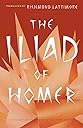
The epic story of the Trojan War in the most faithful and compelling translation available "Sing, goddess, the anger of Peleus’ son Achilleus / and its devastation." For sixty years, that's how Homer has begun the Iliad in English, in Richmond Lattimore's faithful translation―the gold standard for generations of students and general readers. This long-awaited new edition of Lattimore's Iliad is designed to bring the book into the twenty-first century―while leaving the poem as firmly rooted in ancient Greece as ever. Lattimore's elegant, fluent verses―with their memorably phrased heroic epithets and remarkable fidelity to the Greek―remain unchanged, but classicist Richard Martin has added a wealth of supplementary materials designed to aid new generations of readers. A new introduction sets the poem in the wider context of Greek life, warfare, society, and poetry, while line-by-line notes at the back of the volume offer explanations of unfamiliar terms, information about the Greek gods and heroes, and literary appreciation. A glossary and maps round out the book. The result is a volume that actively invites readers into Homer's poem, helping them to understand fully the worlds in which he and his heroes lived―and thus enabling them to marvel, as so many have for centuries, at Hektor and Ajax, Paris and Helen, and the devastating rage of Achilleus. Review: I’m really enjoying this! - I’ve read several novelized, modern versions of The Iliad but never got around to the actual Iliad (if we can call an English language Iliad “actual”). Or maybe I tried it once in another version that I couldn’t stick with. But I really like this one. I’m only about halfway through. I’m an old man who’s been known to fall asleep trying to read or listen to the most exciting thriller, so I’ve mostly been listening to this while I’m out working in the yard. For some reason, it seems perfect for that. The narrator’s voice and delivery are wonderful and the translation is modern enough that it flows like a novel, but it still has a kind of poetic quality to it. I love the short musical interludes between the books (chapters), which give me time to dig my phone out of my pocket and pause the recording if I want to. My only complaint is that the publisher made an introduction (which I skipped) “Chapter One” so that Book One (The Iliad is divided into 24 “books”) is Chapter Two and so on. Makes you wonder why someone did not notice this and simply label the introduction separately and correspond the chapters with the books to avoid confusion. Review: The best translation out there - While most schools have you read the Fitzgerald translation, and better schools have you read the Fagles translation, there really is no better version than Richmond Lattimore's. Lattimore, with artistry and skill, manages to preserve the flow and feeling of Homer's original Greek. I honestly felt like I was reading the original without having to slog through all of the pain of translating it by myself. Lattimore's translation gives life to the characters and passion to the story, and allows us to see the epic as Homer wanted us to see it. It exposes us to alien customs and traditions and does not try to hide them under forced iambic pentameter and awkward phrasing. I honestly did not like the Iliad until I read Lattimore's translation. I thought it was boring, lifeless, and foreign (yes, a very ignorant attitude). I am a classics student and always wondered why the ancients held this poem up as some paragon of humanity. When I read Lattimore's translation, I understood how the ancients saw and read this book with the same fervor that some people see and read the Bible today. If you are not familiar with an ancient language, though, I recommend caution when reading this version. Sentence construction, word choice, and writing style are all very typically "ancient," which to us English readers sounds long-winded and stilted. I can see why some reviewers were not entirely happy with this translation, and I completely understand why high schools do not have students read this version. Overall, this translation brought me from absolutely hating the Iliad to absolutely adoring it. I think that means something.


| Best Sellers Rank | #15,669 in Books ( See Top 100 in Books ) #7 in Classic Greek Literature #18 in Ancient & Classical Poetry #24 in Epic Poetry (Books) |
| Customer Reviews | 4.7 out of 5 stars 1,243 Reviews |
G**Y
I’m really enjoying this!
I’ve read several novelized, modern versions of The Iliad but never got around to the actual Iliad (if we can call an English language Iliad “actual”). Or maybe I tried it once in another version that I couldn’t stick with. But I really like this one. I’m only about halfway through. I’m an old man who’s been known to fall asleep trying to read or listen to the most exciting thriller, so I’ve mostly been listening to this while I’m out working in the yard. For some reason, it seems perfect for that. The narrator’s voice and delivery are wonderful and the translation is modern enough that it flows like a novel, but it still has a kind of poetic quality to it. I love the short musical interludes between the books (chapters), which give me time to dig my phone out of my pocket and pause the recording if I want to. My only complaint is that the publisher made an introduction (which I skipped) “Chapter One” so that Book One (The Iliad is divided into 24 “books”) is Chapter Two and so on. Makes you wonder why someone did not notice this and simply label the introduction separately and correspond the chapters with the books to avoid confusion.
A**R
The best translation out there
While most schools have you read the Fitzgerald translation, and better schools have you read the Fagles translation, there really is no better version than Richmond Lattimore's. Lattimore, with artistry and skill, manages to preserve the flow and feeling of Homer's original Greek. I honestly felt like I was reading the original without having to slog through all of the pain of translating it by myself. Lattimore's translation gives life to the characters and passion to the story, and allows us to see the epic as Homer wanted us to see it. It exposes us to alien customs and traditions and does not try to hide them under forced iambic pentameter and awkward phrasing. I honestly did not like the Iliad until I read Lattimore's translation. I thought it was boring, lifeless, and foreign (yes, a very ignorant attitude). I am a classics student and always wondered why the ancients held this poem up as some paragon of humanity. When I read Lattimore's translation, I understood how the ancients saw and read this book with the same fervor that some people see and read the Bible today. If you are not familiar with an ancient language, though, I recommend caution when reading this version. Sentence construction, word choice, and writing style are all very typically "ancient," which to us English readers sounds long-winded and stilted. I can see why some reviewers were not entirely happy with this translation, and I completely understand why high schools do not have students read this version. Overall, this translation brought me from absolutely hating the Iliad to absolutely adoring it. I think that means something.
N**N
Excellent version of Iliad
This is my second journey into the complete Iliad. The first began with Samuel Butler's translation in prose, which reads easily at an astonishing pace. But my e-copy of Butler's version had no notes or references. I decided to cross-reference Butler's Roman names of gods and places with the Greek, and keeping track of them detracted from my sense of experiencing an authentic work. A friend recommended Lattimore's translation for 2 reasons: His use of Greek names and places, but to a greater degree, the care he took to simulate the poems' rhythm, the 'dactylic hexameter' used in the original Greek text. Either way, for the novice, The Iliad is a satisfying read, when accompanied by plenty of Googling and Wikipedia to help with the background and the myths, the old Greek poems' importance and their legacy. The detailed, contemporary introduction by Richard Martin in this Chicago press edition is truly the best reference you could have before launching head-on into the Iliad (you could even almost pack away Wikipedia). He explains poetic conventions, gives history of the text and collects all known studies about the identity of Homer: was he one genius author, or many authors refining great works over generations? His comparisons of the many English translations fascinate me, from the old Shakespearian-era attempts that imposed rhyming lines, to a very modern translation that reads like a cliched Hollywood action script: most of these translations seem worthy. But it reinforces in my mind the validity of Lattimore's noble translation, as one of the most authentic ways for a humble reader of 20th-century English like myself, to connect with the age and greatness of the poem.
J**R
Very well written with great appendix.
The Illiad is not an easy read due to the number of characters and their relationships with others. It's a mental exercise until you get the hang of it. The thing is that you don't have to know every little thing that's going on between these characters to enjoy the story. But if you do want to know, the author has written a really nice appendix to get to the details. It's also really helpful to have Google to look up some of the details in which would be out of the scope of the book to provide. Definitely an educational and fun read and research challenge. Many things that I did not know about the Greek gods and their interactions with mortals on virtually every level. And I mean 'every'. Seems that the gods needed the mortals more than the other way around.
G**R
Epic. A Must for Anyone.
This is a story that seems infused into our world. We know bits and pieces because the story is so good that thousands of years later it still forms part of our culture. That tells you something about the staying power of the story. And why everyone should read it. This is a story about War. Yes, capitalized. But this is not only an epic war between the Achaeans and Trojans over the most beautiful woman of her Age, but a confrontation between the Gods themselves. I feel like the Achaean side is more popular in our consciousness than the Trojan side. Perhaps because they were the victors. We have Achilles, Ajax, Agamemnon, Patroclus, Odysseus, Menelaus, and Nestor. But on the Trojan side really we only have Hector, Aeneas, Paris, and Priam. And then of course there is Helen over whom the war was fought. Then there are the Gods. These moments when we see them speak and interact are truly divine. On the side of the Achaeans we have Athena, Poseidon, Hera, and Hephaestus. On the side of the Trojans we have Apollo, Ares, Artemis, and Aphrodite. Zeus is neutral. Though not as neutral as it would seem at first. He too has his sympathies. The war between the gods really makes the story interesting on entirely new levels because of their capabilities. The edition I read was translated by Richard Lattimore. Amazon seems to have combined the reviews for various editions together, which is not at all pleasing. I read it on an iPad mini and it was fantastic. The introduction explains a lot - for instance, though the war is ten years long, we only see the last year of the war. And we don't see the end that we are familiar with - the use of the Trojan Horse and the end of Troy. Why? Because they are not in the Iliad as linear story. These events are told in flashbacks and flash forwards. And also in other works, some of which are now lost to us. Sadly these lost works seem to fill in a lot of the events that are told in flashback and flash forward. So the Cypria tells what led to the Trojan War while the Aethiopis tells what happens immediately after Hector is killed. These books are all part of the Epic Cycle, most of which is now lost to us. The Lattimore edition also contains a lot of good notes that help fill in the backstory and explain the events going on. If you are interested in literature or in European history, then this is a great book to read. Its impact on our culture is incalculable. It's also a fantastic story.
A**R
Best translation
Great
S**E
great translation
This version of the Iliad conveys the emotional impact of the original and reads like fine English verse in its own right, You usually forget it is a translation. I love Lattimore's "voice".
S**R
Life Is A Battle
"Let me at least not die without a struggle, inglorious, but do some big thing first, that men to come shall know of it." -Homer (Hector speaking) The Conflict At the brink of war, two great nations fought for the sake of glory and honor. One for the rescuing of Helen, the wife of Agamemnon, who was stolen by Paris, and the other for the protection of the fate of Ilium. On the defensive you have the Trojans of Ilium (commonly referred to as Troy), and on the offensive you have the Achaians (commonly referred to as the Greeks). The defenders have Hector as their champion of war, as well as Paris, who is the slimy man who stole Helen from the Greeks. The offenders have Achilles, Patroklus, Agamemnon, Odysseus, and the fuel of indistinguishable rage. The Gods On the one hand this is a battle of mortals, fighting to the death for the honor of an afterlife they aren't even sure is pleasant. On the other hand this is just a microcosm for the chaotic power struggle between the gods of which Zeus is king. Hera, Athena, and Poseidon fight for the Achaians, while Aphrodite, Apollo, and Artemis fight for the Trojans. Life Is A Battle One can only wonder what Homer was trying to convey by portraying the entire religious and human constitution as a battle. To be human, according to Homer is to be a warrior, battling through life and death for the ultimate prizes that surpass wealth: honor and glory. Honor Honor is that human quality that has to do with moral dignity. Best exemplified in Odysseus, it is standing your ground in the face of death in order to fulfill the duty of a soldier to his fellow warriors, to fight for them as well as yourself. To be an honorable warrior is not the same thing as being a glorious warrior. Glory Glory is that god-like quality of seeking victory and domination for the sake of one's own name. Best exemplified in Achilles, he sought glory in the slaying of Hector, and vengeance in his disgrace. While Achilles was glorious in his victory he was dishonorable in his conduct towards Hector. One can achieve glory without honor just as much as one can achieve honor without glory. A Poem Written in Homeric Greek, this long narrative is actually a poem. Its rhythm exemplifies tension and conflict, rage and warfare. The gore and detail of the battles show that this is a poem about death and mortality more than it is about life and victory. This point cannot be overstressed: the lives of the Achaians and the Trojans were lives of conflict, battle, war, and rage. A World of Chaos In the end, the chaotic struggle between men and men, gods and gods, exemplifies the arduous chaos of human life. To be human, according to the Iliad, is to be a fighter. To not fight is to lose, and to not struggle is to be defeated. Whether it be the gods, man, or beast, the good life is the life of constant battle and war.
M**X
Good
Great quality, great translation.
J**N
Excellent publication
A brilliant publication with an introduction and index. Ideal indentations. Fine paper. The spine does not even crease. The cover art leaves much to be desired however.
A**X
Great translation, not really usefull prephrase
Indeed a great translation of the Iliad, that provides the clear text structure of the original. I don't recommend to buy it for the sake of prephrase. The only map in it is taken from other books (like the oxrord history of the classical world) and can be found elsewhere. The explanations themselves do not clear out the meaning of the poem before you read it. After the reading they are meaningless. If you need a reference, use encyclopedias or other research texts. (Google will also work)
P**E
A sujeição da força humana à força dos deuses e do destino.
A “Ilíada”, à exceção do Javista – autor de Gênesis, Êxodo e Números –, Dante e Shakespeare, é o escrito mais extraordinário produzido no Ocidente, e quem não lê grego antigo pode se valer muito bem de uma guirlanda de ótimos tradutores em inglês, incluindo Richmond Lattimore, Robert Fitzgerald e Robert Fagles. Lendo o épico, temos a impressão de que os deuses são uma conveniência do processo narrativo. Mas o poema raramente nos deixa esquecer que os homens morrem, enquanto os deuses vivem para sempre, contentes na contemplação do nosso sofrer. Zeus não é pai de ninguém; Zeus não nos salva. Conforme observa Richmond Lattimore, os olímpios de Homero são, antes de tudo, homens e mulheres imortais, não superiores à nós, humanos, e raramente se apresentam como paradigmas de sabedoria. Na verdade os deuses se parecem no poema mais com os humanos e os humanos mais com os deuses. Aquiles é máquina mortífera porque almeja a imortalidade de um deus, mas o seu pai humano intima a morte do herói. Assim, Aquiles destrói seres humanos dentro de uma guerra pessoal travado contra a própria morte, a exemplo de uma criança capaz de mutilar um filhote de gato já ferido. O épico em questão é a tragédia de Aquiles, ironicamente, pois ele garante a vitória, mas não consegue superar a amargura da constatação da própria mortalidade. Homero contempla a sujeição da força humana à força dos deuses e do destino; não são espíritos aprisionados na matéria, mas forças ou instintos que vivem, percebem e sentem. “Consideram-se um campo de batalha onde entram em conflito forças arbitrárias e poderes sinistros.” Aquiles e Heitor são figuras bastantes distintas, de vez que não conseguimos visualizar Aquiles inserido na vida cotidiana de alguma cidade, mas ambos glorificam a batalha. Amigo leitor, atente para uma detalhe importante: os guerreiros do épico eram fazendeiros antes da guerra começar; eles já se apropriavam de grãos e frutas como se fossem espólios, na luta com a natureza. Isso contribui para explicar por que a “Ilíada” não se detém a louvar a guerra, pois a realidade, em si, já é uma luta constante, em que nada de valor pode ser obtido sem que alguém ou algo seja pilhado ou arruinado. Assim, competir pela vitória era o ideal homérico. Boa leitura.
J**A
The Best Iliad for Fidelity, Study, and Serious Readers
The Contents: This edition stands out for one reason above all: fidelity. Richmond Lattimore’s translation is famous for staying as close to the Greek as English comfortably allows, often feeling line for line with the original while preserving the original numbering. For anyone studying Ancient Greek, that makes this one of the best companions available because it is remarkably easy to follow alongside the source text. It is written in verse and aims to echo the six-beat movement of the original hexameter, though the language itself often feels more direct than lushly poetic. That is not a flaw so much as a deliberate choice. If you want a more cinematic or grandly poetic reading experience, I would point toward Fagles or Fitzgerald, respectively. Lattimore is for readers who value precision, consistency, and a clearer sense of what Homer is actually saying. Even with that strict approach, the English rarely feels clunky. It is plain without being watered down or overly modern, straightforward without becoming dull. Some may feel it sacrifices a bit of epic grandeur, but what it loses in ornament it gains in clarity. I would say this is the translation to use when you want to understand Homer closely, while other versions may be better when you want to feel the story in a more stylized way. The introduction is extensive at over sixty pages and definitely geared more toward scholars than casual readers. It covers Troy’s archaeology, myth versus history, the Trojan War tradition, the text itself, the Homeric question, translation history, and key interpretive concepts. It is rich and valuable material, but not a light or breezy primer. There are no footnotes, but the endnotes are useful and more approachable than fully academic notes often are. They tend to give readers the kind of background context that ancient audiences would have brought with them. There is also a bibliography, a helpful glossary of names, and a map of Homer’s Greece. The Physical Book: The text is highly legible, and despite the verse structure and line numbering, nothing feels cramped. The layout is clean, with each book clearly marked by headers. The paper quality is solid with minimal bleed-through. It is a bit heavy in the hand, but still compact enough to carry around when needed. The matte cover is simple and tasteful, with abstract art that looks perfectly respectable on a shelf. In short, I highly recommend this edition for students, scholars, and readers who want the closest practical English approach to the Greek. It is less about spectacle and more about understanding, and it succeeds beautifully at that goal.
Trustpilot
1 month ago
2 months ago