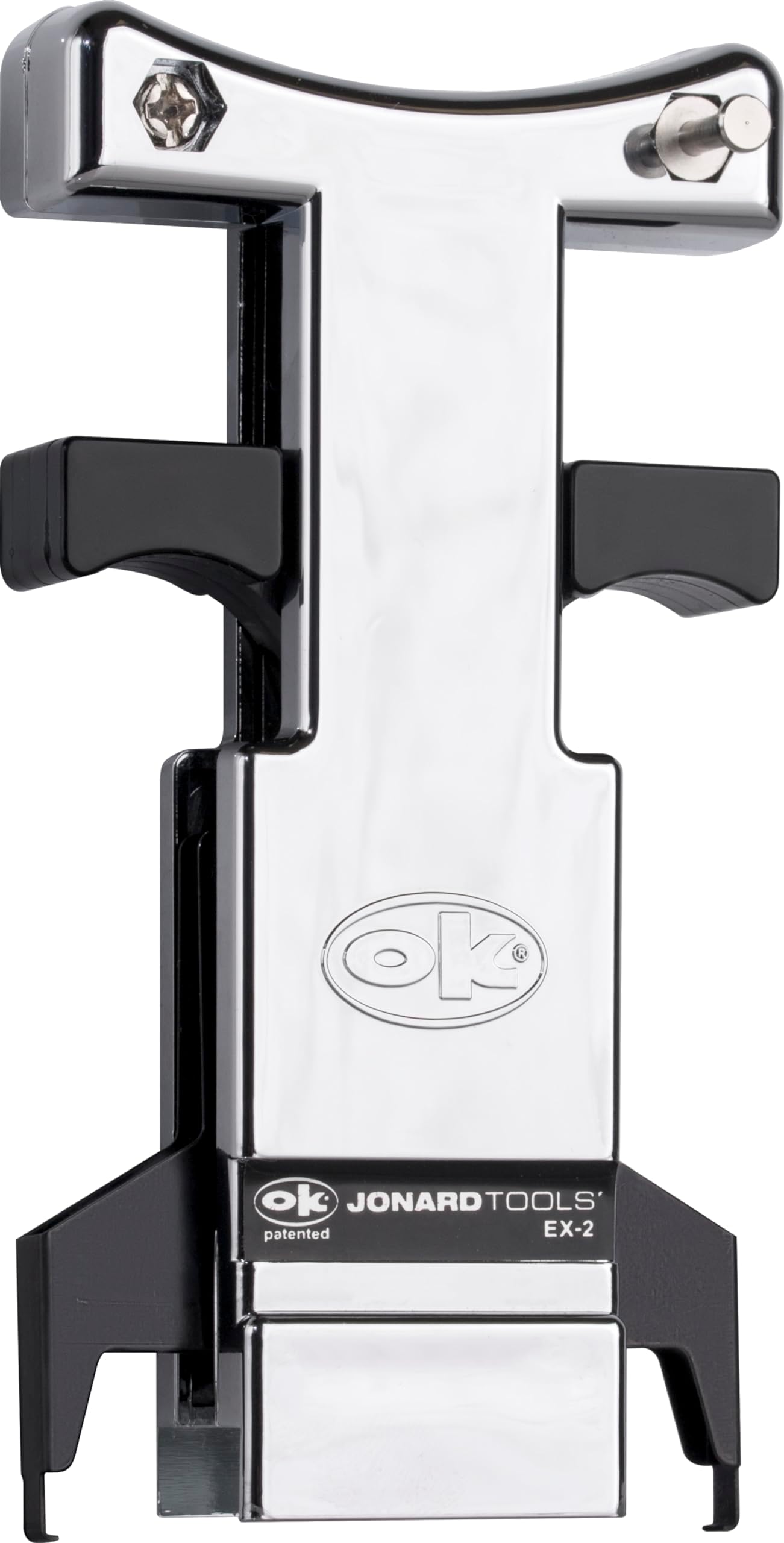
Just to clear up any uncertainty about what this thing does: you place it over the wide DIP chip you want to pull from its socket, and while holding it down against the socket, you squeeze the black handles so that the grabber tightens around the chip and pulls it from the socket, the socket held down by the chrome-colored arms that you're keeping held down against the sides of the socket. I haven't come across anything else that does that; the other devices here on Amazons are ones that you attach to the chip, and then pull the whole ensemble out together. I've had lots of problems with those bending pins as one side pulls out before the other, but the whole virtue of this one is that that won't happen. As to the criticisms: I've read other reviews saying they've bent pins with this. I imagine that if you're pulling it out like one of the other tools, whole ensemble together, then yes, you can bend pins. But you'd be using it wrong. Sometimes the chip will be so tight in its socket that you won't have the strength to squeeze the handle (and there's no leverage amplifying your force), in which case I've had success with using a flat screwdriver to provide the initial un-sticking, and finishing it off with this tool. Its value is really in the last stage of the extraction, guaranteeing that when it comes out it'll be vertical. But most of the time, I haven't needed to provide it additional support. As for the thing needing lots of space to function: this has not been my experience at all. I've used it to successfully pull EPROMs out of a CPS1 B-board, which are packed right next to each other (left-to-right). I can imagine that if there's zero space top-to-bottom between chips, this might be a problem, but I've never seen a board like that, and you can pre-squeeze the grabbers to be the distance you want before lowering. Some have questioned how the grounding pin can operate when the body it's connected to is plastic. Had they taken the time to measure it and used an ohmmeter on it, they'll see it nevertheless is conductive. Holding one probe to the grounding pin and the other to the base where the extractor would press against the socket, the resistance I measured was 0.2 ohms, holding it loosely to take the photo. Lastly, for 'plastic junk'. That's unfair — this *is* plastic (they're not claiming it's not. It looks like metal because of the conductive surface needed for the grounding), but it's fairly well made, and does the job better than anything else I've ever used or seen. I'll admit, it's not perfect. I'd love it if the grabbers were more substantial (they're somewhat thin metal, and can bend), and some kind of leverage system to amplify my pulling force would be great. Maybe I'll wear this one out in time, but on balance I really can't recommend it highly enough. Just make sure you understand how to use it.