
Desertcart purchases this item on your behalf and handles shipping, customs, and support to France.
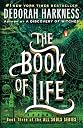
The #1 New York Times bestselling third installment in the All Souls series, from the author of The Discovery of Witches and The Black Bird Oracle. Look for the hit series “A Discovery of Witches,” now streaming on AMC+, Sundance Now, and Shudder! Bringing the magic and suspense of the All Souls Trilogy to a deeply satisfying conclusion, this highly anticipated finale went straight to #1 on the New York Times bestseller list. In The Book of Life, Diana and Matthew time-travel back from Elizabethan London to make a dramatic return to the present—facing new crises and old enemies. At Matthew’s ancestral home, Sept-Tours, they reunite with the beloved cast of characters from A Discovery of Witches —with one significant exception. But the real threat to their future has yet to be revealed, and when it is, the search for Ashmole 782 and its missing pages takes on even more urgency. Review: Breathtaking and amazing... one of the finest series enders I've ever read - 'The Book of Life' is breathtaking and amazing. It's everything that was incredible about the last two books (excepting, of course, the historical fiction aspect of 'Shadow of Night'), with the added benefit that finally, all the questions are answered, and most of the loose ends tied up. I loved it without reservations. There are so many things I want to share about the book and my reactions to it, but I can't tell you some of the best parts because, well, spoilers. The first few chapters start off slowly, as Diana deals with her grief over a missing character and she and Matthew adjust to the world to which they've returned. Soon the pace quickens, and the revelations start piling up, one discovery upon another. Plot twists and surprising turns abound, making for a thrilling read; I could hardly turn the pages fast enough in my eagerness to see what came next. Many old friends and enemies appear, several of them quite unexpectedly, and there are a few terrific new additions to the cast of characters (well, new or expanded; some of them had cameos in the first book.) Diana and Matthew occupy center stage, of course, joined by various members of their expanding family as well as allies. The complexities and challenges of vampire family life, particularly in the de Clermont family, drive some of the plot, as do the politics of the Congregation. The race is still on to find the missing papers, locate Ashmole 782 and discover its secrets, but there are other threats and challenges to meet as well. Harkness is an articulate, intelligent, and insightful author, and her scholarly training and meticulous research are evident throughout -- nowhere more so than in the scenes set at Yale and in Oxford. Genetics plays a big part in the novel, as does historical research. Harkness also excels at bringing her world alive, whether it's the sixteenth-century London of 'Shadow of Night' or the Yale, Oxford, London, New Orleans, and Venice of 'The Book of Life' (to name but a few of the book's many settings.) It's clear that she's been to these places; she provides vivid, evocative details that never overshadow the scene's main focus. And while Harkness has always had a sense of humor, it is more evident in this novel. Not that the book as a whole is comic; on the contrary, it's suspenseful, touching, exhilarating, heartwarming, and chilling by turns. But the comic moments, when they appear, are funny enough at times to have startled shouts of laughter out of me. (I thought of quoting one, but I don't want to ruin the fun of stumbling across them.) She has even put herself in the book! There's a marvelous but almost throwaway line when Diana is recalling the people who had access to a particular manuscript (not Ashmole 782), and one of them is a writer of popular fiction with an interest in alchemy. 'The Book of Life' enthralled me from start to finish. It's one of the finest series enders I've ever read: satisfying on every level, yet leaving me wishing for more. I can't wait to see what Deborah Harkness does next. For now, I'll have to settle for reading the whole trilogy again. Review: as they fall in love at first sight in the Bodleian Library at Oxford ... - Deborah Harkness's All Soul's Trilogy, which I just finished, will, I believe, become a classic of the fantasy/romance genre. Readers start with A Discovery of Witches, travel back in time with Shadow of Night and end up, very satisfactorily, with The Book of Life. In Book 1, A Discovery of Witches we meet Diana Bishop and Matthew de Clermont, as they fall in love at first sight in the Bodleian Library at Oxford University in London. Once Diana fills out that call slip which brings forth a mysterious and unreadable book, Ashmole 782, every single "person" sitting anywhere in that library starts creeping closer to Diana. When she can't decipher the book she sends it back, but not without riling more than a few library patrons. Matthew rescues her. Diana is a witch, but she has been spellbound and doesn't know it. Matthew is a vampire, but he is totally unlike any vampire we have ever met so far in literature or on either the big or small screen and he is so much more. I doubt there is a single female reader who would not wish that she was the one that Matthew assisted in the library that fateful day. There may even be more than a few men who feel that same way. Diana knows how to be a professor but she has no idea how to be a witch. In Book 2, Shadow of Night, she travels back in time to find great teachers who will call forth her talents. She is more talented than anyone imagined. While in the past Diana marries her vampire (well who wouldn't) in spite of the Congregation, which rules vampires, witches, and daemons ("creatures"), and which has made cross-creature marriage illegal. Diana arrives back in the present in Book 3, The Book of Life pregnant with Matthew's babies, absolutely a taboo according to the Congregation (and thought to be impossible). In The Book of Life Diana and Matthew must deal with Matthew's family, Matthew's evil son, Benjamin (possessed of the "blood rage" from which Matthew and his other children also suffer), the birth of the twins, the shock felt by the entire community of "creatures" and the censure of the Congregation. In order to deal with all of this Diana and Matthew must find the two pages that are still missing from Ashmole 782, which they know as The Book of Life, and then Diana must go back to the Bodleian and call back Ashmole 782 to make the book whole. She is sure it contains lost knowledge about witches, vampires and daemons, knowledge which will make the Congregation change the Covenant, will make her marriage to Matthew legal, and will keep her new babies from being assassinated. Yale University, the college where Diana Bishop teaches plays a key role in Book 3. Matthew's blood rage has long driven him to study vampire genealogy and DNA. Others believed that witches and vampires, being separate species could not procreate and yet here is Diana pregnant and eventually presenting the de Clermont family with the twins conceived of Matthew; Rebecca and Philip. What the very tolerant, congenial, and scientific colleagues at Diana's campus find out about "creature" DNA and what Diana eventually learns from The Book of Life is surprising and makes an important plea for tolerance that resounds in the real world occupied by us as humans. (You can form your own judgment about whether "creatures" are real or not.) I love the academic settings for these books which form a sort of library sandwich. Harkness's vampires will have you clamoring for someone to take a bite of you. The skills that Diana finds that belong to her, the most talented in a long line of witches, are also enviable and very effectively written, full of symbolism and connections with antiquity, but I must not describe them in detail. There are no daemons among the true main characters in this book but we see several examples, both good and evil, of this class of creature. I was very happy with Book 3 which answers our questions, contains the penultimate battle, and gives us some of the happy endings that bring equal happiness to our reader's hearts. All this, and those connections that can be drawn with our human perceptions of race and DNA, make this an excellent trilogy indeed. I am sad that it is done, as I always am whenever I finish a very enjoyable and engrossing novel or series of novels. We look forward to whatever else you may write; Deborah Harkness, but these books will stand the test of time.


| Best Sellers Rank | #30,218 in Books ( See Top 100 in Books ) #50 in Horror Occult & Supernatural #167 in Contemporary Fantasy (Books) #227 in Vampire Romances |
| Customer Reviews | 4.6 out of 5 stars 53,652 Reviews |
L**D
Breathtaking and amazing... one of the finest series enders I've ever read
'The Book of Life' is breathtaking and amazing. It's everything that was incredible about the last two books (excepting, of course, the historical fiction aspect of 'Shadow of Night'), with the added benefit that finally, all the questions are answered, and most of the loose ends tied up. I loved it without reservations. There are so many things I want to share about the book and my reactions to it, but I can't tell you some of the best parts because, well, spoilers. The first few chapters start off slowly, as Diana deals with her grief over a missing character and she and Matthew adjust to the world to which they've returned. Soon the pace quickens, and the revelations start piling up, one discovery upon another. Plot twists and surprising turns abound, making for a thrilling read; I could hardly turn the pages fast enough in my eagerness to see what came next. Many old friends and enemies appear, several of them quite unexpectedly, and there are a few terrific new additions to the cast of characters (well, new or expanded; some of them had cameos in the first book.) Diana and Matthew occupy center stage, of course, joined by various members of their expanding family as well as allies. The complexities and challenges of vampire family life, particularly in the de Clermont family, drive some of the plot, as do the politics of the Congregation. The race is still on to find the missing papers, locate Ashmole 782 and discover its secrets, but there are other threats and challenges to meet as well. Harkness is an articulate, intelligent, and insightful author, and her scholarly training and meticulous research are evident throughout -- nowhere more so than in the scenes set at Yale and in Oxford. Genetics plays a big part in the novel, as does historical research. Harkness also excels at bringing her world alive, whether it's the sixteenth-century London of 'Shadow of Night' or the Yale, Oxford, London, New Orleans, and Venice of 'The Book of Life' (to name but a few of the book's many settings.) It's clear that she's been to these places; she provides vivid, evocative details that never overshadow the scene's main focus. And while Harkness has always had a sense of humor, it is more evident in this novel. Not that the book as a whole is comic; on the contrary, it's suspenseful, touching, exhilarating, heartwarming, and chilling by turns. But the comic moments, when they appear, are funny enough at times to have startled shouts of laughter out of me. (I thought of quoting one, but I don't want to ruin the fun of stumbling across them.) She has even put herself in the book! There's a marvelous but almost throwaway line when Diana is recalling the people who had access to a particular manuscript (not Ashmole 782), and one of them is a writer of popular fiction with an interest in alchemy. 'The Book of Life' enthralled me from start to finish. It's one of the finest series enders I've ever read: satisfying on every level, yet leaving me wishing for more. I can't wait to see what Deborah Harkness does next. For now, I'll have to settle for reading the whole trilogy again.
N**N
as they fall in love at first sight in the Bodleian Library at Oxford ...
Deborah Harkness's All Soul's Trilogy, which I just finished, will, I believe, become a classic of the fantasy/romance genre. Readers start with A Discovery of Witches, travel back in time with Shadow of Night and end up, very satisfactorily, with The Book of Life. In Book 1, A Discovery of Witches we meet Diana Bishop and Matthew de Clermont, as they fall in love at first sight in the Bodleian Library at Oxford University in London. Once Diana fills out that call slip which brings forth a mysterious and unreadable book, Ashmole 782, every single "person" sitting anywhere in that library starts creeping closer to Diana. When she can't decipher the book she sends it back, but not without riling more than a few library patrons. Matthew rescues her. Diana is a witch, but she has been spellbound and doesn't know it. Matthew is a vampire, but he is totally unlike any vampire we have ever met so far in literature or on either the big or small screen and he is so much more. I doubt there is a single female reader who would not wish that she was the one that Matthew assisted in the library that fateful day. There may even be more than a few men who feel that same way. Diana knows how to be a professor but she has no idea how to be a witch. In Book 2, Shadow of Night, she travels back in time to find great teachers who will call forth her talents. She is more talented than anyone imagined. While in the past Diana marries her vampire (well who wouldn't) in spite of the Congregation, which rules vampires, witches, and daemons ("creatures"), and which has made cross-creature marriage illegal. Diana arrives back in the present in Book 3, The Book of Life pregnant with Matthew's babies, absolutely a taboo according to the Congregation (and thought to be impossible). In The Book of Life Diana and Matthew must deal with Matthew's family, Matthew's evil son, Benjamin (possessed of the "blood rage" from which Matthew and his other children also suffer), the birth of the twins, the shock felt by the entire community of "creatures" and the censure of the Congregation. In order to deal with all of this Diana and Matthew must find the two pages that are still missing from Ashmole 782, which they know as The Book of Life, and then Diana must go back to the Bodleian and call back Ashmole 782 to make the book whole. She is sure it contains lost knowledge about witches, vampires and daemons, knowledge which will make the Congregation change the Covenant, will make her marriage to Matthew legal, and will keep her new babies from being assassinated. Yale University, the college where Diana Bishop teaches plays a key role in Book 3. Matthew's blood rage has long driven him to study vampire genealogy and DNA. Others believed that witches and vampires, being separate species could not procreate and yet here is Diana pregnant and eventually presenting the de Clermont family with the twins conceived of Matthew; Rebecca and Philip. What the very tolerant, congenial, and scientific colleagues at Diana's campus find out about "creature" DNA and what Diana eventually learns from The Book of Life is surprising and makes an important plea for tolerance that resounds in the real world occupied by us as humans. (You can form your own judgment about whether "creatures" are real or not.) I love the academic settings for these books which form a sort of library sandwich. Harkness's vampires will have you clamoring for someone to take a bite of you. The skills that Diana finds that belong to her, the most talented in a long line of witches, are also enviable and very effectively written, full of symbolism and connections with antiquity, but I must not describe them in detail. There are no daemons among the true main characters in this book but we see several examples, both good and evil, of this class of creature. I was very happy with Book 3 which answers our questions, contains the penultimate battle, and gives us some of the happy endings that bring equal happiness to our reader's hearts. All this, and those connections that can be drawn with our human perceptions of race and DNA, make this an excellent trilogy indeed. I am sad that it is done, as I always am whenever I finish a very enjoyable and engrossing novel or series of novels. We look forward to whatever else you may write; Deborah Harkness, but these books will stand the test of time.
T**N
Book Review
The literary community has long awaited a fantasy title, specifically one labeled as “paranormal romance”, that supersedes the trite additions to the genre that are many recent Young Adult fantasy novels. Stephanie Meyer’s Twilight, for all its strength of characterization, was poorly plotted and her depiction of vampires unimpressive. Conversely, Deborah Harkness provides a fresh and engaging supernatural tale for readers with more serious tastes, and more life experience, shall we say, than the target audiences of Meyers or J. K. Rowling. A Discovery of Witches introduces Diana Bishop, an Oxford scholar who specializes in history, alchemy, and the occult. A latent witch who has spent her entire adult life suppressing her magical powers, both physically and psychologically, Diana accidentally calls forth a magical volume during the course of her research. After examination, Diana discovers that the book, Ashmole 782, is a palimpsest, part alchemical manuscript and part spell book. She promptly banishes it to the stacks, but her discovery sparks a flood of magical encounters, including the appearance of the mysterious vampire and celebrated geneticist Matthew Clairmont, a fellow Oxford colleague and a fellow of All Souls College. Pursued by those who would force her to recall Ashmole 782 and use it for their own ends, Diana must reluctantly trust Professor Clairemont. As the danger increases and Diana begins to awaken to her magical heritage, so too does her emotional connection to Matthew. She eventually flees Oxford with the scientist and sequesters herself in the Clairemont ancestral home in France, where Diana’s presence is barely tolerated by Matthew’s formidable mother. The conclusion of Harkness’ debut novel leaves Diana emotionally and physically scarred, full of more questions than answers. Harkness is an American scholar of history and the occult, which is unsurprising given her heroine’s profession. Her background gives weight to the historical elements of her novel and provides a plethora of allusion and references to excite the discerning reader. One such example is the revelation in Shadow of Night, Harkness’ second novel, that Matthew is a member of the mysterious “School of Night,” a shadowy group in history which was supposed to include such literary and political figures as William Shakespeare, Christopher Marlowe, Sir Walter Raleigh, and Henry Percy, Earl of Northumberland. It is refreshing to see a novel, and a debut one at that, that moves beyond the angst-riddled stereotypes of paranormal fantasy and delivers a mature story with thought-provoking themes. Despite containing a forbidden romance, Discovery is not a love- and blood-soaked vampire story. Rather, it is a book that considers the vision, conflicts, and implications of a society where different races might live peaceably in harmonious coexistence, genetics reveals the final piece to the puzzle to our complicated our human ancestry, and female agency is realized. In the world of Harkness’ novel, vampires, witches, and daemons share the Earth with “normal” humans, living in varying degrees of anonymity. One of the most intriguing concepts Harkness develops is the way the various magical races gravitate towards particular professions. For example, vampires are scientists and doctors, witches pursue the humanities, while daemons are adept financial and political figures. The novel’s development of this element lends maturity and realism to an otherwise fantastical tale. Far from complicating the story, this situation provides a backdrop for Diana’s efforts to bring about equality in the human and magical community. Diana is a strong female protagonist. Her background as a professor, and now as a witch, makes her a daunting counterpart to Matthew, the centuries-old vampire and celebrated scholar. She not only compliments him as a romantic companion, her integrity makes him a better man. Although Diana often counteracts Matthew’s orders (this is no meek and submissive woman), she does so for very logical reasons that always have her loved one’s best interests at heart. While Harkness’ debut novel is surprisingly immersive, the plotting at times leaves much to be desired. Sex (implied and understood, never explicit) is sometimes used to solve the relationship issues of two alpha characters, Diana and Matthew, leading to several cringe-worthy moments (unless you enjoy that sort of thing). Characterization of supernatural races, particularly vampires and their social position, is often trite, specifically in the stereotype of a middle-class awe for the fabulously wealthy, privileged, and dizzyingly attractive vampire. The novel’s pacing is inconsistent, sometimes ejecting the reader from the immersive experience by drawing out a pause in the action for too long. Finally, Discovery would have benefited from more perspectives, particularly from the Daemons, a race which is left, perhaps unintentionally, by the wayside as the novel and the series progresses. Despite its drawbacks, A Discovery of Witches is a book well-worth the read. While by no means a literary masterpiece, it is appropriately light for winding down after a long day (or semester), yet intriguing enough to capture the interest of a wide-range of readers. I recommend it.
R**R
4.5 stars: The Book of Life by Deborah Harkness
Back in their present, Matthew and Diana must deal with grief, the realities of becoming parents, and the complex and dangerous dynamics of creature politics and vampire families; Diana must embrace her weaver magic, and Matthew must deal with his blood rage. (Though reviews are inherently subjective, I prefer to provide some organization to my opinions through the use of a personal rubric. The following notes may contain spoilers.) Plot and Setting: 4.8 -- Plot is engaging from start to finish. Has many unique elements, no major holes, and a sense of focus. Setting is clear and believable. Timeline may be a bit hard to follow. Again, a story with many facets, tied together by Diana and Matthew's relationship and the difficult things they each must learn to accept about themselves, particularly as they become parents and as they navigate the dangerous waters of creature politics. True love, danger, sacrifice, and all that good stuff. Good landmarks to keep track of time passing, but quite a few larger leaps through time, which is a bit disorienting. Characters: 5 -- Relatable, realistic, interesting, dynamic characters. Even minor characters have depth, as do the relationships between characters. All the characters continue to be complex and brilliant. They grow and develop and challenge and help each other, and it's great. Diana is interesting in this one: her unusual, supernatural characteristics take over in more and more ways, and yet she is still very much herself most of the time. And of course there are babies, and people relating to babies, which is always a chance for adorableness and deep emotion. Mechanics and Writing: 5 -- Few, if any, typos, punctuation issues, or word errors. (<3/100pgs) Intelligent use of POV. Skillful writing that adds to the story. I actually only spotted one error in the entire book, and it was a trivial one. POV is mainly 1st-person Diana, with some scenes (mostly when Diana is not present to narrate, but not always) in a sort of universal 3rd-person narrative, dipping into the thoughts of whoever is needed to tell the important details. The POV in this one did start out a little strangely, as it took a little while to get back to Diana's familiar narration, and sometimes we are shown Diana from someone else's perspective, which was a bit disconcerting. Redeeming Value: 3.2 -- Partially focused uplifting themes or lessons. Drugs, alcohol, violence, etc, are not glorified, though there is definitely shaky ground. Several mildly explicit sex scenes. Implied moral guidelines for behavior. This one feels darker and more violent; Benjamin is truly evil and depraved, using rape, torture, and murder to further his own agenda, or just for the fun of it. And Peter Knox is right up there with him. Several sex scenes between Matthew and Diana, but again, they may be fairly explicit, but not gratuitous. Strong themes of honesty and acceptance, bravery and love. Personal Enjoyment: 4.5 -- I loved it. Highly enjoyable and very entertaining, with perhaps an issue or two that tempered my pleasure. I’d enjoy reading it again.
C**E
Absolutely Perfect
I loved this series soooo much. The plot and subplots were amazing, the main character perfect, the side characters well fleshed out and loveable - perfect story telling. I absolutely would read a book about each side character in this series, I love them all so much! While there are a TON of characters, the author does a brilliant job of making each one important and easy to remember. The plot is wrapped up perfectly but the author definitely leaves it open for follow up books. This is definitely a series you would need to re-read though if you plan on picking up the authors new books, just because there are SO many amazing details. The way the author used actual historical characters and events, the magic, the world building, the creatures...incredible. This author is definitely an automatic buy for me now! My only gripe is I NEED to have Gallowglass book! I need a whole 600 page Gallowglass fest, I will wither away not know if he gets his HEA! It definitely seems like something the author will do in the future at least.
V**Y
Should not have been a trilogy- Should’ve been a very long series
Should not have been a trilogy- Should’ve been a very long series. I say this with the upmost respect and admiration. If you go back to my Discovery of Witches (book 1) review), I had a couple of complaint. Book 2, I rated 5 stars but left no review for a variety of (I shall not speak) reasons. But I WILL say, the trilogy got better with each book (which rarely happens) and I’m sad to see it end (though I will read book 4). Deborah Harkness, if you happen to read this, I want you to know that I hope your book becomes infamous. And that historians 500 years from now savor your craft. **I LOVE, I mean LOVE him, Jack. The character development here cannot be touched. I want him as my child! While my grievances are nothing, really, I have to state them because that’s what I do when I leave reviews. 1). I wish the BIG (and final for the book) council meeting was actually written. Many will probably disagree but I truly wish it was. 2). I wish there was an epilogue. That’s it. Wonderful writing. Deborah’s stories grew and grew. And I’m utterly satisfied. Except for the fact that it’s the end. But, alas, it was probably for the best in the age of dragging things through the dirt just to make a buck. Much respect to the author.
E**E
Great Finale...But...
For over two and a half years, like millions of others. I had anticipated and had my own selfish wishes to see if certain things from the two earlier books come to fruition. Again, remember, there may be some spoilers: read this review at your own risk. I gave this lovely book a four star plus-almost 5 stars rating for two things: At the end of Book II, Diana's bereaved aunt, Sarah, was coaxed out of her room by Ysabeaux, saying Sarah's partner Em's death was necessary for the child of the deamons to be born at the end of the second book (Diana's godchild). Now there is no mention of that. Now she was brutally murdered by the bad guys that show up every other page. Huh? Also, I was hoping, by a statement Diana told Phillipe when they were back in time, that she would be with him in dark times, holding his hand. I hoped he would be rescued by Diana by her going back to the time he was being tortured by the Germans. Again spoilers as I write my thought: On to the current book, most of the book is researching the DNA's of everyone--witch, vampire, and deamon. Diana's best friend Chris at Yale comes to help them connect the dots. The Book of Life takes its previous romantic gloves off and deals more seriously with characters to break DNA codes. While that is needed, the magic between Diana and Matthew leads the tone of the book. There is no resolution if Diana would become a vampire, or Matthew's fate--- also the twins'. Many ends are tied up in this last volume, and it is excellently written. I reread the previous two books to get ready for this book, and I found the change of how Em died troubling, but the change was a catalyst in this book. Again it was excellent reading, but a different mood of urgency to find the Book of Life. Futures of families are at stake. Would I reread The Book of Life again? Probably. But only once. The previous two books were so romantic and this was mostly business...I missed the romantic interludes... Congrats to Deborah Harkness. One heckuva series! I know how hard it is to put pieces together to form interesting characters or plot twists to keep folks intrigued. Ellen George, author of children's book Flutterby; poetry/prose in various anthologies, and currently working on her first full length novel.
S**N
A good ending to the series maintaining a slow and steady pace.
The third book like the series as a whole has many strengths and weaknesses. Deborah Harkness was able to keep my interest in her scenes and settings even when the characters were doing largely mundane things. With no real antagonist for most of the series it is the struggles Diana and Matthew have you face and overcome within their own relationships and life that carry the story along. Even in this finale to the series the antagonist were weak secondary and a bit flat. In the end for this work and the entire series it is the relationships between the characters that make this series a worthwhile read in a change of pace for supernatural and fantasy readers. It is easier to criticize then to celebrate a work at times. I found that my expectations for the series directly affected how much I enjoyed reading the work. I expected more magic and some fast pace and abundant action with the main characters growing closer together. I was accustomed to seeing the fantasy elements of such stories receiving more attention. Instead I found more sedate story focused on the relationships of the characters, the descriptions of the settings, and the more day today things that occur in life. It may not have been what I expected but when the last page of this book was turned I found that I was satisfied and having read the story and having it in my collection. Still there are things that I found perplexing and did pull me out of the story at times. The first two books of the trilogy had mostly first person point of view chapters from the character of Diana with some others third-person view chapters sprinkled and in from various characters. In the first books they were point of view errors ranging from slipping the first-person story slipping into a first-person epistolary to having third person limited mixed with third person omnipresent. It was a bit confusing or at the very least distracting. In this third book of the series we see a lot less from Diana perspective. In fact we do not get a chapter from her perspective until a few chapters in. This would not have been so bad if it was not such a change to the previous two works and having read the series all the way through. What annoys me the most and the reason why I could not give the story a 5-star rating is that for a series that is supposed to be about magic and the supernatural there is very little of it when looking at it as a whole. There was a lot of world-building and focus on setting that went fairly deep but when it came down to the actual shiny stuff it was glossed over. We get a lot of details about furniture and how expensive and rare something along with details of an entire house full of rooms. We get a lot of good relationship issues and emotions displayed on page. Then only a brief flash of something magical. There was a ton of salad and garnishes some decent meat and potatoes but only a spoonful of dessert. The story is appropriate only older young adults (about to graduate high school) and above due some sexual scenes that while not explicit in detail leave little to the imagination.
L**U
Loved it but frustrated
I have loved this trilogy, all of the characters are wonderful and I have waited (a long time) since the last book to finally find out what happens to the delectable Matthew de Clairmont and his lovely Diana Bishop and also I was keen to uncover the secrets of the Ashmole 782! P.S. I think I may be slightly in love with Gallowglass! Unfortunately due to other books that I was reading I didn't have time to read the first two in this series again before starting the final book, which meant the first chapter of The Book of Life was a little disorientating for me as I struggled to remember names etc but by chapter two I was hooked, I really struggled to put it down and had quite a few days sporting some seriously heavy bags under my eyes due to reading well into the early hours the night before - hey ho who needs sleep when there is a wonderful story unfolding on the page in front of you. The end of the book came, and lots of questions were answered BUT more were raised in my mind! I literally read the end and thought this cannot be the end surely there will be more books to come (and I sincerely hope there will be!) We got the end of Matthew and Diana's story (well as far as the Ashmole 782 is concerned and their family) But I do feel that the Gerbert issue needs to be resolved (Knox got his just desserts and so should Gerbert!) and what about the item that Phillipe's ghost gave back to Diana??? surely there must be more to come. I definitely feel the need for Gallowglass' story to be told and also would love to see how the twins grow once their powers have been realised. I am not sure the close was satisfying enough for the end of the trilogy - or perhaps it's because I felt so vested in the characters that I am just disappointed it is over!
G**M
Süper
Cok eglenceli bir kitapp
B**A
Thoroughly gripping
I found the entire series thoroughly gripping. I initially bought it on Kindle, but now decided that I wanted the actual books and give it a third read. I loved the story, the characters and the lore, especially when mixed with actual historical figures and facts. I even bought the TV series on DVD's and have watched them more than once. If you like stories involving witches, vampires and daemons, you will enjoy this series.
E**I
とても楽しめました
このシリーズの前編、日本語版の「魔女の目覚め」と「魔女の契り」は、とても面白く一気に読んでしまい、読み終わった後、すぐに最初から読み直しをしてしまいました。初読では酌み取れなかったところの表現や機微に触れることができ、何度も楽しむことができました。小説で、読み終わった後直ぐに最初から全てを読み返すようなことは初めてで、それだけこの小説にハマっています。日本語版の完結編を待っていたのですが、待てずにUSのAmazonでは英語版を読むことにしました。英語はあまり得意ではないので、読むよりは聴く方が挫折しないだろうと思い、Audio版を購入しました。CDで19枚でしたが、自分の期待とは異なる筋書きの意外な展開もあり、面白く一気に2日で聴いてしまいました。筋書きは、自分で実際に読んで楽しんでください。このシリーズの先の2つを楽しめたのでしたら、きっと同様に楽しめると思います。 今この本を読むためにKindleを購入したところです。Auditoを再度最初から聴きながら本も同時に読んでいます。 何度も楽しめています。
P**A
Phantasy for adults!!
Loved this trilogy, it’s vampires and witches for adults!!
Trustpilot
2 days ago
1 month ago