
Buy anything from 5,000+ international stores. One checkout price. No surprise fees. Join 2M+ shoppers on Desertcart.
Desertcart purchases this item on your behalf and handles shipping, customs, and support to France.
📚 Unlock the Depths of Humanity!
Crime and Punishment, a cornerstone of classic literature by Fyodor Dostoevsky, delves into the moral struggles of a young man in 19th-century Russia, exploring themes of guilt, redemption, and the human condition. This Wordsworth Classics edition offers an accessible yet profound reading experience, perfect for both seasoned readers and newcomers alike.


| ASIN | 1840224304 |
| Best Sellers Rank | #94,547 in Books ( See Top 100 in Books ) #1,386 in Psychological Fiction (Books) #2,511 in Classic Literature & Fiction #5,313 in Literary Fiction (Books) |
| Customer Reviews | 4.7 4.7 out of 5 stars (2,413) |
| Dimensions | 4.9 x 1.1 x 7.7 inches |
| Edition | Classic Edition |
| ISBN-10 | 9781840224306 |
| ISBN-13 | 978-1840224306 |
| Item Weight | 12.1 ounces |
| Language | English |
| Print length | 528 pages |
| Publication date | September 29, 2000 |
| Publisher | Wordsworth Editions Ltd |
| Reading age | 18 years and up |
A**R
WORDSWORTH CLASSICS COPY
There’s some wear to the book in these photos, but that’s because I’ve been using it. The condition of the book was in great condition when it arrived, I just forgot to take pictures of it straight out of the box. The chapters are also well formatted, and the text size is decent for those that don’t mind a smaller font. I’ve found the translation to be good and I can easily follow the story. There are footnotes in the back of the book that are extremely helpful and explain certain phrases or references for those that are not familiar with the Russian language or customs. A list of all the characters and their relationships to each other are included at the beginning of the book as well. I’ve found the list to be really helpful because there are many characters that come up so it can be easy to mix up names. Overall, I think this edition is an excellent one for those who are just getting into Russian literature, like myself. I’ve enjoyed Dostoevsky’s story so far and I’m excited to see how the rest unfolds. I highly recommend this edition!
J**T
A Must Read for our Times
A great book for the ages....especially for our age.
A**G
Historic Books' Theme Still Valid
I had read this many years ago while in college, and decided that in light of the current times, I needed to reread it. I'm very glad it was required reading when I was in college. Although it is complicated by many sub-plots, it was well worth my time. It is not something you read to be entertained, but to learn about life and its' difficulties. The books' basic premise - "'do the ends justify the means, or do immoral means corrupt the ends" is still valid in my opinion. It also shows how true Christian love has the power to overcome evil even when you live in abject poverty. Children younger than high school seniors should not read it, the murder description is likely to be too shocking.
J**N
Yes definitely will read again
This was a vary interesting story and it was amazing to read kinda confusing at some points but all in all very good
E**N
Quality
Book came in good condition
J**H
Yea
A good strange read
G**R
Best Done Slowly
Can't believe I finished the whole thing. Trying to broaden my horizons during Covid quarantine, as I mostly read science and math related material. Difficult going given the number of characters and sub-plots, especially for a non-novel-reader such as myself. But worth it---very psychologically oriented book with insights into well-developed characters. Best read perhaps, as they say one should eat an elephant --- a little bit at a time!
B**G
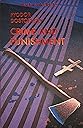
Great cover art
I always choose to get Wordsworth Classics for the cover art.
L**A
I love the book
S**A
Great book to read bought this book for my granddaughter for Christmas and she has finished reading already
A**M
it might be difficult for some to understand some of the key concepts of the book, yet its a classical master piece.
A**R
読みやすい英文で世界の名作にチャレンジしましょう。
T**E
Warning: Contain spoilers Don't know about this latest edition - I bought the edition in 2015 with a different cover. This book has been on two Christian recommended book list. This is what John Piper says about it: “Dostoevsky is compelling because of his penetrating insights into the human soul for its evil and its good and how these are all tangled up together.” Do we know our hearts? I suppose many of us who sit in front of the computer right now browsing through book reviews and book list would not have thought ourselves evil. In fact most of us would think we are decent people, do good and abhor evils. When we see injustice or despicable crime we would be inclined to be the first to point fingers as if we were superior. Just look at the phenomenon on social media in censuring others. I have no idea of the period against which the story is set. Dostoevsky worked on it in the second half of the 19th century. It might have been a contemporary novel then? It certainly depicts a time of confusion when various ideologies were competing to take hold in people’s hearts. Life was harsh and suffering abounded. Even people tried hard and worked hard, there seemed no way out of a life in the gutter, except through marriage or patronage of some kind. The book gives a very good depiction of the poverty trap. What could have been more soul-destroying when there is no possibility to earn a decent living with honest work and to better one’s lot? This is the recipe for piling up social discontent. We cannot judge decisions driven under poverty from a moral high ground. We cannot judge the outcome but must stand with the decision-maker at the time of decision-making to realise those too are economically rational choices. Sonia was driven to prostitution to support her family and faced the contempt of the community. Dounia was tempted by a marriage proposal to a man who was self-seeking, manipulative, and condescending with a totally selfish agenda. Marmeladov was a sorry figure and Katerina, his wife, was driven by poverty into a state of madness. This couldn’t be life; this couldn’t be normal. Naturally for intellectuals, like Raskolnikov, having seen so much suffering and pain and injustice, they sought answers in reason and ideology both to explain and solve the issues. Poverty drove Raskolnikov to be defiant against his lots. He fantasied a new start by murdering an old pawnbroker and robbing her of her money. He rationalized the action on a utilitarian basis and his altruistic motive that the death of an exploitative and oppressive old pawnbroker was “to the service of humanity and the good of all.” He harboured a dangerous revolutionary spirit that great deeds of destruction and violence in terrible carnage could be justified by history. There were two categories of people – the inferior and the superior. The latter were destined for great things and might even have the “right” to kill or commit crimes. These were all theories in his head but after the crime, he found he was tormented by his conscience which was his punishment to the immediate effect. Raskolnikov’s experience was that reason cannot override conscience, which witnesses absolute good and evil and cannot be reasoned away. Good and evil are not on the scale that can be balanced out one another. Can a person who has committed evil still be good? Raskolnikov’s experience was to say no. The book is about this massive internal struggle between the extremes of justification and condemnation. While reason can make sin appear sane, conscience condemns it as insanity. Raskolnikov was in a constant state of delirium, and lived under people’s suspicion of madness. He bore himself contempt before others could judge him and he withdrew himself in order to keep the secret. Feeling a horror to others when they knew, he distanced himself from his loved ones and sentenced himself to isolation. He was at the bursting point with the burden and had chosen Sonia to confess his crime. In her, he would like sympathy and understanding because she lived in degradation and shame and he wondered how she could live in filth side by side with her holy feelings. Why is it not that “It would be better, a thousand times better and wiser to leap into the water and end it all!” “You are a great sinner, that’s true, and your worst sin is that you have destroyed and betrayed yourself for nothing.” Raskolnikov was baffled as to what held up Sonia - -“surely not depravity? All the infamy had obviously only touched her mechanically, not one drop of real depravity had penetrated to her heart…Can it be that she has only been able to bear it till now, because vice has begun to be less loathsome to her? … No, what has kept her from the canal till now is the idea of sin and of those children… “ In his confession, he said to Sonia, “I went into it like a wise man, and that was just my destruction…. Did I murder the old woman? I murdered myself, not her! I crushed myself once for all, for ever …” He wondered if he was a louse like everyone else or a man in committing the crime. In the end his conclusion was that he was just such a louse as all the rest. He saw himself so and there was no reason why others should not see him so. “But it was the devil that killed that old woman, not I.” The devil was the ultimate culprit. Sonia’s insight, however, was: “You turned away from God and God has smitten you, has given you over to the devil.” Sonia understood the burden of sin and in order that God sent him life again, “Suffer and expiate your sin by it, that’s what you must do.” Svidrigailov, a person laden with sins and evil deeds himself, also concluded that Raskolnikov had two alternatives: a bullet in the brain or Siberia. In the end Raskolnikov confessed and his loved ones did not leave him. Sonia followed him to Siberia where he continued to reconcile with his deeds. At the beginning he did not repent as he “found no particularly terrible fault in his past except a simple blunder which might happen to anyone.” “It was only in that that he recognised his criminality, only in the fact that he had been unsuccessful and had confessed it.” But then in Sonia’s infinite love for him, there was a gradual renewal of a man – “He did not know that the new life would not be given him for nothing, that he would have to pay dearly for it, that it would cost him great striving, great suffering.” In parallel, Dounia to Svidrigailov was like Sonia to Raskolnikov. Svidrigailov said that Raskolnikov murdered for a principle which had not proven not to work. This is a warning to all who believe in rationality in denial of our humanity. I don’t know if this portrayal is universal experience of any criminal. Perhaps this only way to choose the other path than Raskolnikov is to have one’s conscience so seared that it ceases to torment. But then according Raskolnikov, this is the murdering of oneself, or as Sonia says, being given up to the devil. The end of Svidrigailov seems to suggest that no matter how skilled one has been living a life of criminality in secret, when confronted with nobleness, holiness, and goodness (embodied in Dounia), something inside is awakened. He put a bullet into his brain. That was a shock. I know this is growing a bit long but I just cannot help quoting this brilliant bit which I think is prophetic about the world we are in right now – look at the UK with regards to Brexit, for example: “Some new sorts of microbes were attacking the bodies of men, but these microbes were endowed with intelligence and will. Men attacked by them became at once mad and furious. But never had men considered themselves so intellectual and so completely in possession of the truth as these sufferers, never had they considered their decisions, their scientific conclusions, their moral convictions so infallible. Whole villages, whole towns, and people went mad from the infection. All were excited and did not understand one another. Each thought that he alone had the truth and was wretched looking at the others, beat himself on the breast, wept and wrung his hands. They did not know how to judge and could not agree what to consider evil and what good; they did not know whom to blame, whom to justify. Men killed each other in a sort of senseless spite. … The most ordinary trades were abandoned because everyone proposed his own ideas, his own improvements, and they could not agree. The land too was abandoned. Men met in groups, agreed on something, swore to keep together, but at once began on something quite different from what they had proposed. They accused one another, fought and killed each other…. All men and all things were involved in destruction…” What is the outcome of this? I will leave you to find out from the book.
Trustpilot
2 weeks ago
2 weeks ago