Buy anything from 5,000+ international stores. One checkout price. No surprise fees. Join 2M+ shoppers on Desertcart.
Desertcart purchases this item on your behalf and handles shipping, customs, and support to France.
๐ญ See the world in stunning clarity โ donโt just watch, experience every detail!
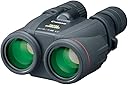
The Canon 10x42 L IS WP binoculars combine professional-grade 10x magnification with advanced image stabilization technology powered by AA batteries, delivering shake-free, bright, and vivid views. Built tough with waterproof and fogproof features, these binoculars are designed for serious birders, marine enthusiasts, and stargazers who demand crystal-clear optics in any environment. With premium L-series optics and ergonomic accessories, they redefine what it means to see and connect with nature.

| ASIN | B0007W4IW2 |
| Age Range (Description) | Adult |
| Age Range Description | Adult |
| Apparent Angle of View | 65 Degrees |
| Best Sellers Rank | #539 in Camera & Photo Products ( See Top 100 in Camera & Photo Products ) #274 in Binoculars |
| Brand | Canon |
| Built-In Media | 10x42 L IS Binoculars - Carry Case - Neck Strap - |
| Coating | Fully Super Spectra Coatings |
| Color | Black |
| Customer Reviews | 4.4 out of 5 stars 220 Reviews |
| Enclosure Material | neoprene |
| Exit-Pupil Diameter | 4.2 Millimeters |
| Eye Relief | 16 Millimeters |
| Features | Electronic Image Stabilization, Large Center Focusing Knob, Twist-Up Eyecups, Ultralow-Dispersion Lead-Free Glass, Waterproof and Fogproof |
| Field of View | 341.2 Degrees |
| Focus Description | Central Focus |
| Focus Type | Center Focus |
| Global Trade Identification Number | 00013803048186, 04960999256498 |
| Item Dimensions L x W | 6.9"L x 5.4"W |
| Item Dimensions L x W x H | 6.9"L x 5.4"W x 3.4"H |
| Item Weight | 2.4 Pounds |
| Low Light Technology | yes |
| Magnification Maximum | 10 x |
| Manufacturer | Canon Cameras US |
| Manufacturer Part Number | 0155B002 |
| Model Name | CN10X42LISWP |
| Model Number | 0155B002 |
| Mount Type | Tripod Mount |
| Objective Lens Diameter | 42 Millimeters |
| Prism Type | Porro Prism |
| Size Map | Full Size |
| Special Feature | Electronic Image Stabilization, Large Center Focusing Knob, Twist-Up Eyecups, Ultralow-Dispersion Lead-Free Glass, Waterproof and Fogproof Special Feature Electronic Image Stabilization, Large Center Focusing Knob, Twist-Up Eyecups, Ultralow-Dispersion Lead-Free Glass, Waterproof and Fogproof See more |
| Specific Uses | Bird Watching |
| Specific Uses For Product | Bird Watching |
| UPC | 013803100051 013803048186 778890552342 |
| Unit Count | 1.0 Count |
| Warranty Description | 3 years warranty |
| Water Resistance Level | Waterproof |
| Zoom Ratio | 10 multiplier x |
W**T
Great Binoculars with some Problems
These provide the sharpest, clearest, highest contrast images I have ever experienced in any of the dozen binoculars and telescopes I've owned over the years. The image stabilization works great. I've completed an in-depth YouTube review of some of the problems with them, which I'll summarize here. (To find the full video review search 'canon 10x42 L IS WP binocular reviews" on YouTube and it should come up in the number one spot.) 1. One reviewer claimed these only have a 37 mm actual aperture because of an internal aperture stop. I measured the true aperture two different ways and both indicated the actual aperture is 42 MM. 2. The front lens caps are very difficult to put on and fall off easily. I solved this problem by adding screw-in lens hoods and caps. It cost $30 (52 mm Sensei lens hoods and 58 mm Sensei caps.) This also addressed the problem of the front optical element being so close to the front of the binoculars that they are easily damaged and increased contrast by reducing stray light getting into the optical train. 3. The eye relief on mine were only 13.5 mm, not the advertised 16 mm. This means eye glass wearers may have a problem. 4. The binoculars were collimated and aligned properly. I didn't have any problems merging the two images. 5. The actual magnification was 10.44X. 6. The actual field of view was 6.48 degrees. 7. The closest focus was 7.5 feet, less than the advertised 8.2 feet. At that distance and with the 10X magnification these things are almost like a binocular microscope. 8. Looking at bright stars, the image was sharp to the very edge of the field of view. Even Venus and the moon were free of color. There was no flaring or ghosting. But, I did notice a very slight astigmatism as I racked the focus in and out. However, it was less than 1/2 what I've seen in any other binocular or telescope. 9 One reviewer commented that the IS briefly shifts the focus every 2 seconds. I looked for this and think I may have detected it, but it's so minor that if it's really there, it's so small an effect that most people won't be able to see it even if they look for it. 10. Some reviews claimed the neoprene neck strap was too weak. The braided nylon straps I received would be able to hold well over 100 pounds so they should be able to handle these binoculars. 11. Some complained the IS button is hard to locate. I didn't find this to be a problem. 12. The focus is slow. Most binoculars go from closest to farthest focus by rotating the focus knob 90 degrees. These require 580 degrees, over six times as much. This is a problem if you're trying to follow a fast moving object. But, this also makes it easier to fine tune the focus to pinpoint perfection. 13. The biggest problem is one that many have mentioned and that I can confirm: The edges of the rubber eye cups for the eye pieces are so sharp that they are uncomfortable, even painful after a few minutes. 14. One reviewer mentioned the moon seemed to swim from time to time. I have not noticed this. 15. Another reviewer stated that his batteries discharged in three days even though the IS function was turned off. I have not seen this problem even though I'm using the cheap batteries included with the binoculars. Please note that what I'm reporting only applies to the binoculars I received. For example: others may not have the short eye relief problem mine have.
P**M
Canon10x42 L IS WP binoculars for birding: a pain in the neck BUT WOW!
Second revision after 1.5 years of use and on pelagic birding trip: No longer a pain in the neck and comfortable in my hands. Now the 44 oz. (versus 24 oz. of previous binoculars) feels normal. VIEWS ARE STILL FANTASTIC. Very useful in all birding conditions (from rain forest to open seas, and especially in windy conditions). With image stabilization on, no one will have a better view through binoculars. Iโd pay several hundred dollars for an image-stabilized spotting scope if someone made oneโseems silly since scopes are on tripods, but I typically use mine at the windy coast where shaking is often annoying. Revised one year after purchase: I raised the rating from 4 to 5 stars since going on a birding trip in the tropics. I also gave up the binocular harness as too annoying (too many straps and too elastic) and used the binocular strap provided by Canonโhence the 44 oz pain in the neck when combined with a camera and a satchel across a shoulder. BUT WOW, when seeing so many new and rarely seen birds, I made full use of the 90-100% stability compared to no image stabilization, which provided viewing opportunities previously afforded only through the guideโs spotting scope. Yes, previously on birding trips Iโd always been first in line at the spotting scope, but on this trip anything within about 100โ was just fine through the binoculars WITH THE IMAGE STABILIZATION ON. Of course this is with top quality glass and 10x (some folks used 8x, but they didnโt even bother looking at the distant birds that were well within the range I had). After about 2 weeks of constant use on the trip, the neck pain diminished and the hefty binoculars felt comfortable in my hands. Normally I only use the image stabiliation a few seconds at a time, about a total of a minute per hour of active birding, but on this trip I used it more frequently and longer since I wanted to carefully study and savor the birds, but there is still plenty of AA battery leftโI assume (battery life isnโt an issue, but unfortunately I donโt know how to predict when they will give out, so I took along a spare pair of batteries). Not only were the binoculars great in the dense rainforest, but they were also outstanding on big and small boats or after hurrying to see a bird that might soon fly away. I havenโt tried them on a pelagic trip, but I expect they would be even more useful there, even though complete image stabilization would be unlikely. So if someone tells you they looked through them once and werenโt impressed (as my guide did), take it with a grain of salt. See my original review (unchanged except the rating of 4 going to 5) below: Original unchanged review: This is a long review since itโs very difficult to find much about image-stabilized binoculars for serious birding. BOTTOM LINE: because of the image stabilization, the very high optical quality, and the reasonably high magnification (10x) no birder will have a better binocular view. But there are two big considerations: 1) extra cost and 2) heavy and ergonomically challenging handling. I believe the latter issue is why these are difficult to find to try out or even to see reviewed in birding circles. But image stabilization revolutionized bird photography, and once the kinks get worked out (mainly weight and bulk) it should revolutionize birding binoculars. Binocular manufacturers have reached the point of diminishing returns on optical quality, leaving wide-open much potential for improvement using image stabilization. Many years ago I had a binocular epiphany. At a roadside pull-off in Yellowstone National Park, I saw a man using 8x compact binoculars on a tripod to view a distant grizzly bear. Overcoming my surprise over tiny binoculars on a tripod, I was amazed that the view through his little binoculars was at least as good as what I had with my larger 10x binoculars. Since then, I have been acutely aware of how much vision is improved when there is complete stability. Iโve come to realize that few birders have looked through their binoculars with complete stability (e.g., resting them on a flat surface and not touching them at all). The view is spectacular, and Iโd say itโs worth a couple of extra powers of magnification and quite a bit more money. Ever since then, Iโve been wondering what it would be like to have image-stabilized binoculars, but reviews for and by serious birders are very hard to findโhence this review. There are several brands available (but very hard to find to test), but since none seem to cost less than $700 for binoculars that would otherwise go for less than $200 (based on the descriptions), I figure $500 is for the image stabilization feature. These Canon 10x42s are pretty much the only top quality ones out there (outstanding glass, waterproof [inadvertently tested and confirmed], fairly close focus, etc.). Almost every review says theyโre heavy (yes, 42g vs 23g for Eagle Optics 10x42 Ranger ED binocularsโmy previous standard). But they all say that the view is spectacular, especially for viewing the night sky. Another serious issue for me from the reviews was the limited warranty and high cost of repairing the image-stabilization feature. With all of this in mind, I decided to take a chance and get a pair 6 months ago and am ready to render an opinion for other serious birders. Not only are they heavy, requiring the use of a harness rather than a simple strap, but more importantly they are bulky and have a different (clumsy) feel in the hand. The housing for the two AA batteries for the image-stabilizer fills the gap between the two barrels, just where Iโd like my thumbs to go. On the plus side, thereโs also a screw hole to readily attach a tripod (but of all binoculars, why would you want to?). Also the objective lenses are perilously exposed in these distinctively shaped binoculars. (This is easily, but annoyingly, corrected by buying two UV filters [52mm threads] and two ยพโ wide sunshades [also 52mm threads], totaling about $40. Then throw away the rubber objective covers [which, as everyone says donโt fit anyway] and the binocular case [which all birders already do]). Now to the image stabilization, which is operated by a button using the right middle finger. YES, IT WORKS, removing most of the shake, often giving glorious total image stability. The shake reduction seems comparable to that of image-stabilized DSLR cameras. WITH EXPERIENCE, FIELD USE IS GREAT. After several months of serious birding in a variety of conditions, my hands have finally adapted to the new feel and the weight. The image quality is indeed superb, and all other features besides weight and grip are fine (e.g., eye relief for eyeglasses, close focus, focusing knob, field of view). Since I only use the image stabilization feature for a few seconds at a time and for only a few times per hour of birding, Iโm still way below the listed 2-8 hours of battery life (depending on AA battery type and temperature). Itโs been great for 1) getting ideal looks at quality birds, 2) warblers high in trees, especially when Iโm tired and have shaky arms, 3) waiting for birds to pop out from behind vegetation (here, I might keep the image-stabilizer on for up to 10-20 seconds), 4) coastal birding in strong wind (times when image-stabilizers would be useful for tripod-mounted scopes), and 5) eking out the last bit of magnification for identifying birds almost too distant for regular 10x binoculars (and definitely out of range for regular 8x). The image-stabilization is also useful for following birds in flight. Surprisingly, one-handed use is not just possible, but is actually quite good despite the size and shape of these โbig boys.โ So, because I knew about the value of a stable image, I took a chance. The binoculars have been rewarding. It has taken adjustment, perhaps not unlike that of bird photographers deciding to switch from an easily portable point-and-shoot high-zoom camera to a bulky 400mm DSLR camera. Anyone considering getting high-end binoculars for their optical quality should give serious consideration to the Canon 10x42 L IS WP binoculars, which give much better views. Iโll go out on a limb here and propose ratings, with 100% being views which canโt be improved upon. Iโll say the highest quality lenses (at notably higher prices) are essentially at their maximum, hence a score of 95%โput them on a tripod or immovable surface and theyโre at 100%. Iโll give my Eagle Optics Rangers ED ($350, alas no longer available!) a 92 or 93%, and the Canon binoculars a 94%. With image-stabilization on, they score about 98% of a perfect image, going well beyond what non-stabilized but otherwise perfect optics can do. I would love to see the high-end binocular manufacturers shrink the image-stabilization mechanism and improve the ergonomics. Come to think of it, high quality zoom (something thatโs never been achieved in birding binoculars) would be nice, too. Note: I took a double chance and bought a returned pair of binoculars (โdamaged boxโ) at a big discount from Amazon Warehouse. The binoculars had an annoying fine tremor when the image stabilization was on, but I could still often get total image stability for a second or two at a time. After several months of living with it, I called Canon to find out if this tremor was normal. They said โNoโ, so I shipped them back at my expense. Since the 3-year warranty was valid, they were quickly repaired (the image stabilization mechanism was replaced) and soon shipped back at Canonโs expense. So the support was excellent. In summary, I believe these give the best overall binocular views currently possible for birding binoculars (i.e. binoculars allowing sharp and quick focusing, quick bird-finding, waterproof, etc.), but the bulk (weight and poor fit-in-the-hand) plus the extra cost force a decision on whatโs most importantโlike the decision to go from a high-zoom point-and-shoot camera to a bulky, more costly DSLR camera.
D**R
Amazing technology takes binnocular viewing to a whole new level!
I own a pair of high end 10 x 50 binoculars dating back from the early 90's from a well known company providing years of crystal clear views. Recently tried a few different 10x42 binoculars costing far less than what I paid back in the day however they have excellent optics, smooth crisp focusing, excellent contrast pretty much a match to what I have so did not make the purchase. Thought to check out image stabilization binoculars hence Canon 10x42 L IS. Curious regards to some user comments offering my opinion given my own experience. Rarely do I write reviews, hopefully my comments and opinions will help answer your questions if considering these. I live in the Bay Area, an awesome view of San Mateo, San Francisco, Oakland, airports, all three major bridges typical targets; freeway traffic, air planes, ships, boats, etc. Here you go: Well packaged not the 'over the top' packaging that's 'pretty' that adds to the cost. Took a look through the optics immediately a major disappointed because the view 'width' appeared way to narrow fixed with no option to adjust? comments stated "difficult to hold" so I figured configuration must be required to accommodate optics, internal stabilization components, mechanics and began thinking I'll have to return them, however figured might as well put the batteries in and check out the stabilization feature, why not? Instructions you say? Time to read the instructions... found you can adjust the ocular separation you would never know by looking at them? a quick adjustment brought perfect alignment with my eyes! Now that the convergence issue was resolved I started to think time to move onto the image stabilization feature (drum roll). Operation Press and hold the button to activate and maintain stabilization or by a quick button tap will activate stabilization for five minutes! (my favorite). Stabilization brings a whole new experience well worth the price of admission, taking out the jitter allows smooth & effortless image tracking with superior detail. At 3,000 yards you can read street signs letters with ease, with stabilization off the only thing I can see is a jittery green sign. Binoculars versus IS binoculars With all the fatigue of using standard binoculars due to holding jitters I generally wouldn't use them for more than five minutes, with stabilization ... 30 ...45 minutes later.... endless views of cities, bridges, traffic, airplanes, ships, birds, radio towers, everything a whole new experience! Response to other's comments: One reviewer mentioned unusual amount of turns required to focus? I found quite the opposite only a half inch rotation to focus from 5' to infinity WOW! This is the fastest most accurate focuser I have used ( smoother than 'Feather touch' / telescope) Some reviewers said they did not feel comfortable to hold like regular binoculars. I like the feel of wrapping both hands around the barrels extra area providing a much more substantial feel, offering balance and ease of control. Lens caps were mentioned not fitting properly I understand that complaint and was also ready to buy the 52mm / lens cap upgrade until I took sometime and practiced putting the covers on and off and found: look into the threaded objective barrels and notice (under good light) there is a starter thread above the threads located on the interior side of the objective tube, starter thread is on the side furthest from focuser take the lens cap and dip or press it under this starter thread insert using two fingers roll depress moving outwards towards opposite side (of lens cap) takes a few tries to perfect. If you place the caps in the normal fashion the caps are prone to hang up on top of the starter thread and cannot seal properly. Some concerns that the lenses can be scratched easily. If you look closely the objective is actually protected sitting a ways behind the front clear filter. Personally I think the low profile of the lens caps on the binoculars looks smart and will use them. Lens eye cups are adjustable very effective I have each set at two clicks out. Final thoughts Optics are outstanding, brightness, clarity and contrast superb to the edge Fit and finish first class, very solid professional feel An amazing experience every-time! Can't put them down :) Well worth the price
J**H
The best low-power (10x) astronomy binoculars.
Summary: The top two reviews with the most helpful votes have covered these binoculars so well, I will keep my review shorter and offer a different emphasis. These Canons were compared to the flagships from Leica, Swarovski, Zeiss, and Nikon. With the IS system turned off, the views were on par or just below the other four. With IS turned on, there was no comparison. IS is the real deal! Once you use it (and can deal with the weight), you can't go back. Background: Some months back, I took up amateur astronomy as a hobby. I was told by veterans to start with binoculars and then progress to a telescope. Now that I have more experience, you should buy both. They are different tools for stargazing much like a pickup truck and a compact sedan are great for different activities. In binoculars for astronomy, there are two camps: low power or high power magnification. Low power generally means 7x-10x and high power means 15x-30x. Aperture ranges from 35mm at a minimum up to 100mm - but anything larger than 42 or 50 mm gets very heavy to hold steady. So, a mount becomes necessary which kills the convenience factor. I'm in the low power camp for binoculars. I use them for sweeping the sky with a wide field of view and large exit pupils. I also think the biggest advantage over a telescopes is their portability, and how fast they are to use for a quick look. Thus, hand-held size and low power are key qualities. I prefer 10x over 7x because that extra magnification is very noticeable, but it still retains a good field of view. The comparison test: Since I'm a casual observer, I only knew important things like chromatic aberration (CA), contrast, sharpness, and brightness. I tested this pair with 5 other people who knew more about quality optics, and one person who knew nothing about them - 7 people total. In our group, we had the alpha brands (Nikon, Leica, Zeiss, and Swarovski) to use as a benchmark. They were the Swarovski 10x42 EL, Nikon 10x42 EDG, Leica 10x42 Ultravid HD, and the Zeiss Victory 10x42. To make it short, all four of these gave superb views with such crispness and clarity, we doubted that the Canons could live up to their level because the price difference was nearly $2,000. For more in-depth analysis, these models have many reviews on the Internet. They are the best to many people for a reason. When the group held the Canon, you could tell their bulky size and weight were a huge negative mark against them. That being said, only two people (particularly my uncle, an avid birder and a lover of Swarovskis) thought their image quality was the same as the benchmark pairs with the IS turned off. We then took turns looking at some stars with the IS turned on. Everyone else gasped. My uncle was in disbelief. No one could have predicted how important a still(er) image could be at 10x. Somehow, sharpness, colors, and details emerged that weren't there before in the benchmark pairs. Still, he gave the slightest edge to the Swarovskis because sweeping the binoculars with IS turned on introduced very tiny artificats. Nonetheless, if you swept the night sky with the IS turned off, locked onto a target, and then clicked the IS button on, the views became close to perfect. This inability to sweep the sky with IS on wasn't a big deal to me. Locking on objects and then clicking became second nature eventually. In the end, I only knew this as a casual observer: I couldn't hold the other pairs, which were considerably lighter, without the image bouncing around. With these, one button click solved the problem. My little sister, the neophyte of the group, agreed with me. She knew nothing about glass performance. Yet, she admitted the view of the Pleiades with IS on versus the others were incomparable. My uncle still preferred his Swarovskis because he had miraculously still hands so the IS wasn't important to him at these magnifications. In addition, because of his age, the weight of these binoculars was too much with his neck craned up at the constellations. Everyone else younger than him could hold these just fine, and they gave the Canons the highest score. Canon 10x42 vs the 15x50/18x50: Before I decided to keep these, I also acquired the Canon 15x50 and 18x50 IS binoculars. The extra magnification was lovely, however, I still preferred the 10x42. Here's why: the L lens gave brighter, sharper, and extremely color-accurate views versus the non L lens glass. Even more, the field of view was greater in these (a big reason why I bought binoculars for astronomy in the first place). The exit pupil was larger too which my eyes can take advantage of in darkness. Lastly, the IS system worked better for the 10x (the shakes were more noticeable in the higher powered models); and these were much lighter than the 15x and 18x in spite of their waterproofing (which the others lack). I may have bought the 15x were it not for my telescope and my need to use the 10x for terrestrial purposes and at football games. Strangely, I did not notice much of a difference with the extra 8mm of aperture. I think the better IS in the 10x42 cancelled out this advantage. Miscellaneous: Everyone has complained about the objective lens caps. I bought two B+W 52mm clear filters (007M) as added protection and the supplied caps click and stay on these filters much better than without them. The added plus is that it's easier to clean the binoculars. In case you mess up, you haven't scratched the costly lenses. I also love that you can dunk these in a bucket of water for better cleaning. Conclusion: The optics with the L lenses place these in the same category as the benchmarks. With the IS turned on, they are the best 10x despite them being much cheaper. Were it not for their weight and bulkiness, I'm sure these would be more popular. Also, Canon's support is subpar versus Swarovski and company. Binoculars are a very small segment of their business. Therefore, if something were to go wrong with the IS system, the repairs would be costly. This likely scares birders who are used to owning their quality binoculars for decades. I don't expect these to last as long as Leicas. If the IS becomes defective after the 3-year warranty expires, I still have very high quality, although heavy, binoculars. Since I can handle the weight and their ergonomics, the L lens and the IS combined make these a keeper for me. A low-power astronomy binocular fan that does not have still hands cannot buy a better 10x stargazing instrument than these pair.
D**Y
Very nice Terra and Astro
So I've had these for about a week now and they are the ones I pick up first. I have the 12x36IS III, and those are great, but you do have to hold the button down. These 10x42 have the best optics, wide FOV and are doable for holding a while, but best while sitting when using for astronomy. I do have tripods, but haven't used them yet. Terrestrial use is crisp and no aberration even at long distances. Astro is amazing, I can sweep the skies and find all kinds of stuff - switch to the 12x and get some great views. These are good all around except for the fact that I'm afraid the objective lenses are so exposed, I'm buying the lens hoods like others have suggested to protect them.
P**A
Great pair of binoculars!
What a wonderful set of binoculars. The image is very bright and clear. The image stabilization is a charm to use. The optics are superb. I compared these binoculars to a cheap ones that I have. I could not believe the difference. After seeing through these binoculars, I think the cheap binoculars were pretty much unusable. I was squinting to see anything from those cheap binoculars. With these canon binoculars, it is as if the binoculars don't exist. When you look through these binoculars, it is as if you can forget that you are looking through a binoculars. You feel like you are looking at a big round screen, with perfect display. There is no eye strain at all. The brightness of the final image seems more than what my naked eye can see. The image lights up when you see through these binoculars. I use it for bird watching, and when you look at any bird, it is as if you are watching it's colors for the first time. The view from these binoculars is just so much more bright and vivid, compared to what I can see with my naked eyes. And rightly so. The amount of light reaching these binoculars is, let's say 42*42/(5*5) times more than my eye - assuming my eye can dilate to 5mm. I am just making some extremely wild guesses here, but I think that the amount of light that gets into these binoculars, is some thing like 60 times what can go in my naked eyes. Of course, some light is lost in optics, and a good amount of light is lost because you are only looking at a smaller part of that light (the smaller field of view compared to naked eye). However, the final view is still bright and crisp, at least as much as I could possibly imagine seeing with naked eye if I could get up close. Beautiful optics light up the scene. When image stabilization is pushed, it is as if the entire view just freezes, and the movie starts. You forget about the binoculars, and just enjoy your view. I have used these binoculars for night start gazing as well. I have heavily polluted skies, but with these binoculars I can view many more stars. The orion nebula looks beautiful with these binoculars. I am absolutely new to astronomy, but I think I saw jupiter and it's four moons distinctly using these binoculars. Also the moon is just breathtaking with these binoculars. You can see all the craters, and the terminator (the line between dark and lighted sides of moon), and many surface details in full clarity with these binoculars. Quality makes all the difference.
K**L
Great while they work - Meaningless warranty
We bought these specifically for the Waterproof claim. Owned for 13 months, lenses fogged from moisture inside. Contacted customer service describing the problem and was sent an estimate of $0, leading me to believe that they would be covered under warranty as I expected them to be. After they received the glasses I received a follow-up email quoting a cost of $290 with an explanation that water damage is not covered by the warranty. When I expressed my surprise that a product with "Waterproof" in the name was not covered for water damage, I was directed to the fine print that explains the exclusion on the Canon website.
I**N
Top Notch Optical Instrument
First, they are extremely well made. They feel solid as a rock in your hand with no clatter or noise when you shake them. They are, at least for me, just the right size fitting my hands very well. They are hefty almost too hefty at a little over 2 lbs. But they are well balanced and the weight is centered at the palm of my hands. It is easy then to rest my arms on my chest when I look straight ahead with them. The front lens cap is custom made and well finished. Too bad it doesn't work. The sucker falls off at the slightest bump and stays in the case when you remove the unit. The rear caps rest over the eyepieces loosely. As long as the unit is pointed down it stays in place. I have added a couple of UV filters and a pair of 52mm screw-on, metal, lens hoods. The eye pieces them selves have some pretty hard rubber eye cups on them. I use them at about half way up. When I crank them alway down I can use my glasses quite easily. The exit pupil is great letting your eyes move around with minimal blacking out on the sides. The image is spectacular, bright and sharp as a tack, I would expect it to be for the 4 figure price tag. And it is! You can focus a subject so sharply it makes the back of your teeth itch. The case too is very well made and fits the unit to a tee. I mostly work out of the case with a small strap for the binoculars that I can put around my neck and the case hanging from the larger strap. The case rests on my chest the bottom of which is a little below my belt. I do some flat water kayaking and this works best for me protecting the binocular from the paddle but being ready at a moments notice to gawk at something. This case lends its self to this with the velcro temporary closure. The strap on the bino. goes on each side of it. Second, The stabilization. This works superlatively! Hit the button and it's on. No waiting for it to get going. I have been using a pair of Burris image stabilizing binoculars for years. They are slow and complicated to get the stabilization to work. And quite frankly had turned me off as far as stabilized binos. went. This unit is a dream and the function its self is really well thought out. When you stop on a subject the stabilization hones in on and freezes the vibration. It is almost as if it knows what you'r looking at. And I mean freezes just like on a tripod. NO MOVEMENT. This to me is unprecedented. It is almost freaky and something I had never experienced with binoculars before. r naturalist. I enjoy kayaking the lakes or just walking through the woods and fields seeing what is there. These are going to be a real asset to me and I cant wait to get out there with them. My thanks to Canon for putting the time and R&D in to make these.
Trustpilot
2 weeks ago
5 days ago