We remain fully operational. Our teams are working around the clock to ensure your deliveries continue safely.

DOWNLOAD THE APP


Copyright © 2025 Desertcart Holdings Limited
DOWNLOAD THE APP
Buy anything from 5,000+ international stores. One checkout price. No surprise fees. Join 2M+ shoppers on Desertcart.
Desertcart purchases this item on your behalf and handles shipping, customs, and support to France.
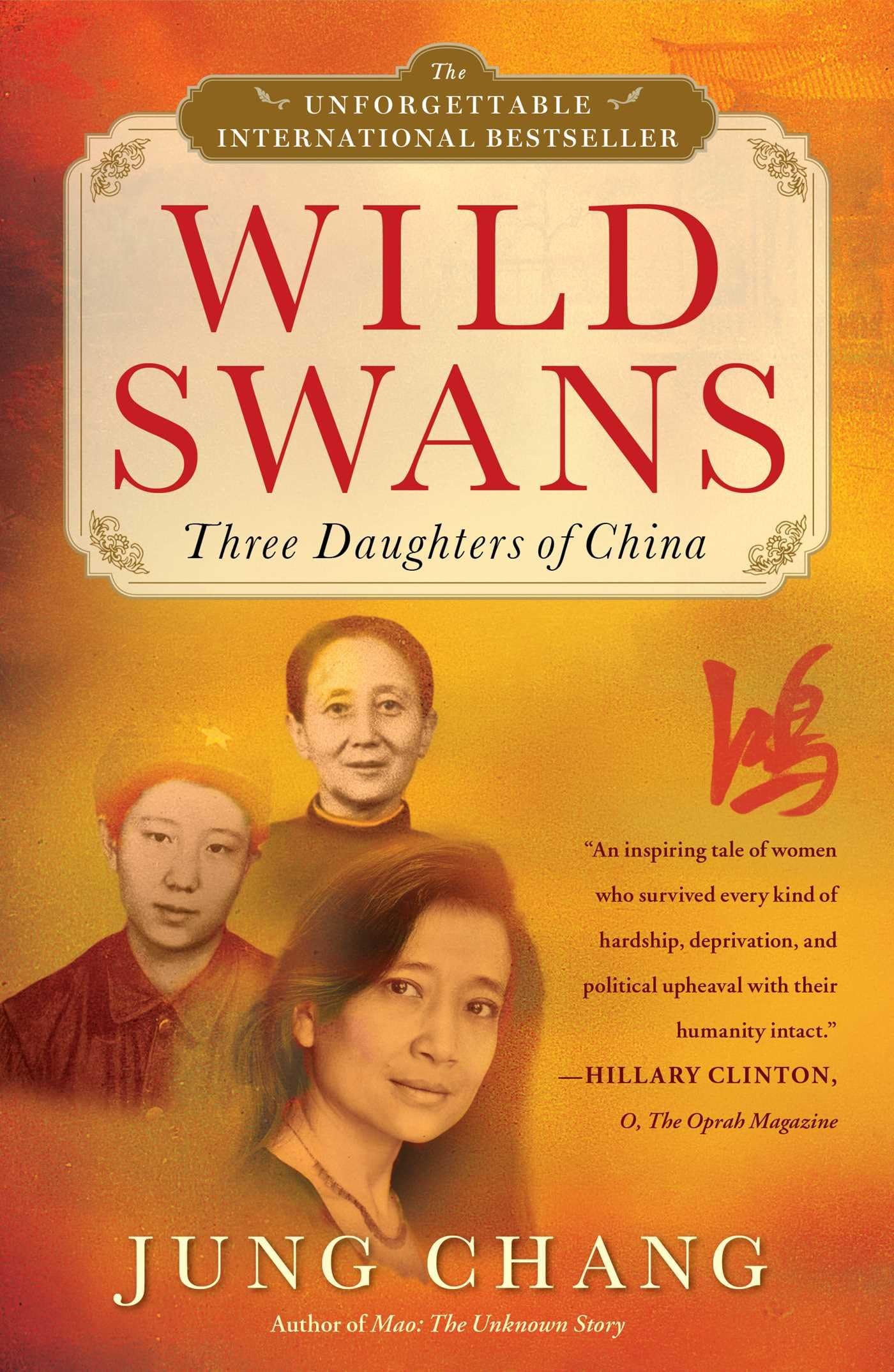
desertcart.com: Wild Swans: Three Daughters of China eBook : Chang, Jung: Kindle Store Review: Review - The author was born in 1952 to Chinese Communist revolutionary leaders. In this beautifully written and revealing 1991 biography she traces the lives of her grandmother, her mother and herself through the historical period of warlords, Japanese occupation, rightist armies of Chiang Kai-shek, rise of Communism, Cultural Revolution, and beginnings of modern China. This is a must-read book. I don’t know how I missed it earlier. It is good literature and it is important history. The author has created an intimate and loving portrait of a close-knit family of individuals with strong character and ideals living in a world often dominated by petty and vengeful characters – taken to an extreme of horror under Mao’s malevolent Cultural Revolution. Written in a straightforward, highly observant and detailed style, it creates a powerful history of that period. The theme of surviving in a petty and jealous environment shows up early on. The grandmother grew up with bound feet as her father schemed to marry her to a warlord general. As the warlord’s concubine “wife” she rarely saw him, but bore him a daughter, and was later hounded by jealous other wives and concubines. After his death she married the well-respected Dr. Xia. To escape his jealous family, they moved away with her daughter leaving all his property and money behind. Living simply, they sheltered others in the threatening climate of the Japanese occupation and then the Kuomintang and Chiang Kai-Shek. The mother grew up sensitive and outspoken. Chang carefully sets the stage for her parents’ engagement in Communism, and she delicately paints the picture of her well-educated father’s stubborn adherence to ideals and the difficulties experienced from it. They had five children (the author being second). As Communist values prevailed, the children were sent to live in nurseries, but eventually as elite revolutionary leaders they were allowed to live as a family and for a few years the children had schooling and relative security. But the mother’s past history of helping the wrong people and the father’s defiance brought downfall. Along with millions, they became victims of the Cultural Revolution. Chang provides a detailed account of this horrifying period in history and how the pettiness and jealousy of people was turned into a weapon. Mao’s programs had plunged the country into poverty and famine. Corrective measures taken by other Communist leaders helped end the famine, but then Mao took revenge and solidified his leadership by removing all former party members and arranging for their detention and torture. Gangs of youth (Red Guard) were formed to attack the enemies of the people and ran rampant through the streets. People were encouraged to inform on each other. Family histories were examined for any previous links contrary to Mao. Books were burned, schools were closed, and Mao propaganda was pushed through loudspeakers and reading material. Her parents were imprisoned, interrogated, and tortured. It was largely through her mother’s courage and resourcefulness that the family was held together and able to avoid the worst tortures, navigating through those who would turn on them and those who would help. This is also a story of Jung awakening. She describes herself as an unquestioning follower of Mao, as one of many who saw the leader as almost a god, while being distraught at the events around her. And then she relates how her eyes and mind began to open, to see and to question. To me this book has tremendous value in that it renders in intimate detail what it was like living in China under Mao, recording a history of how people of all classes suffered and died needlessly during his regime. And further, it has the literary value of relating delicate intricacies of living under such a regime and managing to maintain dignity and live one’s values. Review: Kindle edition and location of photos - Sometimes Kindle editions are a little mysterious. There might be a map inserted before the beginning of the book or a description of characters or a family tree that you never realized was there until you finished reading. So, though I didn't see any photos throughout my reading of the book, I suspected there must be some. I looked in the table of contents, but didn't see them listed. The photos are at the very end of the book, after the book group questions. They are listed in the table of contents, but I didn't see them there, assuming the book group questions were the end. Keep going in the TOC and you will see Photo Insert. The photos are small and some are blurry, but if you have a touch screen, hold your finger over the photo for a couple of seconds, then let go. You will see an icon of a magnifying glass with a plus sign. Tap that and the photo will enlarge. If you don't have a touch screen, you can do the same thing with your cursor. There is also a family tree, a map of China and an index, all at the back of the book. This book was recommended to me by a friend, and I delayed reading it, feeling that it would be somewhat of a slog: dry history or melodrama. Then I got sick of seeing it on my home page, so decided to give it a try. I really liked it. Jung Chang does a good job of helping a Westerner to understand Chinese culture. While she does explain the history of the Communist takeover and philosophy at times in a didactic manner, these deviations from narrative are pretty short, and most of the book is filled with stories and anecdotes that are fascinating. There are descriptions of torture that are very disturbing (I skipped over them) and the lives of the Chinese people at this time is agonizing, but I never found the book depressing. Chang's writing is straightforward and plain, easy to follow, and very aware of what Western readers might have difficulty understanding. She explains it all, which I really appreciated. She writes with dignity, but without becoming aloof. You definitely care about her and her family. I feel I have a much greater understanding of Chinese culture and history now without having had to read a dry and boring account. What the Chinese people went through during this period is horrific and unfair. There is nothing we can do about it. But Jung Chang wrote a book about it, gave them a voice, and we can read. In this way, at least they will not be forgotten.
| ASIN | B0036QVOIW |
| Accessibility | Learn more |
| Best Sellers Rank | #49,738 in Kindle Store ( See Top 100 in Kindle Store ) #5 in Chinese History (Books) #7 in History of China #18 in Asian & Asian American Biographies |
| Customer Reviews | 4.5 4.5 out of 5 stars (10,649) |
| Edition | Reprint |
| Enhanced typesetting | Enabled |
| File size | 4.6 MB |
| ISBN-13 | 978-1439106495 |
| Language | English |
| Page Flip | Enabled |
| Print length | 713 pages |
| Publication date | June 20, 2008 |
| Publisher | Simon & Schuster |
| Screen Reader | Supported |
| Word Wise | Enabled |
| X-Ray | Enabled |
K**S
Review
The author was born in 1952 to Chinese Communist revolutionary leaders. In this beautifully written and revealing 1991 biography she traces the lives of her grandmother, her mother and herself through the historical period of warlords, Japanese occupation, rightist armies of Chiang Kai-shek, rise of Communism, Cultural Revolution, and beginnings of modern China. This is a must-read book. I don’t know how I missed it earlier. It is good literature and it is important history. The author has created an intimate and loving portrait of a close-knit family of individuals with strong character and ideals living in a world often dominated by petty and vengeful characters – taken to an extreme of horror under Mao’s malevolent Cultural Revolution. Written in a straightforward, highly observant and detailed style, it creates a powerful history of that period. The theme of surviving in a petty and jealous environment shows up early on. The grandmother grew up with bound feet as her father schemed to marry her to a warlord general. As the warlord’s concubine “wife” she rarely saw him, but bore him a daughter, and was later hounded by jealous other wives and concubines. After his death she married the well-respected Dr. Xia. To escape his jealous family, they moved away with her daughter leaving all his property and money behind. Living simply, they sheltered others in the threatening climate of the Japanese occupation and then the Kuomintang and Chiang Kai-Shek. The mother grew up sensitive and outspoken. Chang carefully sets the stage for her parents’ engagement in Communism, and she delicately paints the picture of her well-educated father’s stubborn adherence to ideals and the difficulties experienced from it. They had five children (the author being second). As Communist values prevailed, the children were sent to live in nurseries, but eventually as elite revolutionary leaders they were allowed to live as a family and for a few years the children had schooling and relative security. But the mother’s past history of helping the wrong people and the father’s defiance brought downfall. Along with millions, they became victims of the Cultural Revolution. Chang provides a detailed account of this horrifying period in history and how the pettiness and jealousy of people was turned into a weapon. Mao’s programs had plunged the country into poverty and famine. Corrective measures taken by other Communist leaders helped end the famine, but then Mao took revenge and solidified his leadership by removing all former party members and arranging for their detention and torture. Gangs of youth (Red Guard) were formed to attack the enemies of the people and ran rampant through the streets. People were encouraged to inform on each other. Family histories were examined for any previous links contrary to Mao. Books were burned, schools were closed, and Mao propaganda was pushed through loudspeakers and reading material. Her parents were imprisoned, interrogated, and tortured. It was largely through her mother’s courage and resourcefulness that the family was held together and able to avoid the worst tortures, navigating through those who would turn on them and those who would help. This is also a story of Jung awakening. She describes herself as an unquestioning follower of Mao, as one of many who saw the leader as almost a god, while being distraught at the events around her. And then she relates how her eyes and mind began to open, to see and to question. To me this book has tremendous value in that it renders in intimate detail what it was like living in China under Mao, recording a history of how people of all classes suffered and died needlessly during his regime. And further, it has the literary value of relating delicate intricacies of living under such a regime and managing to maintain dignity and live one’s values.
K**N
Kindle edition and location of photos
Sometimes Kindle editions are a little mysterious. There might be a map inserted before the beginning of the book or a description of characters or a family tree that you never realized was there until you finished reading. So, though I didn't see any photos throughout my reading of the book, I suspected there must be some. I looked in the table of contents, but didn't see them listed. The photos are at the very end of the book, after the book group questions. They are listed in the table of contents, but I didn't see them there, assuming the book group questions were the end. Keep going in the TOC and you will see Photo Insert. The photos are small and some are blurry, but if you have a touch screen, hold your finger over the photo for a couple of seconds, then let go. You will see an icon of a magnifying glass with a plus sign. Tap that and the photo will enlarge. If you don't have a touch screen, you can do the same thing with your cursor. There is also a family tree, a map of China and an index, all at the back of the book. This book was recommended to me by a friend, and I delayed reading it, feeling that it would be somewhat of a slog: dry history or melodrama. Then I got sick of seeing it on my home page, so decided to give it a try. I really liked it. Jung Chang does a good job of helping a Westerner to understand Chinese culture. While she does explain the history of the Communist takeover and philosophy at times in a didactic manner, these deviations from narrative are pretty short, and most of the book is filled with stories and anecdotes that are fascinating. There are descriptions of torture that are very disturbing (I skipped over them) and the lives of the Chinese people at this time is agonizing, but I never found the book depressing. Chang's writing is straightforward and plain, easy to follow, and very aware of what Western readers might have difficulty understanding. She explains it all, which I really appreciated. She writes with dignity, but without becoming aloof. You definitely care about her and her family. I feel I have a much greater understanding of Chinese culture and history now without having had to read a dry and boring account. What the Chinese people went through during this period is horrific and unfair. There is nothing we can do about it. But Jung Chang wrote a book about it, gave them a voice, and we can read. In this way, at least they will not be forgotten.
L**E
Compelling and informative history of China under Mao Tsedong
Not a comfortable read by any means, but a fascinating picture of life in China during its modern war years.
L**A
For those of us in the West it is difficult to understand what it was really like to live through the Chinese cultural revolution. Was it the oppressive regime our news media portrayed? Or did it liberate women and the working poor? This book provides some answers. Wild Swans is the tale of three generations of Chinese women, starting with a village beauty who has her feet bound to make her more marketable. Thanks to her crushed foot bones she attracts a wealthy suitor who makes her one of his concubines. The next daughter is a brave revolutionary who risks her life to fight the cruelty of the Japanese invaders. She and her husband are loyal communists set on liberating peasants and women from oppression. At first this daughter is rewarded for her loyalty, but the communist party ends up turning on her and her family. In the third generation is the storyteller Jung Chang. Surprisingly her story is the least vivid. Was it harder for the author to bring her own story to life? Even so, this is lucid, insightful and incredibly readable. I am so grateful to the author for giving me Chinese history in such a riveting story. Brilliant reading.
K**R
I was young and politically active during the 60es and 70es, yet I had no idea of what happened in China during those years. This book has moved me a lot, and I can't stop talking about it. And I am truly upset with the intellectual elite of that time who strongly supported the events in China and who saw China as the model for the western world I truly recommend the book to anyone interested in history and how it relates to our world today
M**C
A friend bought this for me more than 20 years ago. I've re-read the story several times and now bought a fresh copy as original a bit worn. Excellent writing, absolutely fascinating detail about women's lives in the days of concubines and how things were during the Revolution. It also explains everything about when Japan invaded China, in fact all of the recent history of China, in a really interesting way. Definitely one of my favourite books ever because it's so informative and true to life.
P**X
Fascinating read! Don’t be put off by the length, because it goes very quickly. It’s a good mirror of what is happening in the US toady as well.
D**E
Classical great book unraveling a family saga against the backdrop of 1930s-1970s China, featuring beautiful family relations between the author and her mother and grandmother
Trustpilot
1 month ago
4 days ago